AI assistance
Hidden answer generation
Surface patterns consistent with off-screen copilots, teleprompters, and externally generated answers while the interview is running.
Evidence attached for reviewSherlock helps Talent, Compliance, Risk, and Security teams detect fraud in video interviews, from hidden answer assistance to identity fraud, with evidence your team can review, trust, and act on.
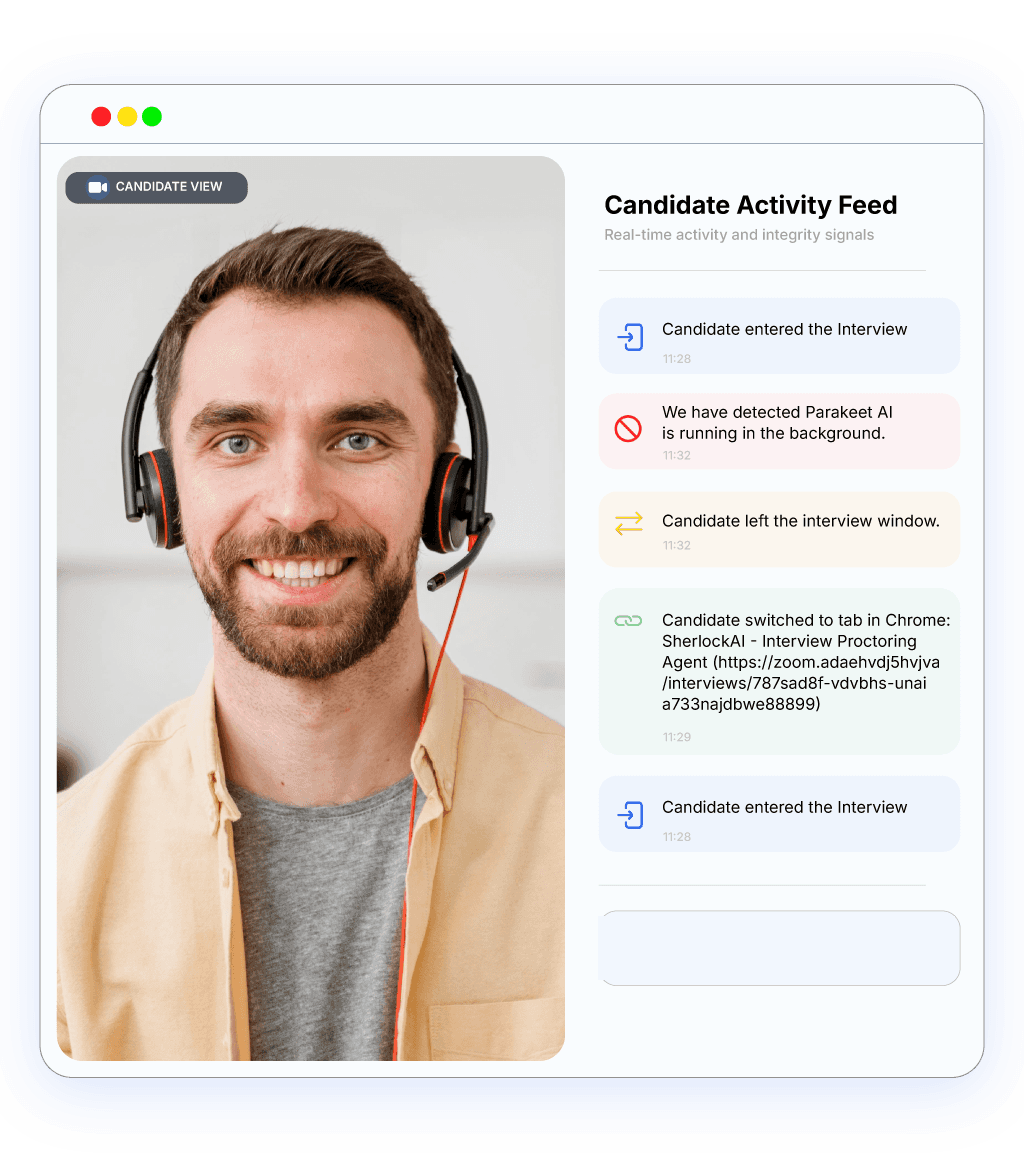 Listening
Sherlock evaluates the session in context and turns scattered activity into a small number of reviewable moments. No single signal decides the outcome.
 Michael L · Candidate
Sherlock combines multiple indicators and preserves the moments that matter, so reviewers can inspect the evidence rather than trust a score.
Surface patterns consistent with off-screen copilots, teleprompters, and externally generated answers while the interview is running.
Evidence attached for reviewReview repeated gaze, timing, and delivery patterns in context instead of treating one glance or pause as proof.
Evidence attached for reviewTrack identity consistency across the session and flag evidence that the participant may not be the expected candidate.
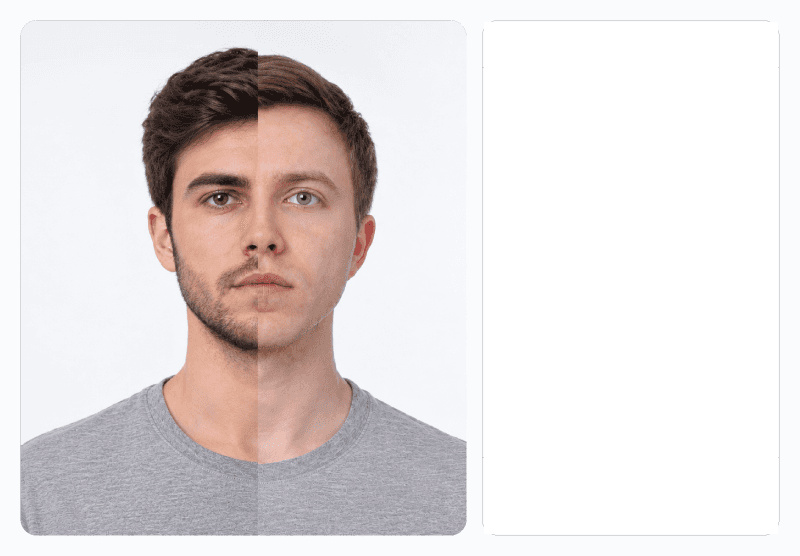
Evidence attached for reviewDetect visual and audio inconsistencies that can indicate synthetic, reenacted, or manipulated interview media.
Evidence attached for reviewSherlock examines the live video and audio stream for inconsistencies that can indicate facial reenactment, manipulated media, or cloned voice.
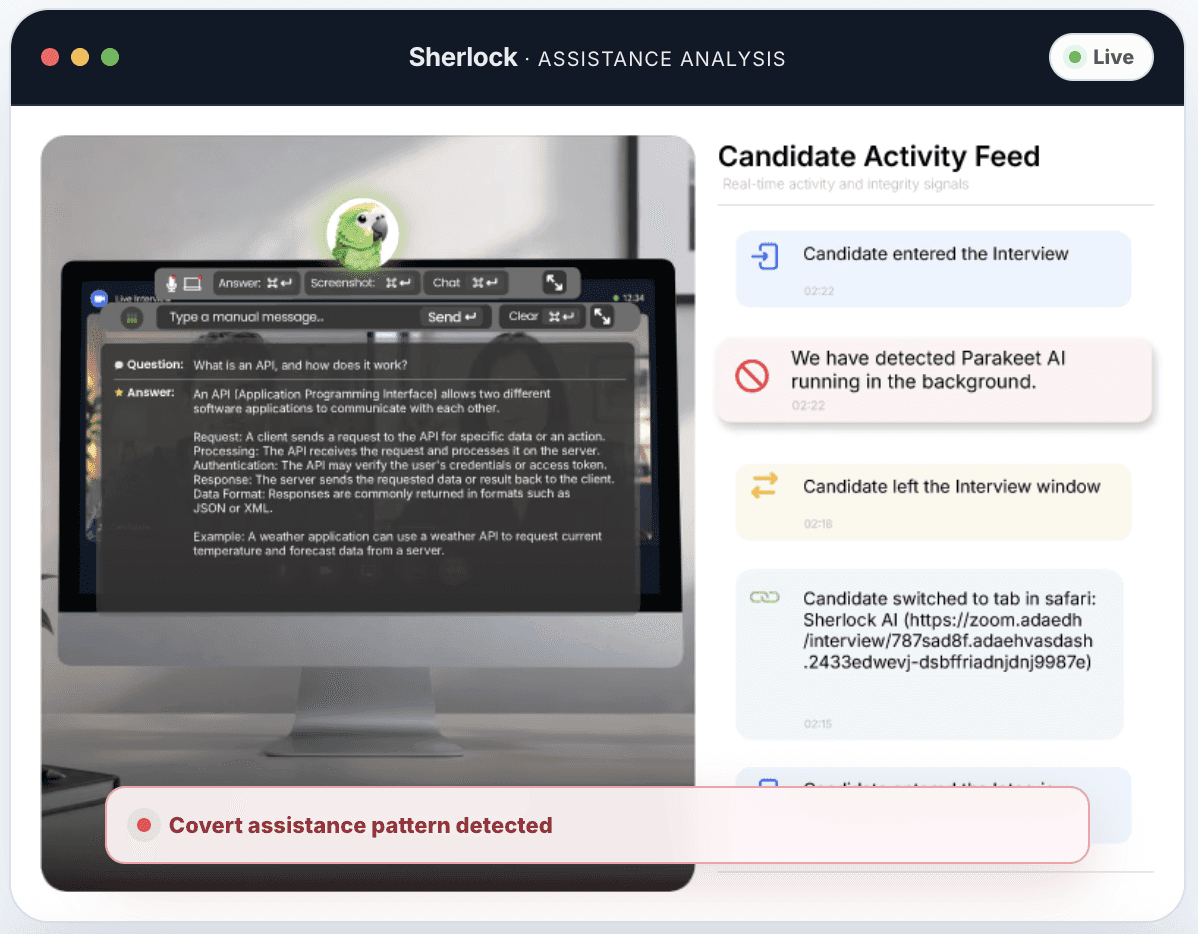
Detect signals consistent with AI copilots, teleprompters, audio relays, and hidden desktop assistance without asking interviewers to play detective.
Every flag should answer three questions: what happened, when it happened, and why it requires attention.
Jump directly to the relevant part of the session.
Review video, audio, identity, and behavior together.
Understand the signal without decoding a black-box score.
Keep hiring policy and final judgment with your team.
Sherlock adds an evidence layer to the live interview process without replacing the people responsible for the decision.
Sherlock joins the live interview workflow and observes the session in context.
Identity, behavior, video, and audio signals are evaluated together as the interview unfolds.
Relevant moments and signal context are attached to the session for authorized reviewers.
Your team clears, re-verifies, holds, or escalates according to its own hiring policy.
Sherlock is designed for sensitive hiring workflows, with controlled access, inspectable evidence, and security practices built for enterprise review.
 GDPR
GDPR ISO 27001
 SOC 2
SOC 2 CPRA
CPRAClear answers for Talent, Compliance, Risk, and Security teams evaluating live interview fraud detection.
No. Sherlock is a decision-support system. It surfaces signals and the relevant evidence for an authorized human reviewer; your team remains responsible for the hiring decision.
Sherlock evaluates patterns across time and across modalities. A single glance, pause, or behavior is not treated as proof. When the evidence is incomplete, the result is routed for review rather than forced into a verdict.
Uncertainty is made explicit. Reviewers can see the moments that influenced the result and decide whether to clear the session, request re-verification, or investigate further.
Sherlock analyzes participant consistency and media-authenticity signals throughout the live session. It can flag evidence consistent with proxy participation, synthetic facial reenactment, manipulated video, or cloned audio for human review.
The workflow is designed to stay in the background. Interviewers continue their conversation while Sherlock records integrity signals and prepares reviewer-ready evidence.
Start with a controlled pilot using sessions where your team already knows the outcome. Compare known-good and known-bad cases, inspect the evidence, and agree on review and escalation policy before broader rollout.
Pilot Sherlock on live interviews and inspect the evidence with your own hiring, compliance, and security teams.
Google Meet · Zoom · Microsoft Teams · Human-reviewed evidence