Back to all blogs
Compare 15 AI hiring tools in 2026 for sourcing, screening, interviews, assessments, scheduling, talent intelligence, and recruiting automation.

AI is changing how companies find, evaluate, and hire talent. In 2026, AI hiring tools go far beyond resume screening and job description generation. They can help recruiters source candidates, review applications, conduct screening interviews, schedule interviews, assess skills, capture interview insights, rediscover past candidates, and automate large parts of the recruiting workflow.
But more AI features do not automatically mean better hiring. With dozens of platforms marketed as AI recruiting software, the bigger challenge is understanding which tool actually solves your team’s hiring bottleneck. A sourcing platform, for example, solves a very different problem from an AI interview tool, assessment platform, ATS, or interview-integrity solution.
AI adoption in talent acquisition is also growing faster than proven business impact. A 2026 Everest Group study commissioned by ManpowerGroup Talent Solutions found that more than 90% of surveyed organizations had deployed AI in talent acquisition, while fewer than 5% described the results as transformational. This highlights an important point: choosing an AI hiring tool is not simply about buying more automation. Teams also need clear hiring criteria, reliable integrations, human oversight, strong candidate communication, and measurable outcomes.
That is why this guide takes a use-case-first approach to AI hiring tools. We compare 15 platforms across sourcing, screening, interviewing, assessment, scheduling, talent intelligence, ATS workflows, interview intelligence, and interview integrity. For each tool, we look at its key capabilities, where it fits into the hiring process, and what teams should consider before adopting it.
Whether you are hiring at scale, trying to improve candidate screening, reduce recruiting workload, strengthen interview integrity, or build a more efficient recruiting stack, this list can help you identify the tools that align with your specific hiring needs.
Top 15 AI Hiring Tools at a Glance
The table below gives a quick view of each platform’s strongest use case. The detailed sections that follow explain the differences in more practical terms.
Tool | Best for | Hiring stage | Main AI capability |
Sherlock AI | Interview integrity and candidate fraud detection | Live interview and verification | Fraud and AI-cheating signals with reviewable evidence |
Workable | All-in-one recruiting for growing teams | Sourcing to offer | Agentic sourcing, screening, engagement and ATS workflows |
hireEZ | Outbound sourcing and recruiting automation | Intake to scheduling | Research, sourcing, outreach, screening and scheduling |
Paradox | High-volume and frontline hiring | Application to onboarding | Conversational screening, scheduling and communication |
HireVue | Structured interviews and assessments | Screening to assessment | Video interviewing, structured evaluation and assessments |
Eightfold AI | Enterprise talent intelligence | Sourcing to selection | Skills matching, talent intelligence and talent agents |
Humanly | High-volume first-round screening | Screening and interviewing | AI interviews and interview assistance |
GoodTime | Complex interview coordination | Interview scheduling | AI scheduling and workflow orchestration |
Gem | Sourcing, CRM and recruiting workflows | Sourcing to offer | Sourcing, application review, rediscovery and fraud signals |
SeekOut | Talent sourcing and rediscovery | Sourcing and screening | AI search, ATS rediscovery and inbound evaluation |
Greenhouse | Structured ATS-centered hiring | Screening to offer | Structured hiring with AI-assisted workflows |
Manatal | SMB recruiting and staffing | Sourcing to placement | AI matching, search, summaries and automation |
Zoho Recruit | Integrated ATS AI assistance | Sourcing to interview | Zia matching, bots, assessments and content assistance |
Teamtailor | Candidate-first ATS with AI | Attraction to selection | Co-pilot screening, summaries and interview support |
Metaview | Recruiting intelligence and AI agents | Review and interviews | Notes, application review, sourcing and screening |
Top 15 AI Hiring Tools in 2026
The products below solve different hiring problems and should not be read as a simple best to worst ranking. Some are full recruiting platforms, while others specialize in sourcing, interviews, scheduling, talent intelligence, or fraud detection.
1. Sherlock AI
Sherlock AI is an interview integrity and candidate fraud platform designed for live remote hiring. Instead of replacing the applicant tracking system or managing the entire recruiting funnel, Sherlock AI focuses on a narrower question that has become increasingly important in AI-enabled hiring: Is the person in the interview genuinely participating as expected, without undisclosed AI assistance, proxy help, identity substitution, or manipulated media?
During a live interview, Sherlock evaluates multiple forms of context rather than treating one unusual action as proof of misconduct. It can surface signals connected with candidate identity, audio and video continuity, device activity, attention shifts, response behaviour, secondary participation, deepfake risk, and possible external AI assistance. Suspicious moments are linked to evidence and timestamps so the hiring team can review what happened in context.
This evidence led approach is important because many ordinary interview behaviours can look unusual in isolation. A candidate may pause, glance away from the camera, experience a connection problem, or speak differently because of stress. Sherlock is intended to help reviewers investigate patterns and specific events rather than automatically disqualify someone because of a single signal.

Key Features
Real-time interview fraud signals that monitor identity, participation, behaviour, and possible undisclosed assistance during a live conversation.
Identity and proxy candidate checks that can help surface inconsistencies in candidate presence, voice, participation, or continuity.
AI-assisted cheating detection for patterns associated with hidden answer generation, scripted reading, external copilots, or off-screen coaching.
Deepfake and media integrity signals that can highlight anomalies involving appearance, lip movement, voice, or video continuity.
Audio and environmental context that can help identify secondary speakers or other participation that may require review.
Evidence linked reports that connect suspicious activity with timestamps and interview context instead of presenting only an unexplained score.
Human review workflow that keeps the final hiring judgment with recruiters and hiring teams rather than turning a signal into an automatic rejection.
Why Sherlock AI Is Useful
Sherlock AI is useful because most ATS, sourcing, and scheduling platforms are not designed to investigate interview integrity in depth. It adds a separate verification layer at the point where the candidate is actually being evaluated. Recruiters can use the surfaced evidence to decide whether an unusual event needs clarification, additional verification, or no action at all.
For organizations conducting large numbers of remote interviews or hiring for technical, sensitive, or high trust roles this can make interview review more consistent and less dependent on instinct. Sherlock AI can sit alongside existing video-interview, and ATS workflows, so a company does not need to replace its recruiting stack simply to add stronger fraud and AI-cheating controls.
Know more about : Why Sherlock AI Is Built for Live Interviews |
|---|
2. Workable
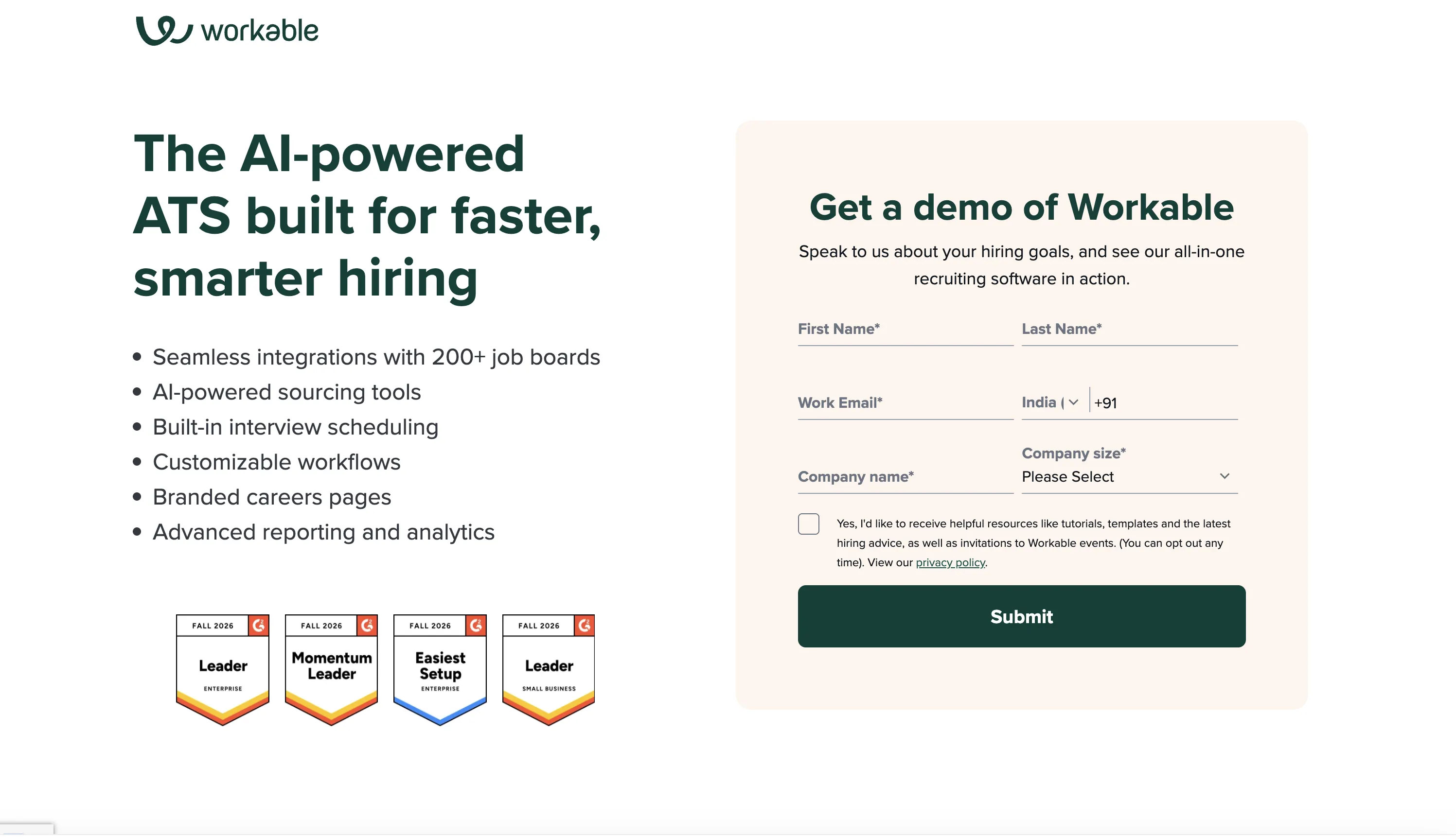
Workable is a broad recruiting platform that combines applicant tracking with AI-assisted sourcing, screening, engagement, and workflow automation. It is designed for teams that want AI to operate inside the same environment where requisitions, candidate records, interviews, scorecards, offers, and reporting are already managed.
Its AI capabilities are particularly relevant at the top of the funnel. Recruiters can use role context to identify potential candidates, engage passive talent, review applicants against defined criteria, and collect information before moving people into recruiter-led stages. Because these actions sit within a full ATS, teams can move from discovery to interview without repeatedly transferring candidate data between point solutions.
The platform is therefore less about one specialist AI function and more about consolidating recruiting work. That can be useful for growing organizations that need sourcing and screening assistance but also want the underlying hiring process, collaboration, and records in one system.
Key Features
AI-assisted sourcing and passive-candidate discovery based on the role and desired profile.
Applicant screening against job-related criteria, with candidate information available inside the ATS workflow.
Candidate engagement and qualification support before recruiter time is committed.
Structured hiring tools such as interview kits, scorecards, scheduling, and collaborative evaluation.
End-to-end ATS workflows covering requisitions, candidate management, interviews, offers, and recruiting reporting.
Workable is most relevant when a team wants a broad recruiting platform rather than a narrow AI add on. A company whose only bottleneck is interview scheduling, assessment, or fraud detection may get more value from a specialist tool, while teams replacing several disconnected recruiting systems may benefit from Workable’s wider scope.
3. hireEZ
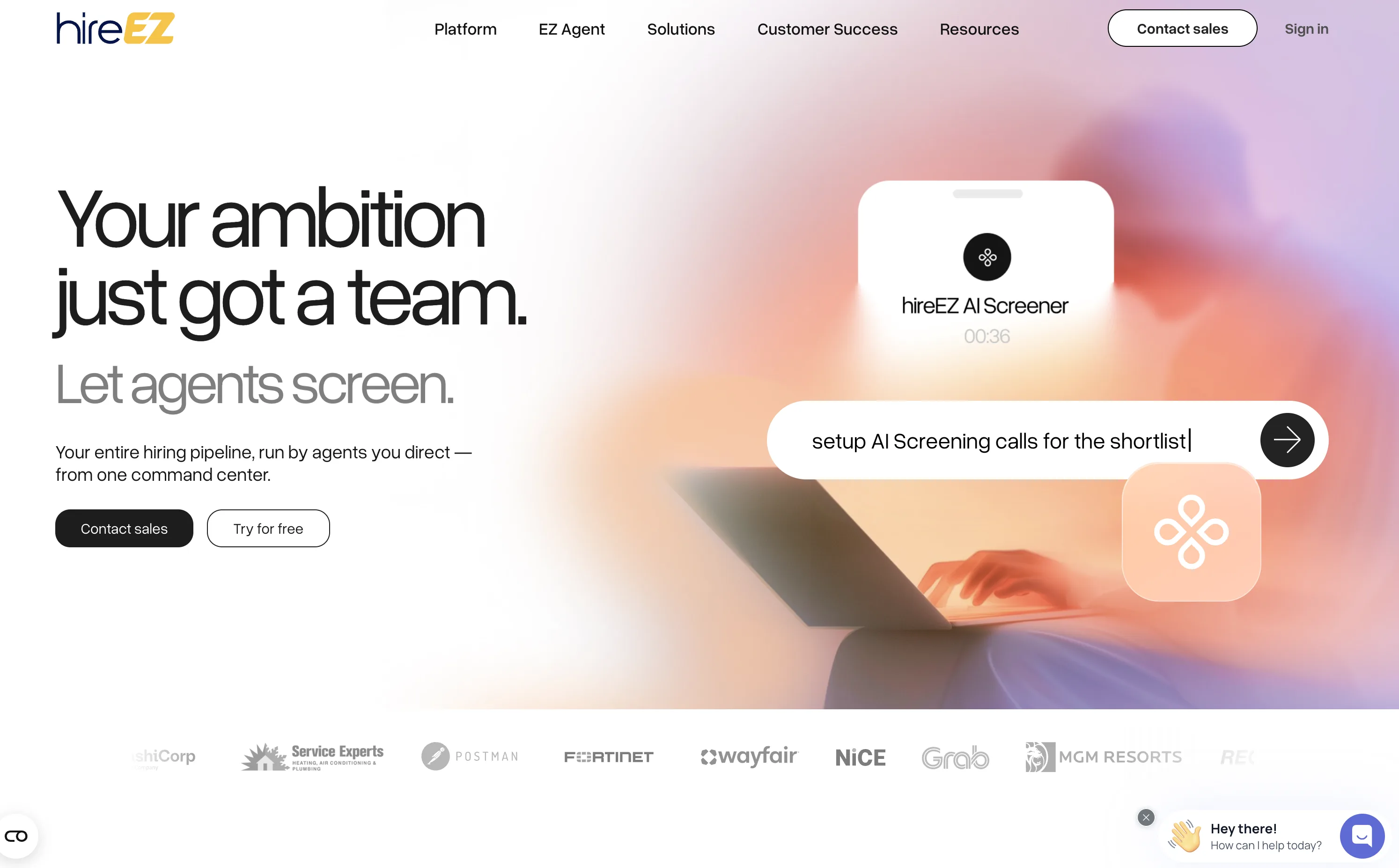
hireEZ is centered on outbound recruiting and talent discovery. It helps recruiters research a role, find candidates beyond the active applicant pool, rediscover people already stored in the ATS, engage prospects, and move qualified candidates toward screening and scheduling.
This makes it useful for hiring teams that cannot rely on inbound applications alone. Instead of starting every difficult requisition with a blank search, recruiters can work across external talent and their own historical candidate data. Outreach and qualification can then continue within the same sourcing-oriented workflow.
The practical value depends heavily on how well hireEZ connects with the organization’s ATS and existing recruiting processes. Teams should test what candidate data synchronizes, where recruiter approval is required, and how outreach activity is recorded before treating it as the operational layer for outbound hiring.
Key Features
Talent discovery and market research for building candidate pools around difficult or specialized roles.
External sourcing combined with ATS rediscovery so previous applicants and known candidates can be reconsidered.
AI-assisted outreach and engagement for turning sourced prospects into active candidates.
Screening and workflow support that can move qualified prospects toward recruiter conversations and interviews.
hireEZ is a stronger fit for sourcing-heavy recruiting teams than for employers already receiving enough qualified inbound applicants. Its value is highest when the real bottleneck is finding and engaging talent, not simply processing applications faster.
4. Paradox
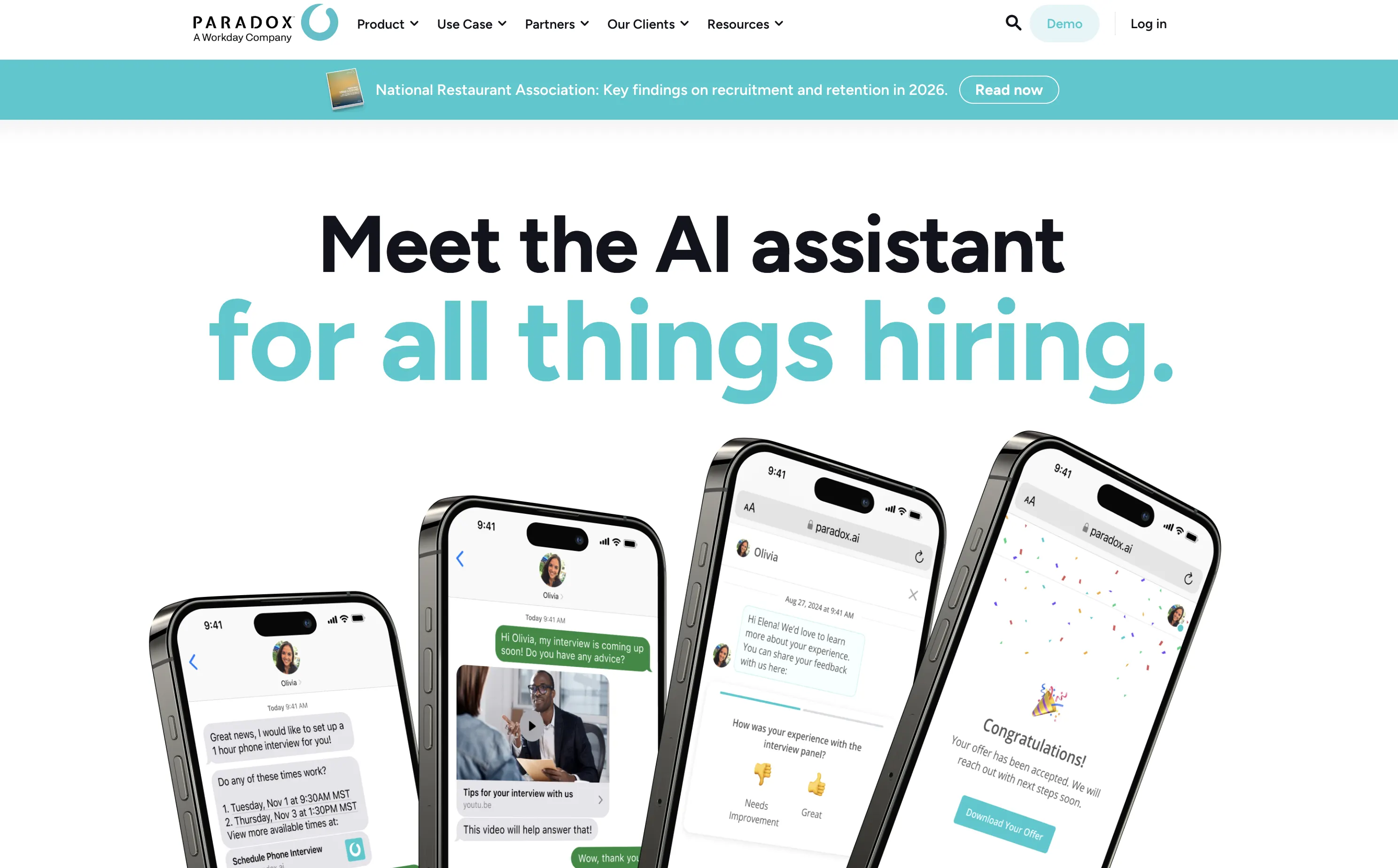
Paradox uses conversational AI to reduce friction in candidate facing recruiting workflows. Its assistant, Olivia, can interact with applicants, answer routine questions, collect information, apply employer defined screening logic, and coordinate interviews without requiring a recruiter to manage every exchange manually.
The approach is especially relevant to high volume and frontline hiring, where speed has a direct effect on conversion. A candidate applying from a phone can move from initial interest to screening and scheduling without waiting for a recruiter to respond during office hours. That can shorten delays in processes involving large numbers of similar roles.
Paradox is not primarily a deep passive-sourcing database or specialist assessment platform. Its strength is the movement and communication of candidates through repeatable stages of the hiring journey.
Key Features
Conversational candidate engagement through chat and mobile friendly experiences.
Employers defined screening and qualification questions for early stage candidate routing.
Automated interview scheduling, rescheduling, reminders, and routine candidate communication.
High volume workflow automation suited to frontline, hourly, and distributed recruiting.
For organizations hiring continuously across locations, the ability to respond and schedule quickly can remove a major operational bottleneck. Smaller teams with low hiring volume and highly bespoke interviews may not need the same level of conversational automation.
5. HireVue
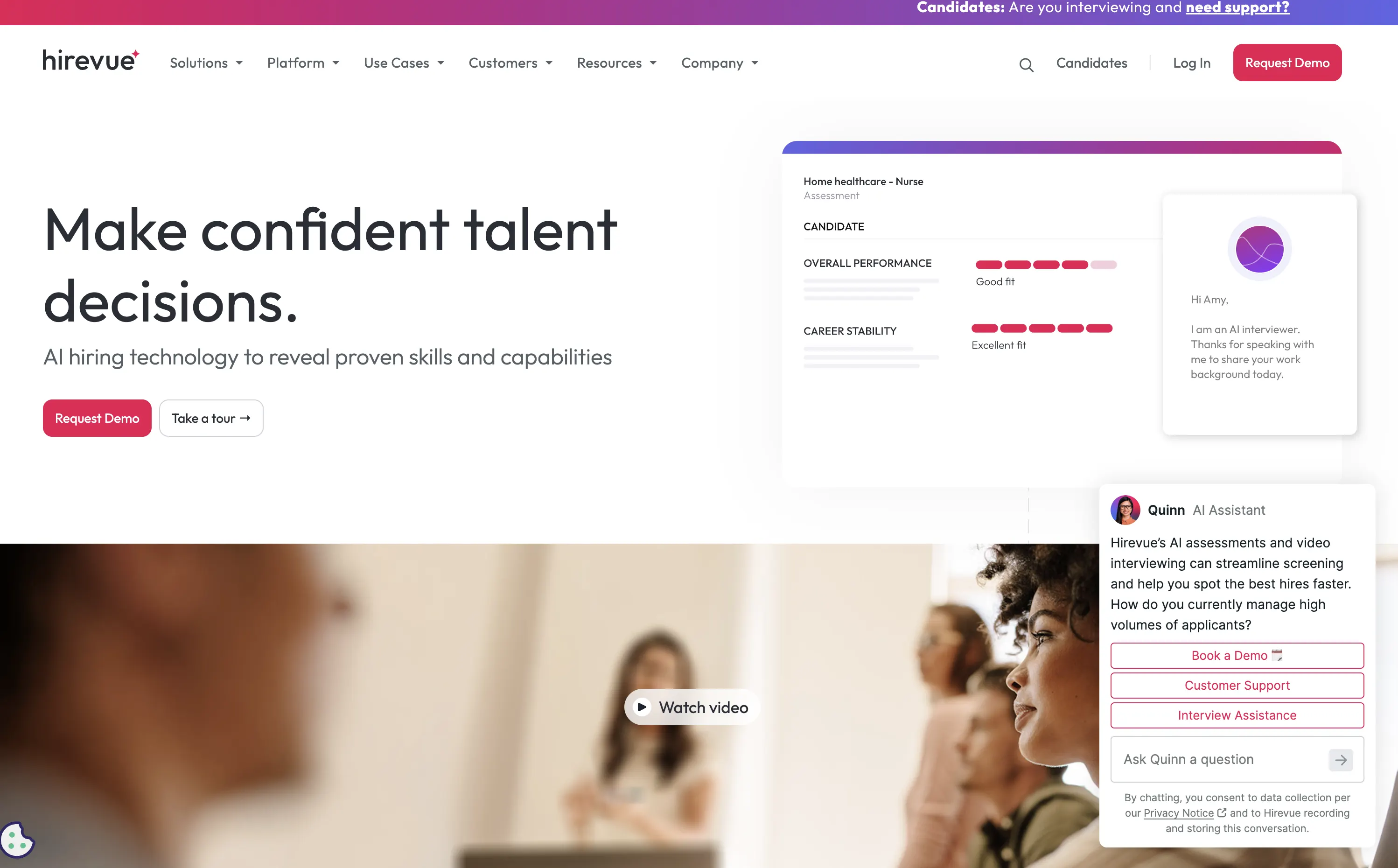
HireVue focuses on candidate evaluation rather than open web talent sourcing. The platform brings together video interviewing, structured interview content, assessments, simulations, and other methods of evaluating job related capability before or during the interview process.
A major reason organizations use this type of platform is consistency. Hiring teams can define interview questions, competencies, and evaluation criteria in advance instead of allowing every interviewer to assess candidates in a completely different way. On demand video can also give candidates a way to complete an early interview without requiring both sides to find a common calendar slot.
For roles where a resume provides limited evidence, assessments and simulations can add another layer of information. The usefulness of those tools depends on whether the assessment is genuinely related to the work and whether results are reviewed as part of a broader hiring decision.
Key Features
Live and on demand video interviewing for synchronous and asynchronous candidate evaluation.
Structured interview guides and rating criteria that help standardize interviewer evaluation.
Job related assessments and simulations for evaluating skills or role relevant behaviour.
Technical and other skills validation options for supported hiring programs.
AI-assisted interview workflows, transcripts, summaries, and evaluation support.
HireVue is generally best suited to organizations that need to evaluate many candidates through a repeatable interview or assessment process. It usually complements the ATS rather than replacing the system that manages requisitions and candidate records.
6. Eightfold AI
Eightfold AI is a talent intelligence platform rather than a single purpose recruiting utility. It uses skills and talent data to help organizations understand external candidates, internal employees, past applicants, and workforce needs through a broader talent lens.
This changes the hiring question from simply “Who should we source?” to “Where does the right capability already exist?” A suitable person may be in the external market, already employed by the company, or sitting in an old applicant database. Eightfold is designed to surface those possibilities using skills, capabilities, and work context.
For large enterprises, this can connect recruiting with internal mobility and workforce planning. The trade off is implementation complexity: value depends on the quality of talent data, integrations, skills architecture, governance, and the organization’s willingness to use one intelligence layer across several talent processes.
Key Features
Skills based talent matching that looks beyond exact job title or resume keyword similarity.
External talent discovery and candidate recommendations for open roles.
Rediscovery of previous applicants and other known talent already held by the organization.
Internal mobility capabilities that can surface employees for new roles and opportunities.
Talent intelligence and agentic assistance that support broader workforce and recruiting decisions.
Eightfold is most relevant to enterprises looking for a connected talent strategy. A smaller employer that only needs applicant tracking or basic sourcing may not need the platform’s wider talent intelligence scope.
7. Humanly
Humanly is designed to reduce the amount of recruiter time consumed by repetitive first round screening and interview administration. Its AI Interviewer can conduct structured candidate conversations through supported chat, voice, or video experiences, while other capabilities assist recruiters during human led interviews.
This can help when qualified applicants are waiting several days simply because recruiters cannot fit enough initial screens into their calendars. A structured early interaction can gather comparable information from more candidates, after which the recruiting team can review summaries, scorecards, or interview evidence before deciding who advances.
The product is most useful when the organization can clearly define what the first round interview needs to establish. If early conversations are highly exploratory or the real bottleneck is finding candidates in the first place, automated interviewing may solve the wrong problem.

Key Features
AI led screening interviews across supported chat, voice, and video formats.
Role specific interview configuration for consistent early stage candidate conversations.
Interview summaries and structured evaluation outputs for recruiter review.
AI assistance and notetaking for recruiter-led interviews and connected ATS workflows.
Humanly fits high volume recruiting teams that want to increase first round screening capacity while retaining human review of candidate evidence. It is less focused on passive sourcing or specialist technical assessment.
8. GoodTime
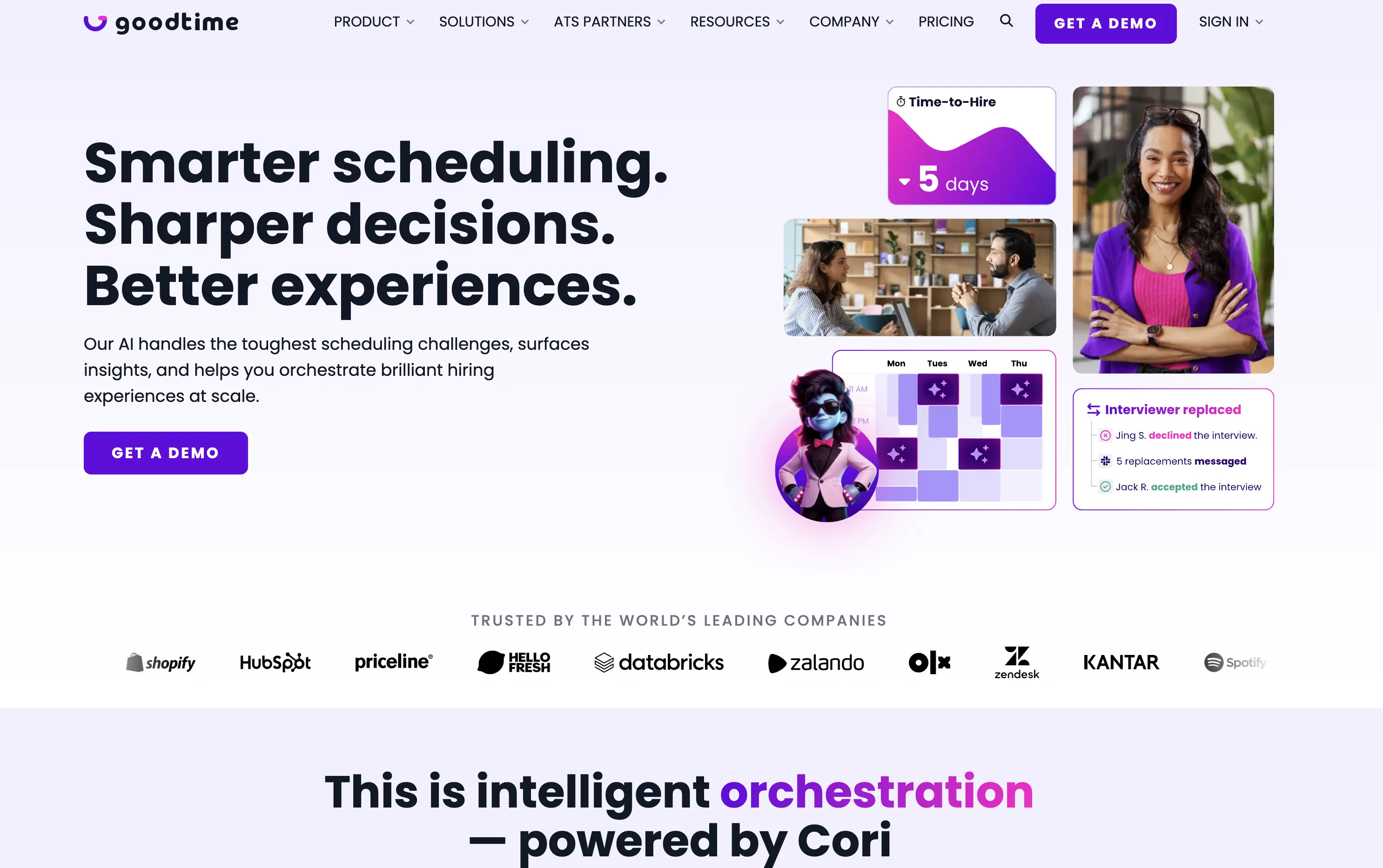
GoodTime specializes in interview scheduling and coordination. That sounds narrow until a recruiting team has to coordinate multiple interviewers, candidate availability, time zones, panel requirements, interviewer eligibility, workload balancing, and last-minute changes across hundreds of interviews.
Instead of treating scheduling as a simple calendar booking problem, GoodTime works as an orchestration layer. It can help recruiting operations teams assemble suitable interview panels, find workable times, communicate with candidates, and rebuild schedules when someone becomes unavailable.
This is primarily an operational tool rather than a candidate-evaluation system. Its value comes from reducing coordinator effort, scheduling delays, and avoidable candidate friction in organizations where interview logistics have become complex.
Key Features
Automated scheduling for one to one, panel, multi stage, and high volume interview processes.
Interviewer eligibility and panel rules that help assign appropriate interviewers.
Load balancing that can distribute interview demand across qualified team members.
Automated rescheduling, reminders, and candidate communication when plans change.
Scheduling analytics for understanding operational performance and interview bottlenecks.
A small company running straightforward interviews may already have enough scheduling capability in its ATS. GoodTime becomes more valuable as interview volume, panel complexity, geographic spread, and coordination effort increase.
9. Gem
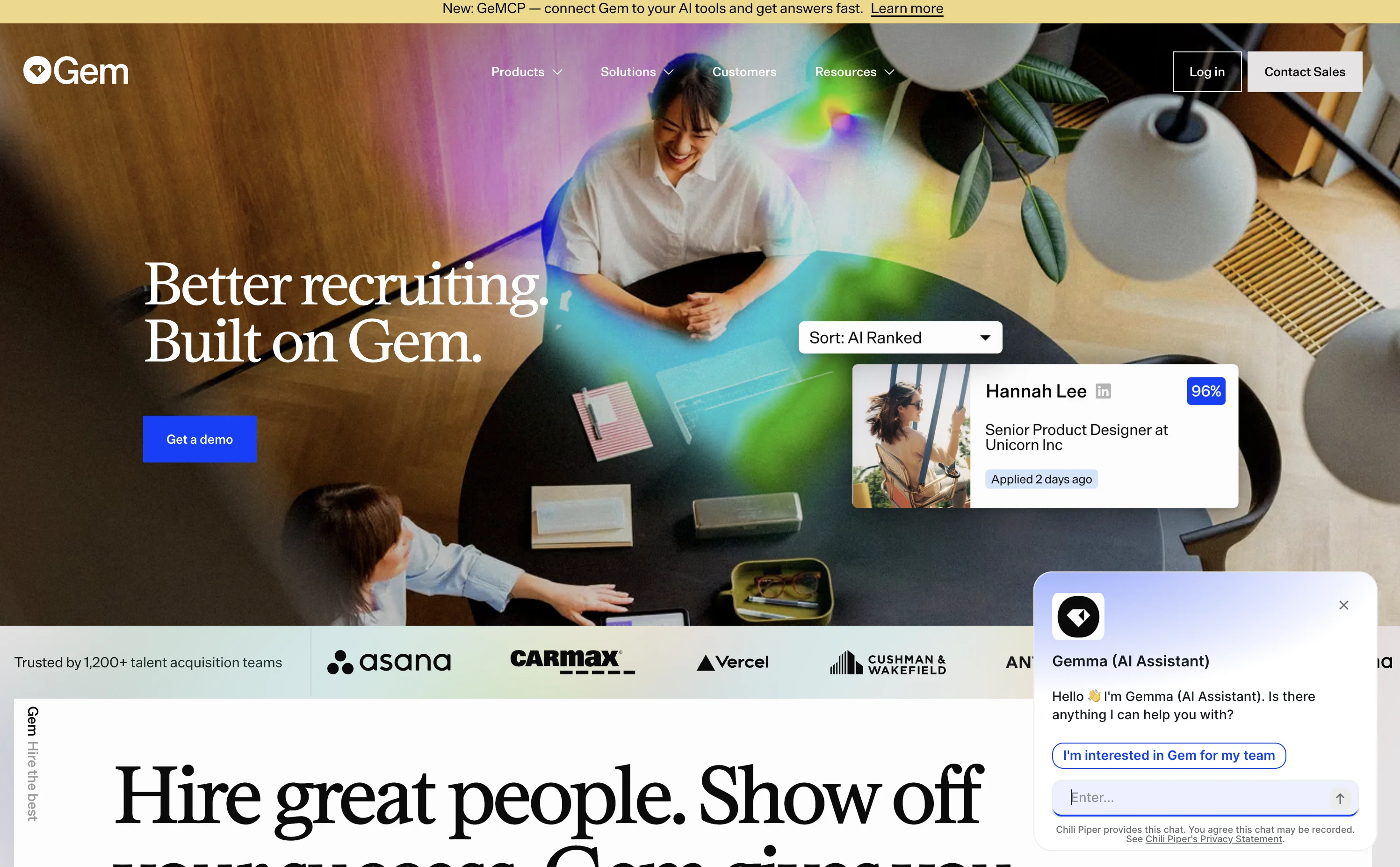
Gem has developed from a sourcing and recruiting CRM product into a broader recruiting platform. It can support external candidate discovery, outreach, application review, rediscovery of known talent, scheduling, analytics, and other workflows around the recruiting funnel.
The combination is useful because recruiting teams often face different pipeline problems at the same time. A specialist role may require proactive sourcing, while a popular role may produce too many inbound applications to review efficiently. Historical candidates may also be relevant but difficult to find inside the ATS without a dedicated rediscovery workflow.
Gem’s value therefore comes from connecting outbound, inbound, and existing candidate data rather than treating each as a separate recruiting activity.
Key Features
AI sourcing across a large talent pool for proactive candidate discovery.
Application review and ranking support using the requirements of the role.
Talent rediscovery across previous candidates and recruiting history.
Recruiting CRM and personalized outreach for managing longer term candidate relationships.
Fraud related signals, scheduling, and analytics that extend the workflow beyond sourcing.
Gem is a strong fit for recruiting organizations that want sourcing and CRM capabilities but also need better use of inbound and historical candidate data. Teams should evaluate which modules solve a real bottleneck rather than buying breadth for its own sake.
10. SeekOut
SeekOut is a talent discovery platform that combines external sourcing with AI-assisted search, candidate engagement, and rediscovery. It can turn a job description into a search, surface similar candidates, generate outreach, and help recruiters work with talent pools more efficiently.
An important part of the value is that discovery does not have to begin outside the company. SeekOut can help teams revisit candidates already known to the organization, reducing the tendency to start every requisition by paying to find entirely new people. Its 2026 AI capabilities also extend into screening through Sam, giving teams an option for early candidate conversations alongside sourcing.
SeekOut remains particularly relevant for hard to fill roles and sourcing intensive recruiting. Organizations that already receive a strong qualified inbound pipeline may use only a portion of its capability.

Key Features
AI-assisted talent search, including job-description-based matching and similar candidate discovery.
ATS rediscovery for identifying relevant people from previous applicant and candidate records.
AI-generated outreach and messaging support for engaging sourced candidates.
AI screening through Sam for teams that want to extend automation beyond candidate discovery.
The strongest use case is a recruiting team that needs to find scarce talent while making better use of its existing candidate database. Buyers should compare its sourcing depth and ATS integration against the specific roles they recruit most often.
11. Greenhouse
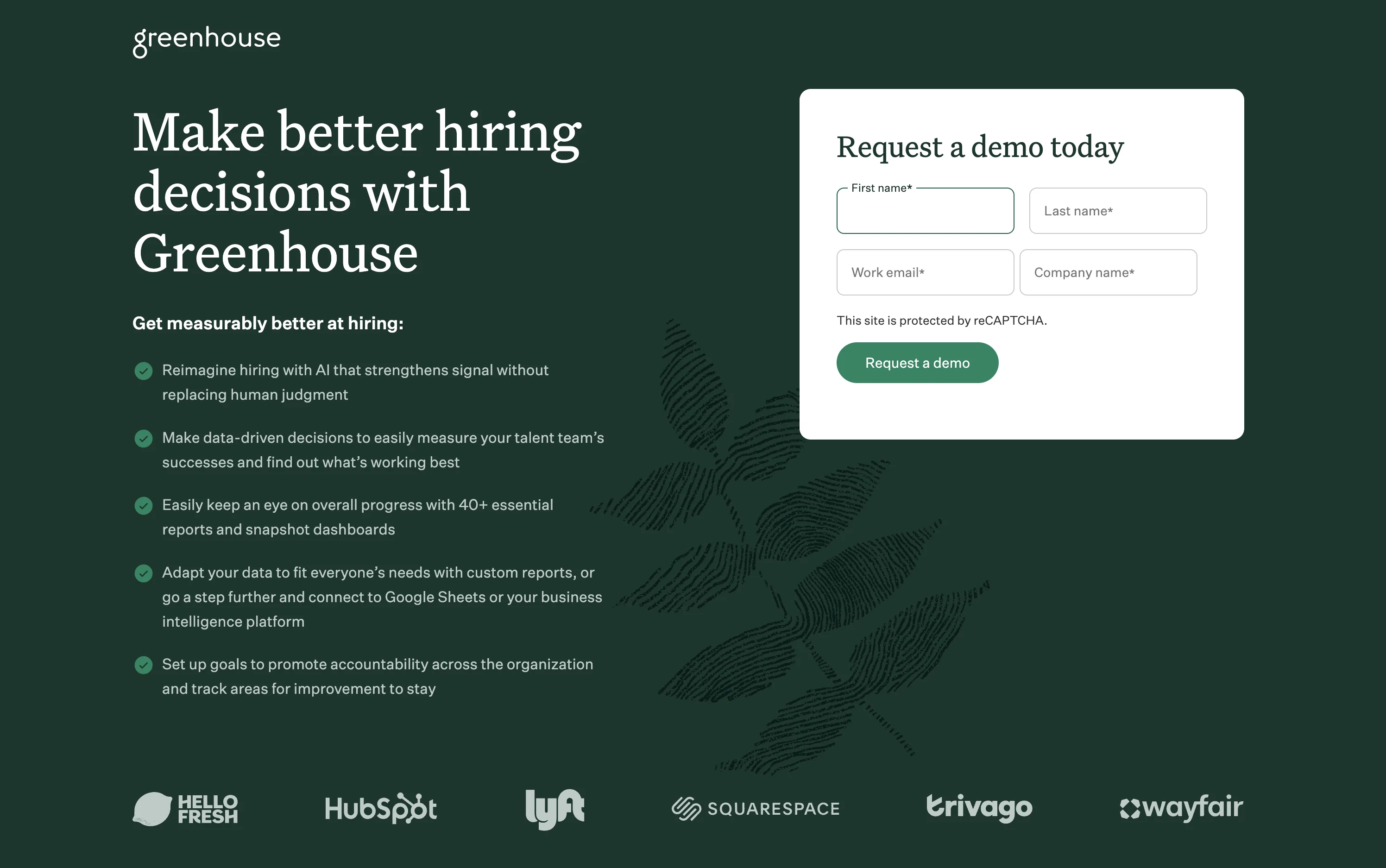
Greenhouse is a structured hiring platform with AI increasingly embedded across job setup, interviewing, candidate insight, and recruiting operations. Its approach is notable because the AI is positioned around an existing structured process rather than as a replacement for job criteria or human judgment.
Teams can use Greenhouse to define interview plans, scorecards, and evaluation expectations before candidates are assessed. Newer AI capabilities reduce manual work around tasks such as interview notes, candidate insights, role setup, and analysis while keeping the underlying hiring evidence connected to the ATS.
This makes Greenhouse different from tools that begin with sourcing or autonomous screening. The platform is strongest when an organization wants the ATS itself to enforce a consistent hiring process and then use AI to make that process easier to execute.
Key Features
Structured interview plans and scorecards for defining consistent evaluation criteria.
AI notetaking and interview support capabilities that reduce manual documentation.
Candidate insights and matching assistance within the recruiting workflow.
AI support for role setup and other administrative hiring tasks as newer capabilities roll out.
ATS, analytics, offers, and collaboration tools that keep hiring activity in one structured system.
Greenhouse is a good fit for organizations that prioritize structured, explainable hiring and want AI inside a mature ATS. Teams whose primary need is deep open-web sourcing, interview fraud detection, or specialist assessment will still need complementary tools.
12. Manatal
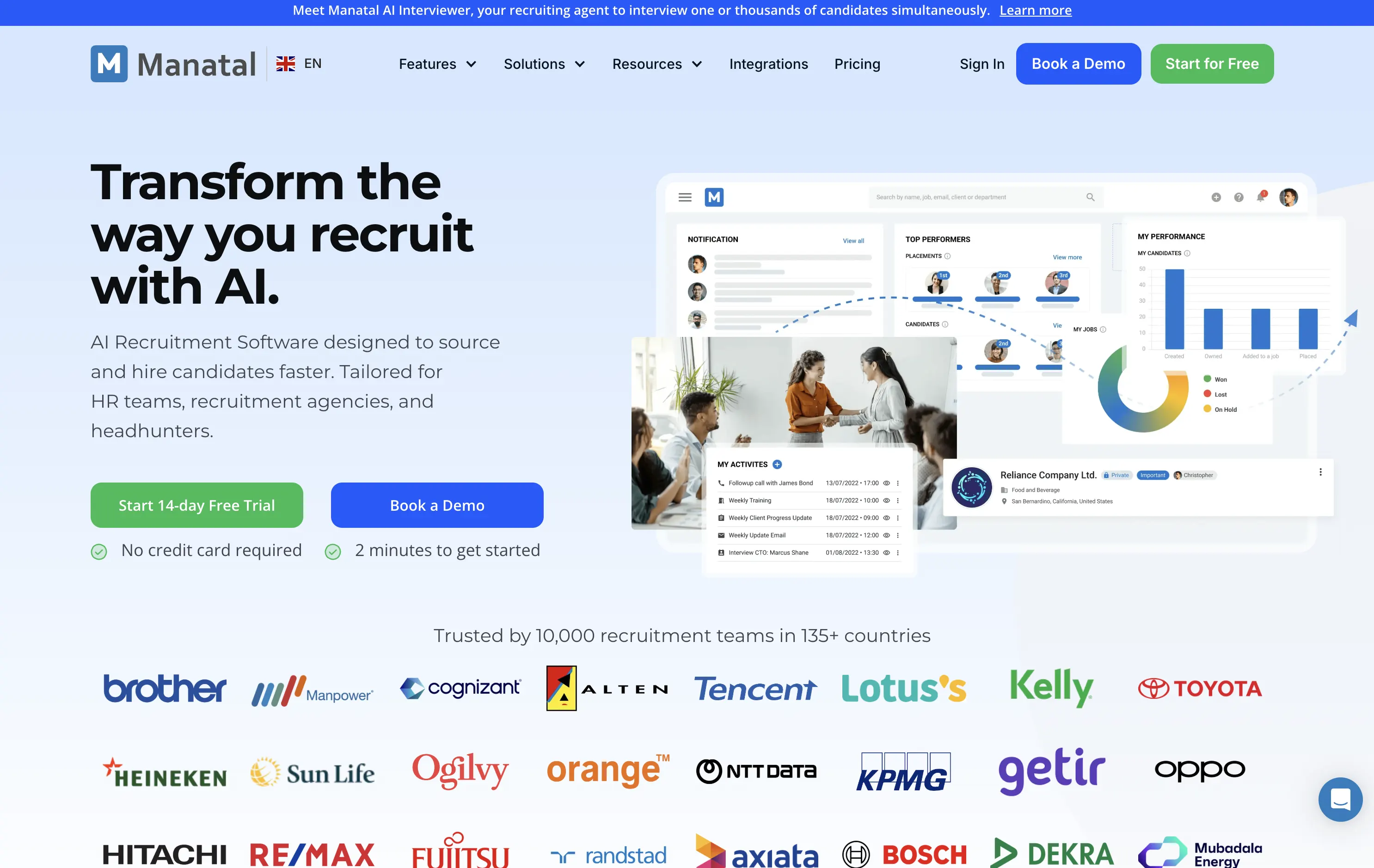
Manatal is an AI enabled recruiting platform aimed at internal recruiting teams and staffing agencies that want applicant tracking, CRM, sourcing, matching, and newer AI agents in one system. Its current AI suite is broader than simple candidate scoring: it includes semantic search, automated interviewing, meeting notetaking, profile enrichment, resume parsing, and natural language access to recruitment data.
For recruiters, that means AI can assist at several points in the workflow. Resumes can be parsed into structured profiles, candidates can be matched and ranked against jobs, public information can enrich profiles, and semantic search can find relevant people even when exact keywords differ. The AI Interviewer can also run asynchronous screening conversations, while the Notetaker records and summarizes supported meetings.
This breadth makes Manatal attractive to smaller teams that want several capabilities without assembling an enterprise stack. Buyers should still test the depth of integrations, governance controls, and any specialist evaluation requirements they have.
Key Features
AI candidate matching and semantic search for identifying relevant profiles from the recruitment database.
AI Interviewer for automated asynchronous video screening using recruiter defined content and criteria.
AI Notetaker for recording, transcribing, and summarizing supported candidate and client meetings.
Resume parsing, profile enrichment, sourcing assistance, and AI Copilot access to recruitment data.
Manatal is particularly relevant to small and mid sized recruiting teams and agencies that want broad AI assistance inside an ATS/CRM. Large enterprises with highly customized global processes may need to examine integration and governance requirements more closely.
13. Zoho Recruit
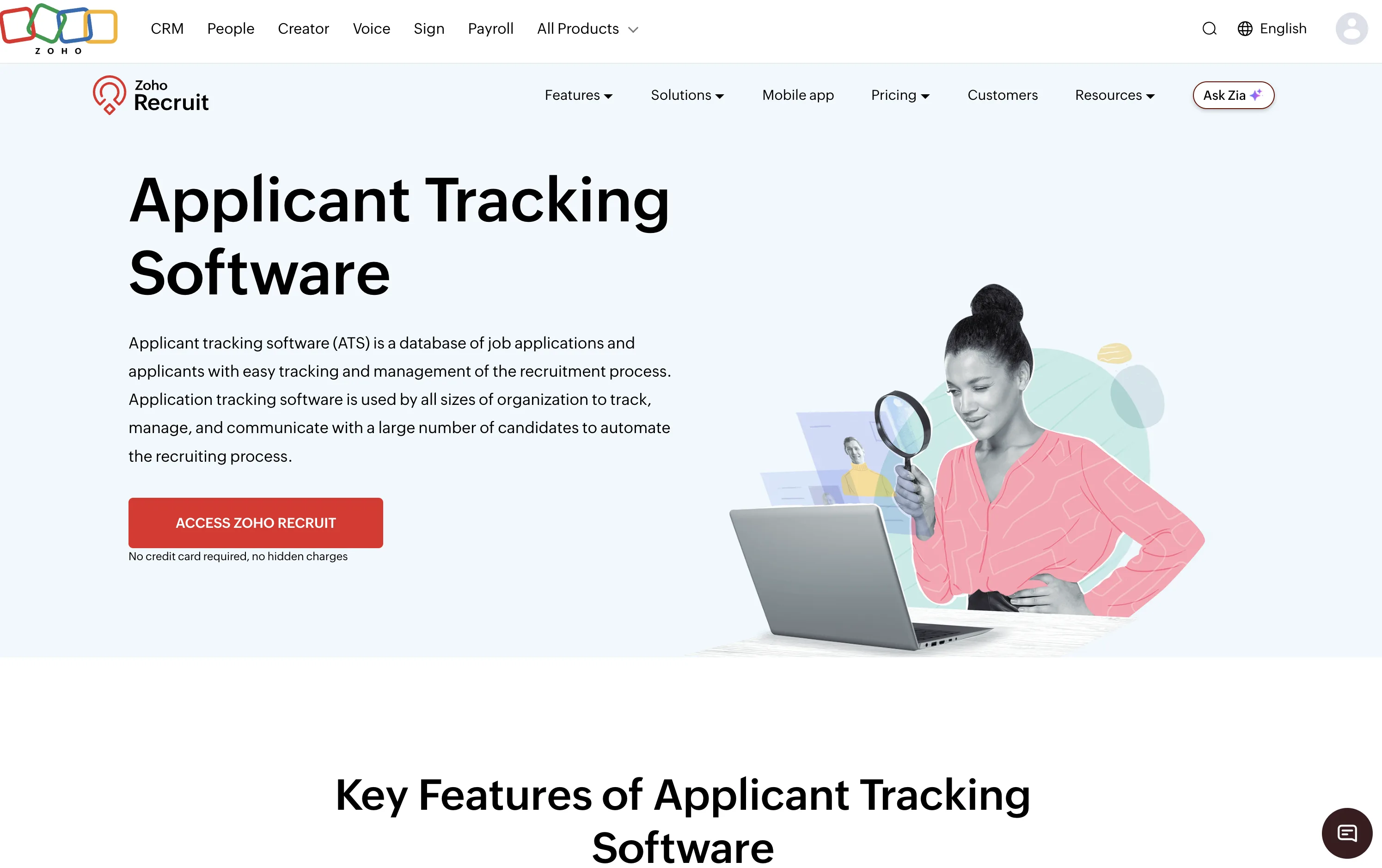
Zoho Recruit is an applicant tracking and recruitment platform that adds AI through Zia and AI Assist. Rather than separating AI into one standalone product, Zoho applies it to candidate matching, screening, assessment creation, candidate communication, content generation, and other recruiting tasks inside the ATS.
Zia can compare candidate skills and job requirements and generate match information that helps recruiters prioritize review. Zoho also supports screening bots and role based assessment workflows, while AI Assist can help create job descriptions, messages, notes, and other recruiting content. More recent capabilities include interview transcription, summaries, and concise candidate profile views.
The result is a broad set of assistance for teams already managing their recruiting workflow in Zoho Recruit. Exact availability depends on edition, plan, region, and configuration, so organizations should confirm which AI functions are included before comparing the platform with specialist products.
Key Features
Zia candidate matching based on skills, experience, job requirements, and related candidate information.
Screening and sourcing bots for automating parts of candidate engagement and early qualification.
AI-assisted assessment generation for creating structured role-related screening content.
AI Assist for job descriptions, candidate communication, notes, and other recruiting content.
Interview transcription, summaries, and candidate-profile insights within supported workflows.
Zoho Recruit is most attractive to teams that want several AI capabilities inside a configurable ATS, particularly organizations already using other Zoho applications. Its breadth can reduce the need for separate lightweight tools, although specialist sourcing, assessment, or fraud requirements may still call for additional software.
14. Teamtailor
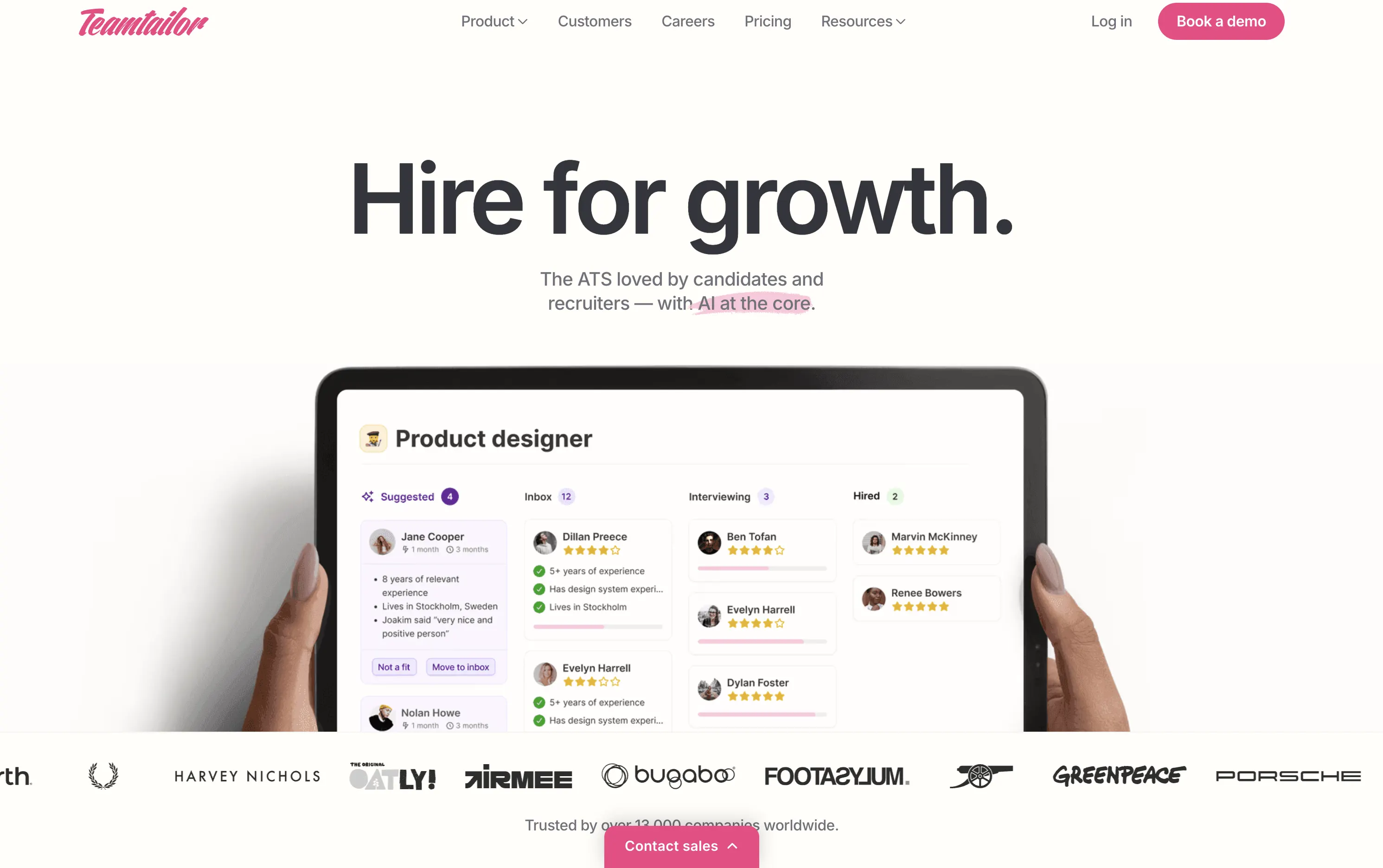
Teamtailor combines an applicant tracking system with careers site, employer branding, and candidate experience capabilities. Its Co-pilot layer adds AI assistance to everyday recruiting work such as candidate screening, resume summaries, interview preparation, content creation, meeting summaries, and talent rediscovery.
This makes the AI feel more like a collection of recruiter aids than a single autonomous hiring agent. A recruiter can use Co-pilot to understand a profile faster, prepare an interview, suggest skills or traits for evaluation, draft content, or surface candidates already in the talent pool.
Teamtailor has also added controls relevant to AI-era applicant behaviour, including detection of hidden instructions in resumes that are intended to influence AI review. The recruiter remains responsible for the decision rather than having the system automatically reject the candidate.
Key Features
Candidate screening, suggestions, and resume summaries for faster profile review.
Interview preparation assistance, including suggested questions, skills, and evaluation traits.
Meeting summaries and recruiting insights that reduce manual documentation.
Content creation and translation for job ads and candidate facing recruiting communication.
Detection of concealed resume instructions designed to manipulate AI-assisted evaluation.
Teamtailor is well suited to organizations that care about candidate experience and employer branding as well as ATS automation. Teams needing a deep sourcing database or specialist assessment engine should evaluate whether those functions need to sit outside the platform.
15. Metaview
Metaview is a recruiting intelligence platform that began with AI interview notes and has expanded into additional recruiting workflows. Its core idea is to capture useful context from recruiter and hiring manager conversations and then make that context available for tasks such as application review, sourcing, screening, and reporting.
Interview notetaking remains an important part of the product because it reduces the need for recruiters to divide attention between the candidate and manual documentation. Structured summaries can also make interview evidence easier to share with the wider hiring team. As the platform expands earlier into the funnel, the same role context can be reused instead of being recreated for each task.
Metaview is therefore most useful when a team wants recruiting intelligence and workflow assistance around an existing system of record, rather than a replacement HRIS or a traditional all in one ATS.

Key Features
AI interview notes and structured summaries for recruiter and hiring manager conversations.
Application review that uses role and recruiting context to assist candidate evaluation.
AI-assisted sourcing and candidate discovery for selected recruiting workflows.
Conversational screening and recruiting reports that extend the platform beyond interview documentation.
Organizations considering Metaview should define how information will move between it and the ATS, which system owns the official candidate record, and which AI workflows will genuinely reduce recruiter work. It is a particularly natural fit for teams that already value interview intelligence but want that context to support more of the funnel.
How to Choose the Right AI Hiring Tool
Start with the hiring problem, not the product category. Two platforms may both describe themselves as AI recruiting software while solving completely different bottlenecks. A useful shortlist begins by identifying where the current process loses time, signal, or candidate engagement.
1. Identify the bottleneck first: Measure whether the real problem is sourcing, applicant review, screening, interview fraud, scheduling, assessment, interview documentation, rediscovery, or reporting. Buy for the problem that is actually affecting the team.
2. Match the tool to hiring volume: High volume frontline hiring needs different automation from specialist or executive recruiting. Test whether the product performs well at your normal requisition and applicant volume.
3. Check integrations: Confirm how the platform connects with the ATS, calendars, video tools, assessment systems, and HR software. A strong AI feature can still create more work if recruiters must move data manually.
4. Review human control: Understand which actions are automated, what evidence recruiters can inspect, whether criteria can be adjusted, and where a person remains responsible for the final decision.
5. Test candidate experience: Walk through the process as a candidate. Screening, scheduling, verification, interviewing, and communication should be clear and proportionate to the role.
6. Compare total cost: Consider implementation, integrations, usage or volume charges, add ons, user seats, and the internal effort required to maintain the workflow not only the headline subscription.
7. Run a controlled pilot: Use a defined group of roles and measure outcomes such as recruiter time saved, candidate response speed, scheduling time, completion rate, shortlist quality, or integrity review workload before expanding.
Conclusion
The top AI hiring tools in 2026 solve different problems. Sherlock AI focuses on interview integrity and fraud detection; other platforms concentrate on sourcing, conversational screening, assessment, scheduling, talent intelligence, ATS workflows, or interview documentation. That is why feature count alone is a poor way to choose between them.
Define the hiring bottleneck first, then evaluate the product against that problem. Check how it uses hiring criteria, how it connects to the existing recruiting stack, what evidence and controls recruiters receive, and how candidates experience the process. A focused pilot with clear success measures is usually more informative than selecting the platform with the longest list of AI features.