Back to all blogs
Learn the key advantages and disadvantages of remote work for employees and employers. Discover how remote work impacts productivity, communication, hiring, retention, and business growth.


Remote work has evolved from a temporary business solution into a long-term workplace strategy adopted by organizations worldwide. From startups and technology companies to enterprise businesses and distributed teams, remote work continues to reshape how employees collaborate, communicate, and perform their daily responsibilities.
The popularity of remote work has grown significantly over the last few years. According to Forbes, nearly 98% of employees want the option to work remotely at least some of the time, highlighting a major shift in workforce expectations. Additionally, around 16% of companies now operate as fully remote organizations, demonstrating how businesses are increasingly embracing location-independent work models.
Businesses are also seeing measurable benefits from flexible work arrangements. An Akamai and i4cp survey found that 83% of remote-friendly companies reported high or very high productivity levels, proving that remote work can support both employee satisfaction and business performance when managed effectively.
For employers, understanding the advantages and disadvantages of remote work is essential for building productive, secure, and engaged teams. For employees, evaluating the benefits and drawbacks can help determine whether remote work aligns with their professional goals, work preferences, and personal lifestyle.
In this guide, we explore the 20 biggest advantages and disadvantages of remote work, including its impact on productivity, work-life balance, hiring, employee retention, collaboration, business costs, cybersecurity, and long-term organizational growth. Whether you are a business leader, HR professional, recruiter, or remote employee, this comprehensive guide will help you understand the realities of remote work in 2026 and beyond.
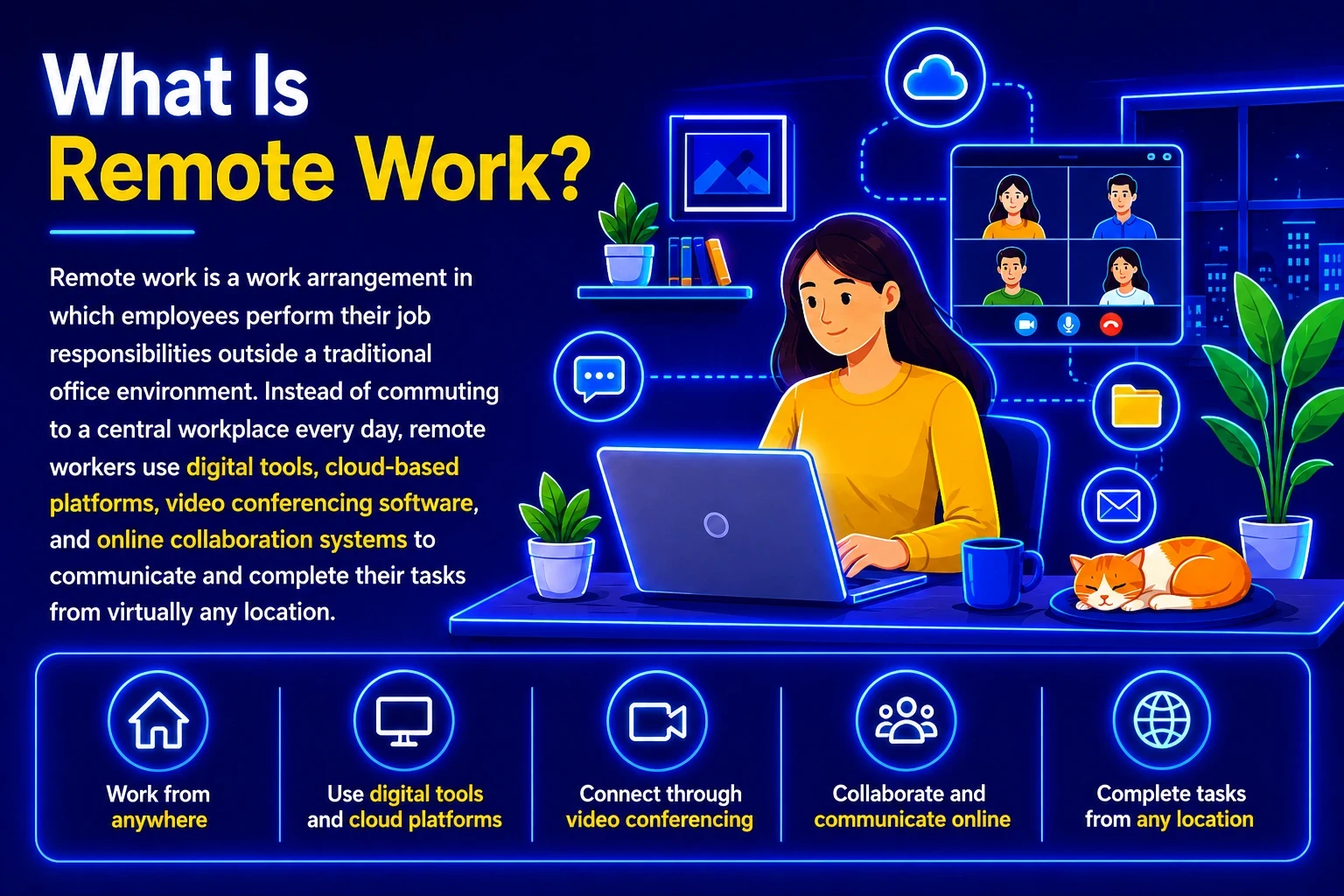
20 Advantages and Disadvantages of Remote Work at a Glance
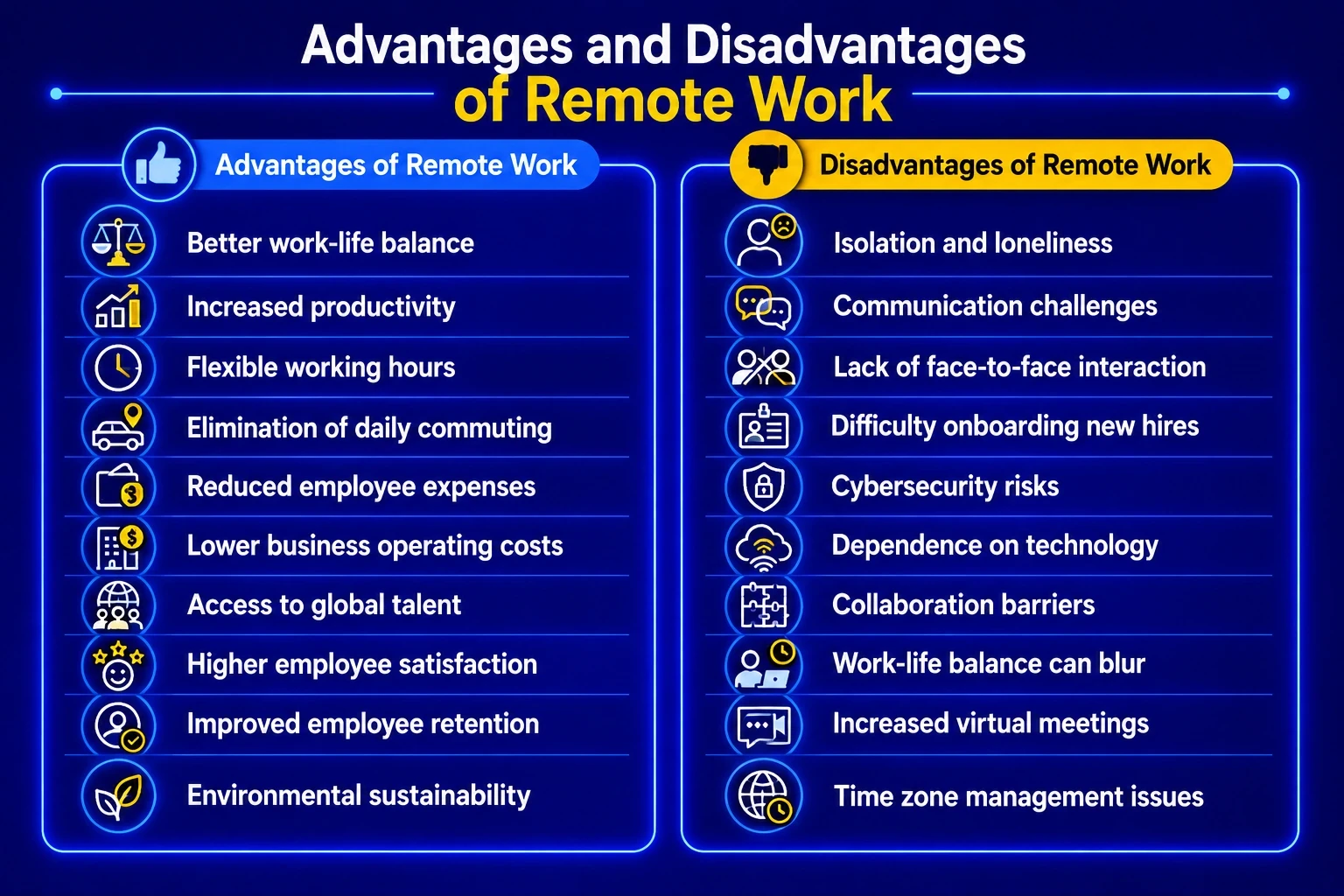
Remote work offers significant benefits for both employees and employers, including greater flexibility, improved productivity, reduced operational costs, and access to a wider talent pool. However, it also presents challenges such as communication barriers, employee isolation, cybersecurity concerns, and difficulties maintaining work-life boundaries.
Understanding these advantages and disadvantages can help organizations create effective remote work policies while ensuring employees remain productive, engaged, and connected. The key is finding the right balance between flexibility, collaboration, security, and performance.
Advantages of Remote Work
Let's begin by exploring the biggest advantages of remote work and why so many businesses continue to adopt remote and hybrid work models.
1. Better Work-Life Balance
Better work-life balance is one of the most cited benefits of remote work. Employees gain greater control over their schedules, allowing them to balance professional responsibilities with personal commitments more effectively.
Without daily commutes and rigid office hours, workers can dedicate more time to family, health, hobbies, and personal development. This flexibility often leads to reduced stress levels and improved overall well-being.
How Remote Work Supports Work-Life Balance
Eliminates commuting time
Offers greater schedule flexibility
Enables employees to work during peak productivity hours
Makes it easier to manage family and personal responsibilities
Reduces workplace-related stress
Organizations that support work-life balance often experience higher employee satisfaction, stronger engagement, and improved retention rates. Employees who feel trusted and supported are more likely to remain committed to their roles and contribute consistently over the long term.
In FlexJobs’ survey, 58% of respondents say a fully remote job represents their “ideal” work style, highlighting how strongly many professionals value location independence.
Example
An employee who previously spent two hours commuting each day can use that time for exercise, childcare, learning new skills, or simply recharging, creating a healthier balance between work and personal life.
2. Increased Productivity
Increased productivity is one of the most commonly reported benefits of remote work. Many employees find that working remotely allows them to focus better, manage their time more effectively, and complete tasks with fewer interruptions than they would experience in a traditional office setting.
In a remote environment, employees often have greater control over their workspace and daily routines. This flexibility enables them to create conditions that support concentration and deep work, helping them stay focused on high-priority tasks. Without the distractions of a busy office, many professionals can accomplish more in less time.
How Remote Work Increases Productivity
Reduces workplace distractions and interruptions
Enables focused and uninterrupted work sessions
Allows employees to create personalized work environments
Minimizes time spent commuting
Supports flexible schedules that align with peak productivity hours
For employers, higher productivity can lead to improved operational efficiency, faster project delivery, and better business outcomes. When employees are given the flexibility to work in environments where they perform best, organizations often benefit from increased output and stronger overall performance.
Example
A software developer working remotely may be able to complete complex coding tasks without the frequent interruptions that often occur in open-office environments. By maintaining uninterrupted focus for longer periods, they can produce higher-quality work and complete projects more efficiently.
3. Flexible Working Hours
Flexible working hours are one of the most valued advantages of remote work. Unlike traditional office environments that often require employees to follow fixed schedules, remote work allows individuals to organize their workday around their most productive hours and personal responsibilities.
This flexibility helps employees manage appointments, family commitments, and daily tasks without compromising their professional responsibilities. It also enables workers to create schedules that align with their energy levels and working styles, which can contribute to better performance and job satisfaction.
How Flexible Working Hours Benefit Employees
Allows employees to work during their peak productivity periods
Makes it easier to balance work and personal commitments
Reduces scheduling conflicts and workplace stress
Supports parents and caregivers with greater flexibility
Improves overall job satisfaction and employee experience
Flexible work arrangements have become a major priority for today's workforce. According to a FlexJobs survey, 65% of respondents believe they would be more productive working from home than in a traditional office environment.
For employers, offering flexible schedules can improve employee retention, increase engagement, and strengthen workplace morale. Employees who have greater autonomy over their time often feel more trusted and empowered, which can positively impact performance and commitment.
Example
A marketing professional may choose to start work earlier in the morning to accommodate school pickups in the afternoon. This flexibility allows them to meet both professional deadlines and personal responsibilities without sacrificing productivity.
4. Elimination of Daily Commuting
One of the most immediate advantages of remote work is the elimination of daily commuting. Employees no longer need to spend hours traveling to and from the office, allowing them to reclaim valuable time that can be used more productively or personally.
Long commutes can contribute to stress, fatigue, and lower job satisfaction. By working remotely, employees can start their workday feeling more energized and focused instead of dealing with traffic congestion, crowded public transportation, or lengthy travel times.
How Eliminating Commutes Benefits Employees
Saves valuable time each day
Reduces travel-related stress
Lowers transportation expenses
Improves overall well-being
Creates more time for personal activities
Organizations also benefit when employees arrive at work mentally refreshed and less stressed, often leading to improved engagement and performance.
Example
An employee who previously spent two hours commuting each day can use that time for exercise, family activities, learning new skills, or simply getting more rest.
5. Reduced Employee Expenses
Remote work can significantly reduce day-to-day expenses for employees. Traditional office work often comes with costs related to transportation, fuel, parking, meals, and professional attire.
By working remotely, employees can lower many of these expenses, helping them save money over time. While some remote workers may invest in home office equipment, the overall financial impact is often positive.
How Remote Work Reduces Employee Expenses
Lowers transportation and fuel costs
Reduces spending on parking and tolls
Decreases expenses for work clothing
Minimizes spending on dining out
Helps employees manage personal budgets more effectively
For many professionals, these savings can add up significantly over the course of a year, improving overall financial well-being.
Example
A professional who previously spent money on fuel, parking, and daily lunches may save hundreds of dollars each month after transitioning to remote work.
6. Lower Business Operating Costs
Remote work can help organizations reduce many of the expenses associated with maintaining physical office spaces. Businesses often spend substantial amounts on rent, utilities, office equipment, maintenance, and workplace amenities.
With remote or distributed teams, companies can operate with smaller office footprints or eliminate certain facility costs altogether. These savings can then be redirected toward growth initiatives, employee development, or technology investments.
How Remote Work Reduces Business Costs
Lowers office rental expenses
Reduces utility and maintenance costs
Minimizes spending on office supplies
Decreases facility management expenses
Supports more cost-efficient scaling
According to Global Workplace Analytics, employers can save an average of approximately $11,000 per year for every employee who works remotely half of the time due to increased productivity, reduced absenteeism, and lower real estate costs.
Reducing operational costs allows organizations to allocate resources more strategically while maintaining workforce productivity.
Example
A growing startup with a fully remote team may avoid leasing a large office space, enabling it to invest more heavily in product development, marketing, and hiring.
7. Access to a Global Talent Pool
Remote work removes geographical limitations from the hiring process, allowing organizations to recruit talent from virtually anywhere in the world. Instead of focusing solely on candidates within commuting distance, employers can access a much larger and more diverse talent pool.
This expanded reach helps companies find specialized skills, fill positions faster, and build stronger teams.
How Remote Work Expands Talent Access
Removes location-based hiring restrictions
Increases access to specialized skills
Improves workforce diversity
Helps fill positions more quickly
Supports business growth across regions
For employers facing talent shortages, remote hiring can provide a significant competitive advantage by opening opportunities to candidates from different cities, countries, and time zones.
Example
A company based in Bangalore can hire a cybersecurity expert from Singapore, a software developer from Pune, and a marketing specialist from London without requiring relocation.
8. Higher Employee Satisfaction and Retention
Employee satisfaction is often higher in remote work environments because workers have greater flexibility, autonomy, and control over their daily routines. When employees feel trusted and supported, they are more likely to remain engaged and committed to their organizations.
Remote work can also improve retention by giving employees the flexibility they increasingly expect from modern employers.
How Remote Work Improves Retention
Increases workplace flexibility
Enhances employee autonomy
Supports better work-life balance
Reduces burnout and stress
Improves overall job satisfaction
Organizations that offer remote work options often gain a competitive advantage in attracting and retaining top talent, particularly in industries where skilled professionals have multiple employment opportunities.
Example
An experienced employee who might otherwise leave due to relocation or family commitments may choose to remain with the organization if remote work options are available.
9. Environmental Sustainability
Remote work can contribute to environmental sustainability by reducing the number of people commuting to offices each day. Fewer vehicles on the road can lead to lower fuel consumption, reduced greenhouse gas emissions, and less traffic congestion.
As businesses continue to prioritize sustainability initiatives, remote work has become an important strategy for reducing environmental impact.
How Remote Work Supports Sustainability
Reduces commuting-related emissions
Lowers fuel consumption
Decreases traffic congestion
Minimizes office energy usage
Supports corporate sustainability goals
According to a study conducted by researchers, fully remote work presents the most substantial environmental benefit, with up to a 54% reduction in carbon emissions. This is largely because full-time remote workers eliminate daily commutes and significantly reduce the need for office energy consumption.
For organizations focused on environmental responsibility, remote work can play a meaningful role in achieving sustainability targets.
Example
A company with hundreds of remote employees may significantly reduce its overall carbon footprint by decreasing daily commuting and lowering office energy consumption.
10. Improved Business Continuity
Remote work helps organizations maintain operations during unexpected disruptions such as natural disasters, public health emergencies, transportation strikes, or severe weather conditions.
Because employees can continue working from different locations, businesses are often better equipped to adapt to changing circumstances without major interruptions.
How Remote Work Supports Business Continuity
Enables uninterrupted operations during emergencies
Reduces dependency on physical office locations
Supports disaster recovery planning
Improves organizational resilience
Allows teams to remain productive from anywhere
Companies with established remote work processes are often able to respond more quickly to disruptions while continuing to serve customers and meet business objectives.
Example
During a severe weather event that prevents employees from traveling to the office, a remote-enabled organization can continue operating with minimal impact on productivity and customer service.
Here's a quick overview of the biggest advantages and disadvantages of remote work.
Disadvantages of Remote Work
While remote work offers numerous benefits, it also presents challenges that can affect employee well-being, team collaboration, productivity, and business operations. Understanding these drawbacks can help organizations implement strategies that maximize the benefits of remote work while minimizing potential risks.
11. Isolation and Loneliness
One of the most common disadvantages of remote work is the feeling of isolation. Unlike traditional office environments where employees interact with colleagues throughout the day, remote workers may spend long periods working independently with limited social interaction.
Over time, this lack of face-to-face communication can affect employee engagement, collaboration, and overall well-being. Individuals who thrive in highly social work environments may find remote work particularly challenging.
Common effects of workplace isolation include:
Reduced social interaction
Lower employee engagement
Feelings of loneliness
Weaker team connections
Difficulty building professional relationships
According to Buffer's State of Remote Work report, loneliness continues to be one of the most frequently reported challenges among remote workers, highlighting the importance of maintaining strong workplace connections.
Organizations can address this challenge by encouraging regular team interactions, virtual social activities, and opportunities for in-person collaboration when possible.
12. Communication Challenges
Communication is one of the biggest challenges organizations face in remote work environments. Without in-person conversations, employees often rely on emails, messaging platforms, and video calls to exchange information and collaborate on projects.
While digital communication tools make remote work possible, they can sometimes lead to misunderstandings, delayed responses, and information gaps. Important context may be lost when conversations take place entirely through written messages, making it more difficult to align teams and make decisions efficiently.
Common communication challenges in remote teams include:
Misinterpretation of messages
Delayed responses across teams
Lack of non-verbal communication cues
Information silos between departments
Difficulty discussing complex topics virtually
Communication challenges can become even more noticeable in larger organizations where multiple teams work across different locations and time zones. Without clear communication processes, collaboration and productivity may suffer.
To overcome these issues, many companies establish communication guidelines, encourage regular check-ins, and use collaboration tools that improve transparency and knowledge sharing.
13. Lack of Face-to-Face Interaction
Remote work limits opportunities for face-to-face interaction, which can affect relationship building, collaboration, and company culture. While video conferencing helps teams stay connected, virtual meetings often cannot fully replace the value of in-person conversations.
Many workplace relationships are built through informal discussions, team lunches, and spontaneous interactions that naturally occur in an office environment. These moments can be difficult to replicate in a fully remote setting.
The lack of face-to-face interaction can lead to:
Weaker workplace relationships
Reduced team bonding
Fewer networking opportunities
Difficulty building trust among colleagues
Lower sense of belonging
Organizations that prioritize employee engagement often invest in virtual team-building activities, periodic in-person meetings, and collaborative events to help employees maintain strong professional relationships.
For businesses that rely heavily on teamwork and creativity, maintaining meaningful human connections remains an important consideration when implementing remote work policies.
14. Difficulty Onboarding New Hires
Onboarding new employees can be more challenging in a remote work environment. In traditional offices, new hires can easily observe workplace processes, ask questions, and build relationships with colleagues through daily interactions.
Remote onboarding requires organizations to intentionally create structured processes that help employees understand their responsibilities, company culture, and communication practices.
Common onboarding challenges include:
Slower relationship building
Limited access to informal learning opportunities
Difficulty understanding company culture
Delayed knowledge transfer
Reduced visibility into team workflows
Without proper onboarding support, new employees may take longer to become fully productive and engaged in their roles.
Organizations can improve remote onboarding by providing clear documentation, assigning mentors, scheduling regular check-ins, and using collaborative tools that help new hires integrate into the team more effectively.
15. Cybersecurity Risks
Cybersecurity is a growing concern for organizations with remote workforces. When employees access company systems from different locations and devices, businesses face a broader range of security threats than they would in a centralized office environment.
Remote workers often rely on home networks, personal devices, and cloud-based applications to perform their jobs. Without proper security measures, these environments can create vulnerabilities that cybercriminals may exploit.
Common Cybersecurity Risks in Remote Work
Unsecured home Wi-Fi networks
Phishing and social engineering attacks
Weak password practices
Use of personal devices for work
Unauthorized access to company data
To reduce cybersecurity risks, companies often implement multi-factor authentication, endpoint security solutions, employee security training, and secure remote access policies.
16. Dependence on Technology
Remote work depends heavily on technology for communication, collaboration, and daily operations. While digital tools enable employees to work from virtually anywhere, they can also create challenges when technical issues occur.
Internet outages, software failures, hardware problems, or platform disruptions can quickly affect productivity and business continuity. Employees may also experience frustration when dealing with multiple applications and complex technology stacks.
Challenges associated with technology dependence include:
Internet connectivity issues
Software outages and disruptions
Hardware failures
Learning new digital tools
Increased reliance on IT support
Organizations can reduce these challenges by investing in reliable technology infrastructure, providing technical support, and ensuring employees have access to the tools they need to perform their jobs effectively.
As remote work continues to evolve, technology remains both an enabler and a potential limitation for distributed teams.
17. Collaboration Barriers
Collaboration can become more difficult when employees work from different locations. While communication platforms and project management tools help teams stay connected, remote work may reduce spontaneous discussions and real-time problem-solving opportunities.
In traditional office environments, employees can quickly gather to discuss ideas, resolve issues, or brainstorm solutions. Remote teams often need to schedule meetings or rely on digital communication channels, which can slow collaboration.
Common collaboration barriers include:
Reduced spontaneous interactions
Delayed feedback and decision-making
Difficulty brainstorming virtually
Limited visibility into team activities
Challenges coordinating across locations
According to Microsoft's Work Trend Index, 85% of business leaders say the shift to hybrid work has made it challenging to have confidence that employees are being productive, highlighting the collaboration and visibility challenges many distributed teams face.
These barriers can be particularly noticeable in projects that require frequent communication, creativity, and cross-functional teamwork. Without regular interaction, teams may experience communication gaps, slower decision-making, and reduced opportunities for innovation.
Organizations can improve collaboration by establishing clear workflows, using collaborative technology platforms, encouraging knowledge sharing, and creating opportunities for regular team interaction. Clear communication practices and well-defined processes can help remote teams collaborate more effectively despite physical distance.
18. Blurred Work-Life Boundaries
While remote work can improve flexibility, it can also make it difficult for employees to separate their professional and personal lives. Without a clear distinction between the workplace and home, some employees may find themselves working longer hours or struggling to disconnect after the workday ends.
Over time, these blurred boundaries can contribute to stress, fatigue, and burnout. Employees may also feel pressure to remain available outside of regular working hours, especially in organizations that lack clear expectations around communication and availability.
Common Effects of Blurred Work-Life Boundaries
Difficulty disconnecting from work
Increased risk of burnout
Longer working hours
Reduced personal time
Higher stress levels
Organizations can help employees maintain healthier boundaries by encouraging flexible but structured work schedules, promoting time-off policies, and setting clear expectations around after-hours communication.
19. Increased Virtual Meetings
Remote teams often rely heavily on video conferencing and online meetings to stay aligned and collaborate effectively. While these meetings help maintain communication, excessive virtual meetings can reduce productivity and contribute to employee fatigue.
Many employees spend a significant portion of their workday attending meetings, leaving less time for focused work. Frequent video calls can also lead to mental exhaustion, commonly referred to as "Zoom fatigue."
Challenges Associated with Excessive Virtual Meetings
Reduced time for focused work
Meeting overload
Increased mental fatigue
Lower productivity
Difficulty maintaining engagement
Organizations can address this challenge by evaluating meeting necessity, encouraging asynchronous communication where appropriate, and establishing clear meeting guidelines to improve efficiency.
Remote work is most effective when meetings support collaboration without becoming a barrier to productivity.
20. Time Zone Management Issues
Managing teams across multiple time zones can create scheduling and communication challenges for remote organizations. While access to global talent is a major advantage of remote work, coordinating work across different regions often requires additional planning.
Employees may experience delays when waiting for responses from colleagues in other time zones, and finding meeting times that accommodate everyone can become increasingly difficult as teams grow internationally.
Challenges of Managing Multiple Time Zones
Scheduling conflicts
Delayed communication
Slower decision-making
Limited overlap in working hours
Increased coordination requirements
These challenges can affect collaboration, project timelines, and team efficiency if not managed effectively.
Organizations often address time zone differences by establishing overlapping working hours, documenting processes clearly, and adopting asynchronous communication practices that reduce dependency on real-time interactions.
Conclusion
Remote work has transformed the way organizations operate, offering greater flexibility, improved productivity, access to global talent, and better work-life balance for employees. At the same time, it presents challenges such as communication barriers, cybersecurity risks, isolation, and difficulties managing distributed teams.
Understanding the advantages and disadvantages of remote work is essential for businesses looking to build effective remote or hybrid work environments. While the benefits can improve employee satisfaction, reduce costs, and increase operational efficiency, organizations must also address the challenges that come with managing a geographically dispersed workforce.
The success of remote work ultimately depends on having the right strategies, technology, communication practices, and security measures in place. Companies that proactively address potential challenges can create a productive, collaborative, and sustainable remote work culture.
As remote and hybrid work models continue to evolve, businesses that strike the right balance between flexibility and accountability will be better positioned to attract top talent, improve employee experience, and achieve long-term growth.