Back to all blogs
Explore real-world examples of AI hiring fraud, detection techniques, prevention methods, and the technologies organizations can use to build a more secure hiring process.

AI Hiring Fraud is rapidly becoming one of the biggest challenges facing recruiters, HR leaders, and talent acquisition teams. As organizations increasingly adopt remote hiring, virtual interviews, and AI-powered recruitment workflows, fraudsters are leveraging the same technologies to manipulate the hiring process.
What was once limited to exaggerated resumes or misleading job applications has evolved into a sophisticated threat involving deepfake interviews, AI-generated resumes, voice cloning, synthetic identities, and proxy candidates. Today’s hiring fraud is no longer just a recruitment issue. It is a security, compliance, and business risk that can lead to financial losses, data breaches, and reputational damage.
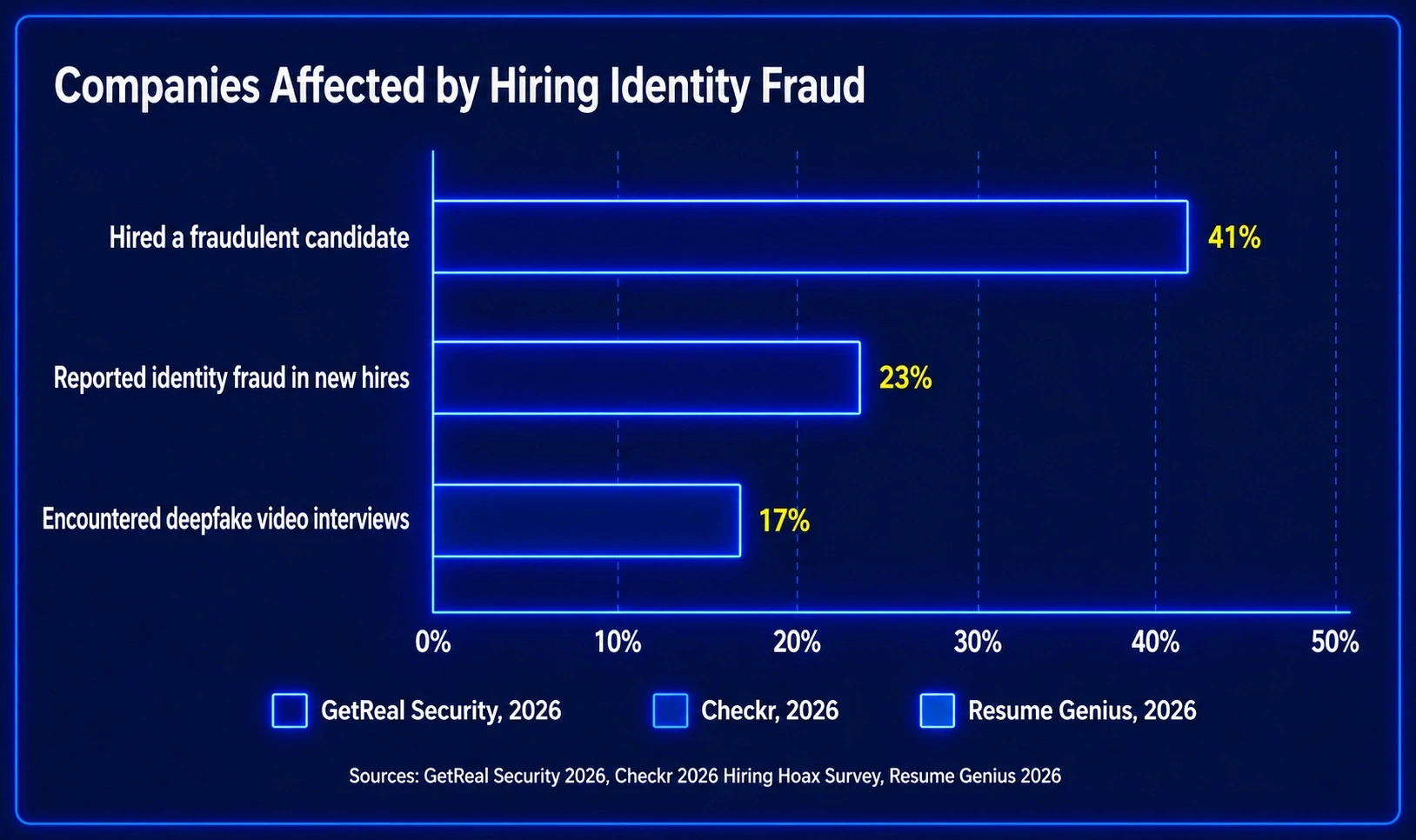
Recent research highlights the growing scale of the problem. According to Study Reports, more than half of hiring professionals (51%) have spotted AI-created work portfolios, while 42% have identified fake references and 39% have found fake credentials or diplomas. Voice manipulation is also on the rise, with 17% of recruiters detecting voice filters or voice cloning attempts.
First Advantage research shows 69% of UK hiring leaders now rank AI-enabled impersonation as the top emerging threat to hiring - which is why a single checkpoint is no longer sufficient.
For recruiters, the challenge is clear: traditional background checks and manual interview processes are no longer enough. Organizations need stronger identity verification, real-time fraud detection, and continuous monitoring throughout the hiring lifecycle.
What Is AI Hiring Fraud?
AI hiring fraud refers to the use of artificial intelligence to deceive employers during the recruitment process. Fraudsters use AI-powered tools to create fake identities, generate misleading resumes, manipulate interview appearances, or impersonate legitimate candidates to secure employment.
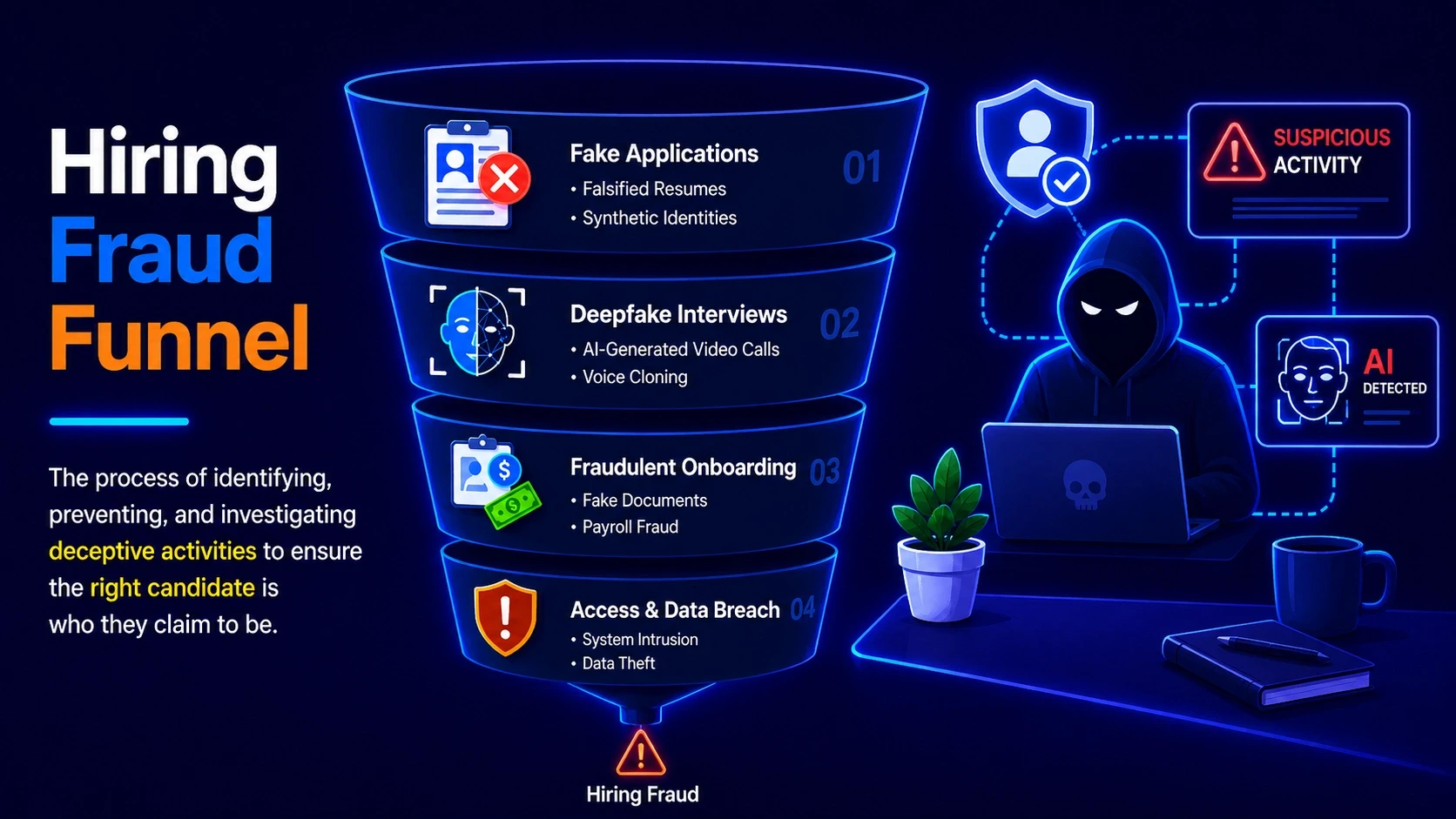
Common forms of AI hiring fraud include deepfake interviews, AI-generated resumes, voice cloning, synthetic identities, and proxy interviewing. These tactics are designed to bypass traditional hiring checks and make fraudulent candidates appear credible.
How It Differs From Resume Exaggeration
Resume exaggeration typically involves a candidate overstating their skills, qualifications, or work experience. While dishonest, the individual applying for the role is still the same person being evaluated.
AI hiring fraud is more sophisticated. It often involves identity manipulation, impersonation, or the use of AI-generated content to mislead recruiters throughout the hiring process.
Why It’s an Identity and Trust Problem Now
As remote hiring becomes more common, organizations rely heavily on virtual interviews and digital interactions. This creates opportunities for fraudsters to use AI tools to conceal their true identity or qualifications.
As a result, hiring teams must verify not only a candidate’s skills and experience but also whether the person participating in the hiring process is genuinely who they claim to be. This makes identity verification and fraud prevention essential in modern recruitment.
How to Detect AI Hiring Fraud
Detecting AI hiring fraud requires recruiters to verify both candidate identity and authenticity throughout the hiring process. While AI-generated resumes and deepfake technologies are becoming more sophisticated, there are several warning signs that can help identify potential fraud.
1. Verify Candidate Identity
Identity verification should be the foundation of every hiring process. Fraudsters often use stolen identities, synthetic profiles, or impersonation tactics to secure interviews and job offers. Recruiters should ensure that the individual participating in interviews matches the identity provided in application documents.
Key checks:
Match the candidate’s face with submitted identification documents
Verify personal details across resumes, applications, and professional profiles
Use identity verification tools before high-value interviews
Identity verification helps prevent impersonation, synthetic identities, and unauthorized candidates from progressing through the hiring process.
Example: A candidate applies under a legitimate name and submits valid-looking documents. During the interview, however, the individual on screen does not match the profile photo on their LinkedIn account. Further verification reveals the identity was stolen from another professional.
Identity verification helps prevent impersonation, synthetic identities, and unauthorized candidates from progressing through the hiring process.
2. Verify Professional and Academic Credentials
Fraudsters may fabricate degrees, certifications, or employment history to improve their chances of securing a role. Credential verification helps confirm that candidate claims are legitimate.
Key checks:
Verify educational qualifications
Confirm certifications with issuing organizations
Validate previous employment history
Review professional references
Credential verification reduces the risk of hiring individuals with fabricated qualifications.
Example: A candidate claims to hold a specialized certification required for the role. Upon verification, recruiters discover that the certification number does not exist in the issuing organization’s records.
3. Check Resume Authenticity
AI tools can generate highly polished resumes tailored to specific job descriptions within seconds. While these resumes may appear impressive, they often contain exaggerated achievements, fabricated experiences, or unverifiable credentials.
Key checks:
Verify employment history
Review certifications and qualifications
Look for vague accomplishments without measurable results
Cross-check information with professional profiles
Resume verification helps identify candidates who may be relying on AI-generated or misleading information.
Example: A candidate claims to have led multiple enterprise-level projects at a well-known company. When questioned during the interview, they struggle to explain project details or discuss their specific contributions.
4. Monitor for Proxy Interviewing
Proxy interviewing occurs when someone other than the actual applicant participates in interviews or assessments. This tactic is becoming increasingly common in remote hiring environments.
Key checks:
Delayed or unnatural responses
Frequent off-screen glances
Sudden changes in voice or communication style
Difficulty answering spontaneous follow-up questions
Detecting proxy interviews ensures the person being evaluated is the same person who will perform the job.
Example: A candidate confidently answers technical questions during an initial interview but struggles with basic concepts during a later round. Recruiters later discover that another individual assisted them during the first interview.
5. Conduct Real-Time Skill Assessments
Live assessments can reveal whether candidates genuinely possess the skills listed on their resumes. Practical exercises make it harder to rely on AI-generated responses or external assistance.
Key checks:
Ask candidates to solve problems in real time
Request detailed explanations of previous work
Use scenario-based questions
Evaluate thought processes rather than memorized answers
Real-time assessments help validate skills and reduce the risk of hiring unqualified candidates.
Example: A software developer claims expertise in a programming language but struggles to explain fundamental concepts during a live coding exercise.
6. Compare Candidate Responses Across Stages
Fraudulent candidates often find it difficult to maintain consistency throughout the hiring process. Comparing responses across multiple touchpoints can reveal discrepancies.
Key checks:
Compare screening call responses with interview answers
Review written and verbal communication styles
Validate technical claims across interview rounds
Look for conflicting information
Consistency across hiring stages is often a strong indicator of candidate authenticity.
Example: During a phone screening, a candidate describes five years of management experience. During a panel interview, they mention having never managed a team, creating a clear inconsistency.
7. Look for Deepfake Interview Signs
Deepfake technology allows fraudsters to manipulate their appearance or voice in real time during video interviews. While deepfakes are becoming increasingly realistic, they can still leave behind subtle visual and audio inconsistencies.
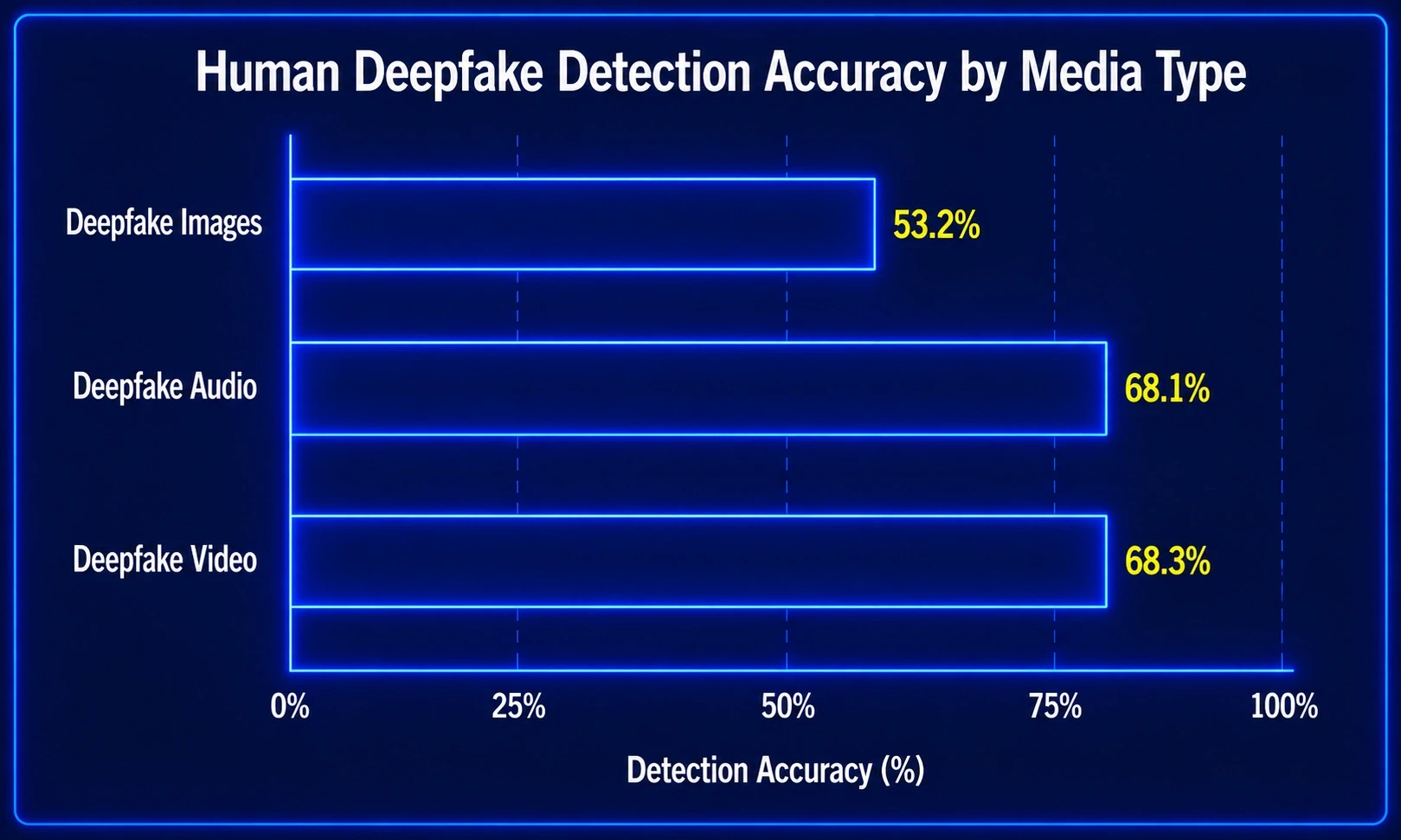
A 2025 meta-analysis of 56 studies published in Human Behavior and Emerging Technologies (Wiley) found humans detect deepfakes with only 55.54% accuracy.
Key checks:
Unnatural facial expressions or eye movements
Lip-sync delays during conversations
Blurred edges around the face
Robotic, inconsistent, or distorted audio
Identifying deepfake technology early can help recruiters avoid advancing fraudulent candidates.
Example: During a video interview, a candidate’s voice continues speaking even after their lips stop moving. Recruiters also notice occasional facial distortions when the candidate turns their head. These are potential indicators of deepfake manipulation.
8. Use AI-Powered Fraud Detection Tools- Sherlock AI
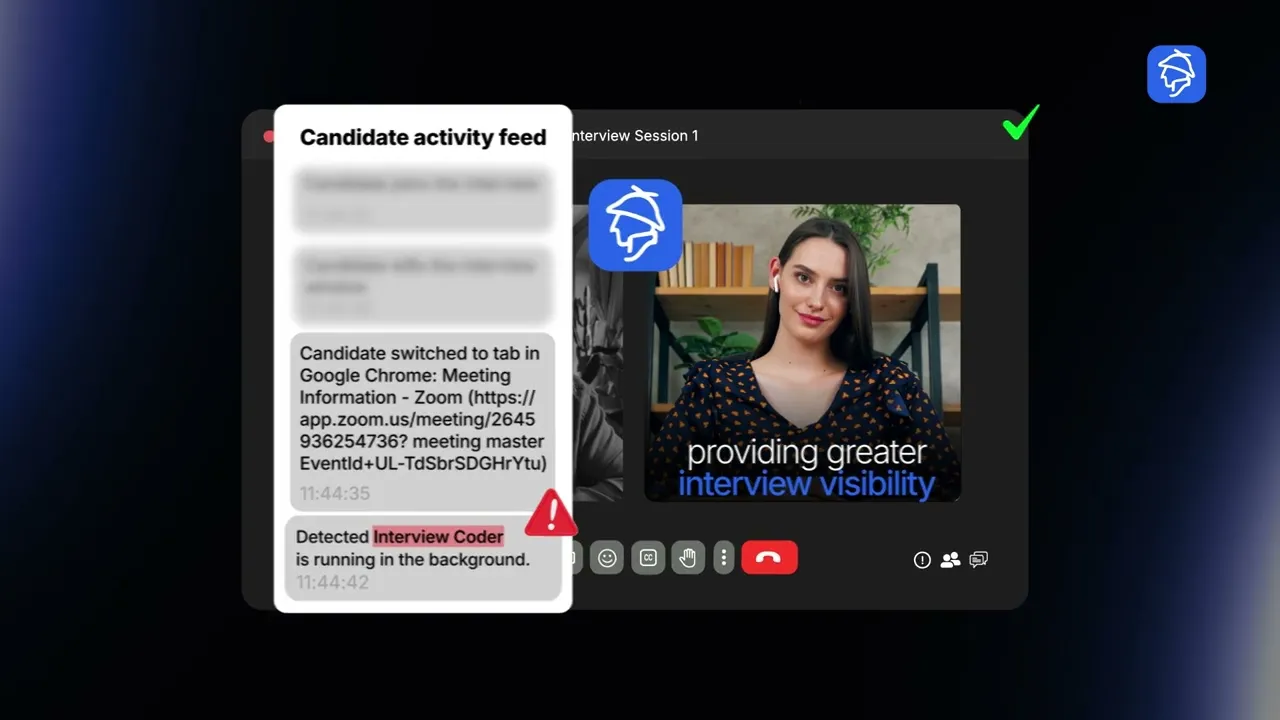
As AI hiring fraud becomes more sophisticated, relying solely on manual reviews and recruiter observations is no longer enough. Advanced fraud detection platforms like Sherlock AI help organizations identify suspicious activity throughout the hiring process by analyzing candidate behavior, identity signals, and interview authenticity in real time.
Sherlock AI is designed to help recruiters and hiring teams detect potential fraud before a candidate progresses through the hiring pipeline. By combining automated verification with intelligent fraud detection, organizations can strengthen hiring decisions and reduce the risk of onboarding fraudulent candidates.
Key checks:
Detect potential deepfake video manipulation during interviews
Identify voice cloning and synthetic audio patterns
Verify candidate identity and authenticity
Monitor suspicious interview behavior
Flag inconsistencies across hiring stages
Generate fraud risk insights for recruiters
AI-powered fraud detection tools like Sherlock AI provide an additional layer of security that helps recruiters identify impersonation attempts, deepfakes, proxy interviewing, and other forms of AI hiring fraud. This enables organizations to hire with greater confidence while protecting sensitive business data, systems, and resources from fraudulent actors.
Example: During a virtual interview, a candidate appears qualified and answers questions confidently. However, Sherlock AI detects unusual facial inconsistencies and voice anomalies that may indicate the use of deepfake technology. The hiring team is alerted and can conduct additional verification before moving the candidate to the next stage.
How to Prevent AI Hiring Fraud
AI hiring fraud is becoming increasingly sophisticated as fraudsters use deepfakes, synthetic identities, AI-generated resumes, and proxy interviewing techniques to manipulate recruitment processes. To protect hiring decisions and reduce organizational risk, companies must take a proactive approach that combines strong verification practices, secure hiring workflows, and advanced fraud prevention measures.
1. Implement Multi-Factor Candidate Verification
As AI hiring fraud becomes increasingly sophisticated, verifying candidate identity at a single point in the hiring process is no longer sufficient. Fraudsters often rely on stolen identities, synthetic profiles, or manipulated credentials to gain access to recruitment pipelines. Implementing multiple verification checkpoints throughout the hiring journey helps organizations prevent fraudulent candidates from progressing unnoticed.
A multi-factor verification approach ensures that candidate identity is continuously validated from application to onboarding, reducing the likelihood of impersonation and identity-related fraud.
Key checks:
Verify candidate identity at multiple hiring stages
Validate government-issued identification
Cross-check candidate information across submitted documents
Reconfirm identity before onboarding
Maintain secure candidate verification records
Multi-factor candidate verification helps organizations establish trust in the hiring process while reducing the risk of impersonation, identity theft, and fraudulent applications entering the workforce.
Example: A candidate successfully passes the application stage but fails a secondary identity verification checkpoint before the final interview, preventing a potential impersonation attempt.
2. Establish Standardized Hiring Workflows
As organizations expand remote and global hiring efforts, inconsistent recruitment processes can create opportunities for fraudsters to exploit procedural gaps. A standardized hiring workflow ensures that every candidate is evaluated using the same verification procedures, assessment criteria, and approval requirements.
By following a consistent recruitment framework, organizations can strengthen hiring controls and reduce vulnerabilities that fraudulent applicants may target.
Key checks:
Follow consistent interview procedures
Apply identical verification requirements to all candidates
Use documented approval workflows
Standardize assessment and evaluation criteria
Maintain audit trails for hiring decisions
Standardized hiring workflows improve recruitment integrity, reduce human error, and make it more difficult for fraudulent candidates to bypass critical hiring controls.
Example: A company requires every applicant to complete the same identity verification, assessment, and approval process before receiving an offer, eliminating opportunities for exceptions that could be exploited.
3. Strengthen Credential and Employment Validation
AI-powered tools can generate convincing resumes, certifications, and professional profiles within minutes. As a result, organizations should proactively validate candidate qualifications rather than relying solely on submitted documentation.
Thorough credential and employment validation helps ensure that candidates possess the education, certifications, and work experience required for the role while reducing the risk of onboarding individuals with fabricated backgrounds.
Key checks:
Validate educational qualifications
Verify professional certifications
Confirm previous employment history
Review reference authenticity
Check licensing requirements where applicable
Credential and employment validation provides an additional layer of protection against resume fraud, fabricated qualifications, and misleading professional claims.
Example: A candidate claims to hold a specialized cybersecurity certification. During verification, recruiters discover that the certification was never issued, preventing a potentially risky hire.
4. Secure Remote Interview Environments
Remote interviews have become a standard part of modern recruitment, but they also create opportunities for deepfakes, proxy interviews, and other forms of AI-enabled fraud. Establishing secure interview environments helps organizations maintain confidence in candidate authenticity throughout the hiring process.
By implementing interview security measures, recruiters can reduce opportunities for unauthorized participation and identity manipulation.
Key checks:
Conduct interviews through approved platforms
Require live video participation
Implement interview security guidelines
Restrict unauthorized third-party participation
Verify candidate presence throughout interviews
Secure remote interview environments help organizations preserve hiring integrity while reducing the risk of manipulation during virtual recruitment.
Example: A company uses a secure interview platform and verification procedures that prevent an unauthorized individual from participating on behalf of the candidate.
5. Train Hiring Teams on Emerging Fraud Risks
Technology alone cannot prevent AI hiring fraud. Recruiters, hiring managers, and interviewers must understand how modern fraud tactics operate and how they can impact recruitment outcomes.
Ongoing education enables hiring teams to stay informed about emerging threats and strengthens their ability to respond appropriately when suspicious activity occurs.
Key checks:
Provide ongoing fraud awareness training
Share examples of emerging fraud techniques
Educate recruiters on risk indicators
Establish escalation procedures
Update hiring policies regularly
Recruiter awareness programs create a stronger first line of defense against evolving hiring fraud tactics and help organizations maintain a proactive security posture.
Example: After participating in fraud-awareness training, a recruiter identifies suspicious candidate behavior and escalates the case for additional review before an offer is extended.
6. Apply Role-Based Risk Controls
Not every position presents the same level of organizational risk. Roles involving privileged system access, financial responsibilities, customer data, or sensitive intellectual property often require additional hiring safeguards.
Applying risk-based hiring controls allows organizations to allocate verification resources more effectively while strengthening protection for high-impact positions.
Key checks:
Classify roles based on risk level
Apply enhanced verification for critical positions
Increase scrutiny for privileged-access roles
Conduct additional background checks where necessary
Review access requirements before onboarding
Role-based risk controls help organizations focus fraud prevention efforts where potential business impact is highest.
Example: A company hiring for a senior finance position conducts enhanced verification and additional reference validation before extending an employment offer.
7. Create a Hiring Fraud Response Framework
Even with strong preventive measures, organizations may occasionally encounter suspicious candidates or unusual recruitment activity. Establishing a formal fraud response framework ensures potential threats are investigated quickly and consistently.
A clearly defined escalation process enables hiring teams to address concerns efficiently while minimizing recruitment risks.
Key checks:
Establish fraud escalation procedures
Define investigation workflows
Document suspicious activity
Assign ownership for fraud reviews
Maintain records of fraud incidents
A structured fraud response framework enables organizations to respond effectively to emerging threats while maintaining confidence in hiring decisions.
Example: During recruitment, a candidate fails a verification checkpoint. The hiring team follows a predefined escalation process and conducts additional reviews before making a final hiring decision.
8. Use AI-Powered Fraud Prevention Tools Like Sherlock AI
As AI hiring fraud becomes more sophisticated, relying solely on manual reviews and recruiter observations is no longer enough. Modern fraud prevention platforms like Sherlock AI help organizations proactively identify and prevent suspicious activity throughout the hiring process by analyzing behavioral, audio, video, and contextual signals in real time. Sherlock AI is specifically designed to address emerging hiring threats such as deepfake interviews, AI answer copilots(Cluely,, voice cloning, proxy candidates, and identity substitution.
Sherlock AI helps recruiters and hiring teams maintain interview integrity by continuously monitoring candidate authenticity throughout the interview process. Rather than relying on a single verification checkpoint, Sherlock AI analyzes multiple signals simultaneously and provides explainable risk insights that help recruiters make more informed hiring decisions.
Key checks:
Detect deepfake video manipulation and facial inconsistencies
Identify voice cloning and synthetic speech patterns
Detect AI answer copilots and real-time AI assistance
Monitor for proxy candidates and identity substitution
Analyze behavioral anomalies and suspicious response patterns
Compare candidate consistency across multiple interview stages
Monitor audio, video, device, and contextual signals simultaneously
Generate real-time interview risk alerts and fraud insights
Create audit-ready interview records for investigation and compliance
Verify candidate authenticity throughout the hiring journey
Sherlock AI uses a multimodal approach that combines behavioral intelligence, audio analysis, video analysis, and contextual monitoring to identify sophisticated hiring fraud that traditional interview monitoring solutions often miss. The platform continuously evaluates candidate authenticity during live interviews, helping organizations prevent deepfakes, AI-assisted cheating, proxy interviewing, and impersonation attempts before fraudulent candidates progress through the hiring pipeline.
Example: During a technical interview, Sherlock AI identifies unusual response timing patterns associated with AI answer copilots(Interview Coder) while simultaneously detecting inconsistencies in voice characteristics across interview rounds. The hiring team receives a real-time risk alert and conducts additional verification, preventing a potentially fraudulent candidate from advancing to the final stage of recruitment.
Real-World Examples of AI Hiring Fraud
AI hiring fraud is no longer a theoretical concern. Organizations across industries are encountering sophisticated fraud attempts involving deepfakes, proxy candidates, AI-generated resumes, and voice cloning technologies. These real-world examples highlight how fraudsters are exploiting modern recruitment processes and why stronger hiring safeguards are becoming essential.
A 2025 Greenhouse survey of 4,136 people found 18% of hiring managers caught candidates using deepfakes in video interviews. That’s nearly one in five.
According to Heimdal Security’s Voice Cloning Detection 2025 report, impersonation scams including AI voice cloning spiked 148% between April 2024 and March 2025, representing nearly a 1.5x increase in AI voice cloning scams in less than a year.
Instances of résumé or experience misrepresentation are even more common. 60% percent of respondents said they’ve caught candidates lying about their qualifications or backgrounds.
Why Traditional Hiring Methods Are No Longer Enough
As AI-powered hiring fraud continues to evolve, traditional recruitment practices are struggling to keep pace. Methods that once helped identify dishonest candidates are often ineffective against deepfakes, synthetic identities, AI-generated resumes, and proxy interviewing. Organizations must supplement conventional hiring processes with modern verification and fraud prevention measures to reduce risk.
Traditional Hiring Method | Limitation Against AI Hiring Fraud | Modern Alternative |
|---|---|---|
Resume Screening | AI can generate highly optimized resumes with fabricated skills, experience, and achievements that appear credible. | Resume verification combined with credential validation and identity checks. |
Manual Interview Observation | Recruiters may struggle to identify sophisticated deepfakes, voice cloning, or AI-assisted candidates. | Real-time interview authenticity monitoring and AI-powered fraud detection. |
LinkedIn Profile Reviews | Fraudsters can create convincing professional profiles using stolen photos, fake work history, and AI-generated content. | Cross-platform identity verification and profile consistency checks. |
Reference Checks | Fake references can be generated or coordinated to support fraudulent applications. | Independent employment and credential verification from trusted sources. |
Background Checks After Offer Stage | Fraud may only be discovered after significant time and resources have been invested in the candidate. | Continuous verification throughout the hiring lifecycle. |
One-Time Identity Verification | Fraudsters may pass a single verification step and later substitute another individual. | Multi-stage identity verification and identity continuity checks. |
Remote Technical Assessments | Candidates can use AI answer copilots or external assistance during assessments. | Live skill evaluations with behavioral monitoring and follow-up validation. |
Human-Only Fraud Detection | Humans often miss subtle signs of deepfakes, impersonation, and synthetic media manipulation. | AI-powered fraud prevention technologies that analyze audio, video, and behavioral signals. |
Traditional hiring methods remain important, but they were not designed to address modern AI-enabled threats. As deepfakes, voice cloning, AI-generated resumes, and proxy interviewing become more common, organizations need a layered approach that combines human judgment with identity verification, continuous monitoring, and AI-powered fraud prevention solutions.
Conclusion
AI hiring fraud is no longer a future concern, it is a growing reality for organizations hiring in an increasingly digital and remote-first world. From deepfake interviews and voice cloning to AI-generated resumes and proxy candidates, fraudsters are leveraging advanced technologies to exploit weaknesses in traditional recruitment processes. As these tactics become more sophisticated, the challenge for employers is no longer just identifying qualified candidates, but ensuring that those candidates are genuinely who they claim to be.
Traditional hiring methods such as resume screening, manual interviews, and post-offer background checks remain important, but they were not designed to address the complexities of modern AI-enabled fraud. Organizations must move beyond one-time verification and adopt a more proactive, multi-layered approach that continuously validates candidate identity, credentials, skills, and authenticity throughout the hiring lifecycle.
By combining identity verification, credential validation, secure interview practices, recruiter awareness, real-time monitoring, and AI-powered fraud prevention technologies, organizations can significantly reduce the risk of fraudulent hires. This not only protects sensitive business systems and data but also helps preserve team productivity, hiring budgets, regulatory compliance, and organizational reputation.
The reality is that AI will continue to transform both recruitment and hiring fraud. While fraudsters will keep finding new ways to exploit emerging technologies, organizations that prioritize hiring integrity and invest in modern fraud prevention strategies will be better positioned to build trusted, high-performing workforces.
The future of hiring is not just about finding the best talent it’s about ensuring that the talent you hire is authentic, qualified, and trustworthy. Companies that proactively address AI hiring fraud today will be better equipped to hire with confidence, reduce risk, and create a more secure recruitment process for years to co
Ready to strengthen your hiring process? Discover how Sherlock AI helps organizations detect and prevent AI hiring fraud before it impacts your business. 👉 Book a Demo Today and see Sherlock AI in action. |
|---|