Back to all blogs
Explore 100 AI in hiring statistics for 2026, covering AI adoption, recruitment automation, candidate behavior, hiring efficiency, bias, trust, and emerging trends.


Artificial intelligence is rapidly changing how employers source, screen, assess, interview, and communicate with candidates. At the same time, candidates are using AI to write applications, prepare for interviews, and, in some cases, assist themselves during live interviews.
The result is a hiring environment where AI adoption is accelerating while candidate trust, transparency, bias, and human oversight remain major concerns.
Key AI in Hiring Statistics at a Glance
99% of hiring managers surveyed by Insight Global use AI somewhere in the hiring process.
98% reported significant improvements in hiring efficiency from AI.
93% emphasized that humans remain important in hiring.
74% believe AI can assess compatibility between an applicant's skills and a position.
88% say they can tell when candidates use AI in applications.
54% care if candidates use AI to create resumes or cover letters.
95% expect their organizations to increase investment in AI for recruitment.
73% believe AI can match candidates to other roles within an organization.
49.6% of candidates surveyed by Enhancv have used AI during the hiring process.
50.5% of U.S. job seekers received at least one rejection with zero human feedback.
31.4% have abandoned a job application or declined an interview because of AI screening.
47.7% believe AI hiring tools are biased against people based on age, race, gender, or background.
68.5% say employers never disclosed that AI was used to evaluate them.
Only 9.7% were clearly told that AI was used.
Only 26% of candidates trust AI to evaluate them fairly.
Top 100 AI in Hiring Statistics 2026
The following statistics highlight the latest AI hiring trends across adoption, recruitment technology, employer strategies, candidate behavior, diversity, efficiency, and industry-specific hiring.
AI Adoption in Hiring
1. 99% of Hiring Managers Use AI in the Hiring Process
According to Insight Global's 2025 AI in Hiring Report, 99% of hiring managers said their organizations use AI in some capacity during the hiring process. The survey included 1,005 U.S. hiring managers responsible for hiring at organizations with 100 or more employees.
Key Takeaway: AI adoption has moved from experimentation to becoming a standard part of recruitment for most surveyed organizations.
2. 57% of Companies Use AI in Recruitment
According to Resume Templates survey 57% of companies already use AI to support hiring, according to ResumeTemplates.com research.
The research included 1,399 U.S. workers.
Key Takeaway: AI is now a core part of hiring, not an experiment — but companies are moving faster on adoption than on oversight, with most allowing AI to reject candidates without human review.
3. 47% of U.S. Employees Say Their Organization Has Integrated AI
47% of U.S. employees say their organization has integrated AI tools to improve productivity, efficiency, or quality, up from 41% in the previous quarter. The finding comes from Gallup's Q2 2026 research.
In Context: Broader workplace AI adoption provides context for the growing use of AI in HR and recruitment.
4. AI Adoption Among HR Professionals Rose From 58% to 72%
AI adoption among HR professionals reportedly increased from 58% in 2024 to 72% in 2025, according to Azumo research citing HireVue's survey of 4,000+ HR leaders and employees globally. That represents a 14-percentage-point increase in one year, showing how quickly AI is becoming embedded in HR operations.
What the Data Shows: HR's use of AI is expanding rapidly as organizations move from testing individual applications toward broader adoption.
5. 93% of Recruiters Plan to Increase AI Use in 2026
According to a Times of India report citing recent research on AI-led hiring, 93% of recruiters plan to increase their use of AI in 2026. The finding indicates that AI adoption is expected to expand beyond its current applications across the recruitment process.
Hiring Implication: Recruiters will increasingly need to combine AI-powered automation with human judgment.

6. 62% of Companies Expect AI to Run Their Entire Hiring Process
According to a ResumeTemplates.com study of companies using AI in recruitment, 62% of companies say it is extremely or very likely that AI will run their entire hiring process by the end of 2026. The finding reflects growing expectations that AI will take on a larger role across multiple stages of recruitment.
What the Research Shows: The anticipated role of AI extends well beyond resume screening and administrative automation.
7. 3 in 4 Companies Allow AI to Reject Candidates
According to a Resume Templates study on AI in hiring, 3 in 4 companies allow AI to reject candidates without human oversight. The study found that 35% of companies allow AI recommendations to determine rejections at any stage of hiring, while 39% limit AI-led rejection to the initial stages. Only 26% require human oversight for every rejection.
Recruitment Impact: As automated rejection becomes more common, organizations face greater pressure to ensure that screening systems are accurate and fair.
8. 79% Use AI for Resume Review and Screening
According to a Resume Templates study of companies using AI in recruitment, 79% use AI for resume review and screening, making candidate screening one of the most common applications of AI in the hiring process.
9. 66% Use AI for Candidate Assessments
According to the Resume Templates study, 66% of companies using AI in recruitment use it for candidate assessments. This shows that AI is being applied not only to screen resumes but also to evaluate candidates further along the hiring funnel.
10. 63% Use AI for Applicant Research
According to Resume Templates research on AI adoption in recruitment, 63% of AI-using companies use AI for applicant research. This suggests that employers are increasingly using AI to gather and analyze information about candidates during the hiring process.
11. 41% Use AI for Candidate Communication
According to the Resume Templates study, 41% of companies using AI in recruitment use it for candidate communication. AI can therefore support interactions with applicants in addition to screening and assessment activities.
Key Takeaway: AI is increasingly being used not only to evaluate candidates but also to manage communication throughout the hiring journey.
12. 39% Use AI During Onboarding
According to Resume Templates research, 39% of companies using AI in recruitment also use AI during onboarding. This indicates that the use of AI can extend beyond candidate selection into the early stages of the employee lifecycle.
13. 34% Use AI-Led Interviews
According to a Resume Templates study on AI-powered recruitment, 34% of companies using AI in hiring use AI-led interviews. The finding shows that AI is being used directly in candidate evaluation, rather than only for administrative recruitment tasks.
Recruitment Impact: AI is increasingly influencing candidate evaluation at a stage traditionally dominated by human interviewers.
14. 63% of Job Seekers Have Experienced an AI Interview
Nearly two-thirds (63%) of job seekers surveyed by Greenhouse said they've now been interviewed by an AI - up 13 percentage points from six months earlier. The survey covered 2,950 job seekers across the U.S., UK, Ireland, Germany, and Australia.
What the Research Shows: AI interviews are becoming a familiar part of the candidate experience rather than an isolated experiment.
Remote and Hybrid Work
15. 31.4% of Candidates Have Abandoned AI-Screened Opportunities
According to Enhancv's 2026 research, 31.4% of candidates said they had abandoned a job application or declined an interview because of one-way AI video or chatbot screening.
Candidate Impact: AI screening can influence not only how candidates are evaluated but also whether they continue with an application.
16. 79.1% of Abandoned AI-Screened Roles Paid Under $100,000
Among candidates who abandoned a role because of AI screening, 79.1% said the position paid less than $100,000. The finding provides additional context about the types of roles where candidates reported abandoning the process.
In Context: Candidate resistance to AI screening was particularly common among applicants pursuing roles below the $100,000 salary threshold.
17. 50.5% of Job Seekers Received a Silent Rejection
50.5% of U.S. job seekers reported receiving at least one rejection with zero human feedback during the previous 12 months. Another 6.6% answered "Maybe," bringing the combined figure to 57.1%.
Key Takeaway: Silent rejection has become a significant part of the reported candidate experience.
18. 63.8% Blamed AI for Silent Rejections
Among the 538 candidates who received a rejection without human feedback, 63.8% believed AI was responsible. Only 13.9% believed a human made the decision, while 22.3% were unsure.
What the Data Shows: Candidates increasingly associate automated hiring systems with rejection experiences where employers provide little or no feedback.

19. Younger Candidates Experience More Silent Rejections
The reported silent-rejection rate was 62.2% among candidates aged 25–34 and 61.5% among those aged 18–24, compared with 32% among candidates aged 55 and older.
In Context: The research shows a substantial difference in reported silent-rejection experiences across age groups.
Recruitment Technologies and AI in Hiring
20. 98% of Hiring Managers Report Significant Efficiency Improvements
According to Insight Global's 2025 AI in Hiring Report, 98% of hiring managers reported significant improvements in hiring efficiency after using AI. Reported applications included interview scheduling, resume screening, and skills assessment.
Key Takeaway: The strongest perceived benefit of AI among surveyed hiring managers is improved recruitment efficiency.
21. 74% Believe AI Can Assess Applicant-Job Compatibility
74% of hiring managers believe AI can assist in assessing the compatibility between an applicant's skills and the position they applied for. This suggests that recruiters increasingly view AI as a tool for evaluating candidate-job fit.
22. 73% Say AI Can Match Candidates to Other Internal Roles
According to Insight Global, 73% of hiring managers said AI can help match candidates to other positions within the organization that they did not originally apply for. AI can therefore support internal talent discovery as well as external recruitment.
Recruitment Impact: Candidate matching can potentially help organizations identify talent for roles beyond the original application.
23. 88% of Hiring Managers Can Tell When Candidates Use AI
88% of hiring managers say they can tell when candidates use AI to help with applications, cover letters, or resumes. The finding comes from Insight Global's survey of 1,005 hiring managers.
Key Takeaway: AI-generated application content is increasingly visible to hiring professionals.
24. 54% of Hiring Managers Care if Candidates Use AI
54% of hiring managers said they care if applicants use AI for resumes or cover letters. Among those who care, 36% said it demonstrates AI or technology expertise, while others associated it with lower effort, ATS optimization, or impersonal applications.
What the Research Shows: Employers are not uniformly opposed to AI use by candidates; their reactions depend on how they interpret that use.
25. 95% of Hiring Managers Expect Increased AI Investment
95% of hiring managers anticipate increased investment in AI to further optimize recruitment. This indicates that employers expect AI spending and adoption to continue expanding.
Hiring Implication: Recruitment teams are likely to encounter more AI-powered tools across sourcing, screening, assessment, and hiring operations.
26. Gen AI Adoption Among Recruiting Teams Rose to 37%
According to LinkedIn's "Future of Recruiting 2025" report, 37% of organizations are now "actively integrating" or "experimenting" with Gen AI tools in recruiting, up from 27% a year earlier.
What the Data Shows: GenAI adoption is moving beyond early experimentation as more talent acquisition teams begin testing practical use cases.
27. Recruiters Using GenAI Save About 20% of Their Workweek
According to LinkedIn's "Future of Recruiting 2025" report, recruiters using generative AI reportedly save approximately 20% of their workweek, equivalent to about one working day. The reported time savings come from automating or accelerating repetitive recruitment activities.
Recruitment Impact: Even modest time savings can allow recruiters to dedicate more time to strategic and candidate-facing work.
Employer Recruitment Strategies
28. 93% Say Humans Remain Important in Hiring
Despite widespread AI adoption, 93% of hiring managers surveyed by Insight Global said human involvement remains important in hiring. The finding reinforces the continued role of human judgment alongside AI.
Key Takeaway: Employers appear to view AI as an augmentation tool rather than a complete replacement for human decision-making.
29. Two-Thirds Believe AI Can Mitigate Cultural Bias
According to Insight Global, approximately two-thirds of hiring managers believe AI can remove or mitigate cultural bias from interviews. This reflects expectations that technology can introduce greater consistency into candidate evaluation.
In Context: The finding contrasts with separate candidate research showing significant concerns about AI bias.
30. 52% of Talent Leaders Plan to Add AI Agents
According to Korn Ferry's 2026 Talent Acquisition Trends research, more than half (52%) of talent leaders plan to add autonomous AI agents to their teams in 2026, with many already creating employee records for AI agents in HR. The finding reflects the growing interest in AI systems capable of handling more autonomous tasks.
Hiring Implication: AI agents could increasingly become part of day-to-day talent acquisition operations.
31. 43% of Talent Leaders Plan to Replace Roles With AI
43% of talent leaders plan to replace some roles with AI, according to Korn Ferry's research. The study surveyed 1,674 talent leaders and 230 Korn Ferry experts.
What the Data Shows: AI is being considered not only as a productivity tool but also as a potential substitute for some existing work.

32. 84% of Talent Leaders Plan to Use AI in 2026
84% of talent leaders plan to use AI in 2026, according to Korn Ferry. The figure indicates that AI adoption is expected to become a mainstream component of talent acquisition strategies.
33. 61% Believe AI Analytics Could Improve Quality-of-Hire Measurement
According to LinkedIn's Future of Recruiting 2025 report, 61% of recruiting leaders believe AI analytics could improve their ability to measure quality of hire. AI-powered analytics can potentially help recruitment teams connect hiring decisions with longer-term outcomes.
Key Takeaway: AI's role in recruitment is expanding from candidate selection to measuring the effectiveness of hiring decisions.
AI Use by Job Seekers
34. 21% of Job Seekers Use AI to Research Companies
According to Insight Global's research, 21% of job seekers use AI to research companies during their job search. Candidates are therefore using AI to gather information about potential employers before applying.
Candidate Impact: Employers are increasingly being evaluated by candidates through AI-assisted research as well as traditional sources.
35. 31% Use AI to Prepare for Interviews
According to Insight Global's research, 31% of job seekers use AI to prepare for interviews. Candidates can use these tools to practice questions, generate mock interviews, and prepare talking points.
36. 40% Use AI to Draft Application Materials
According to Insight Global's research, 40% of job seekers use AI to draft application materials. This includes the preparation of resumes, cover letters, and other application content.
Key Takeaway: AI is becoming part of the candidate workflow before an applicant even reaches an interview.
37. 8% Use AI to Determine Salary Expectations
According to Insight Global's research, 8% of job seekers use AI to determine salary expectations. Candidates are therefore using AI not only for application preparation but also to inform compensation decisions.
39. 44% Use AI Primarily for Interview Preparation
According to Enhancv's 2026 research, 44% of candidates use AI for preparation, including practicing interview answers, generating mock questions, and preparing talking points. Interview preparation is therefore one of the most common candidate-side uses of AI.
40. 5.6% Have Used AI Live During an Interview
According to Enhancv's 2026 research, 5.6% of candidates reported using AI live during an interview to provide themselves with answers. This represents a more direct use of AI during the evaluation itself rather than simply for preparation.
Hiring Implication: Employers increasingly need assessment methods that can distinguish between candidate preparation and real-time AI assistance.

AI Hiring Bias
41. 47.7% Believe AI Hiring Tools Are Biased
According to Enhancv's 2026 research, 47.7% of candidates agree that AI hiring tools are biased against people based on age, race, gender, or background. Only 25.8% disagree with the statement.
Candidate Impact: Candidate perceptions of fairness remain a significant challenge for organizations using AI in hiring.
42. 53.4% of Neurodivergent Candidates Report AI Bias Concerns
According to Enhancv's 2026 research, 53.4% of neurodivergent candidates net agree that AI hiring tools are biased against them, compared with 45.8% of non-neurodivergent candidates.
What the Data Shows: Perceptions of AI bias can differ across candidate groups, making inclusive testing and evaluation particularly important.
43. 18.5% of Neurodivergent Candidates Strongly Agree AI Is Biased
According to Enhancv's 2026 research, 18.5% of neurodivergent candidates strongly agree that AI hiring tools are biased against them, compared with 12.7% of non-neurodivergent candidates.
In Context: The difference suggests that concerns about automated hiring can be particularly pronounced among neurodivergent candidates.
44. 80% of HR Professionals Believe AI Can Reduce Unconscious Bias
According to research cited by Employer Branding News, 80% of HR professionals believe AI can reduce unconscious bias during early-stage screening. This reflects the expectation that standardized processes can reduce certain forms of human subjectivity.
Key Takeaway: Employers and candidates can have very different perceptions of whether AI reduces or increases hiring bias.
45. 50% of Companies Cite AI Bias as a Major Concern
Employer Branding News, 50% of companies cite AI introducing bias as a major concern. Organizations therefore recognize that automated recruitment can create fairness risks even while offering efficiency benefits.
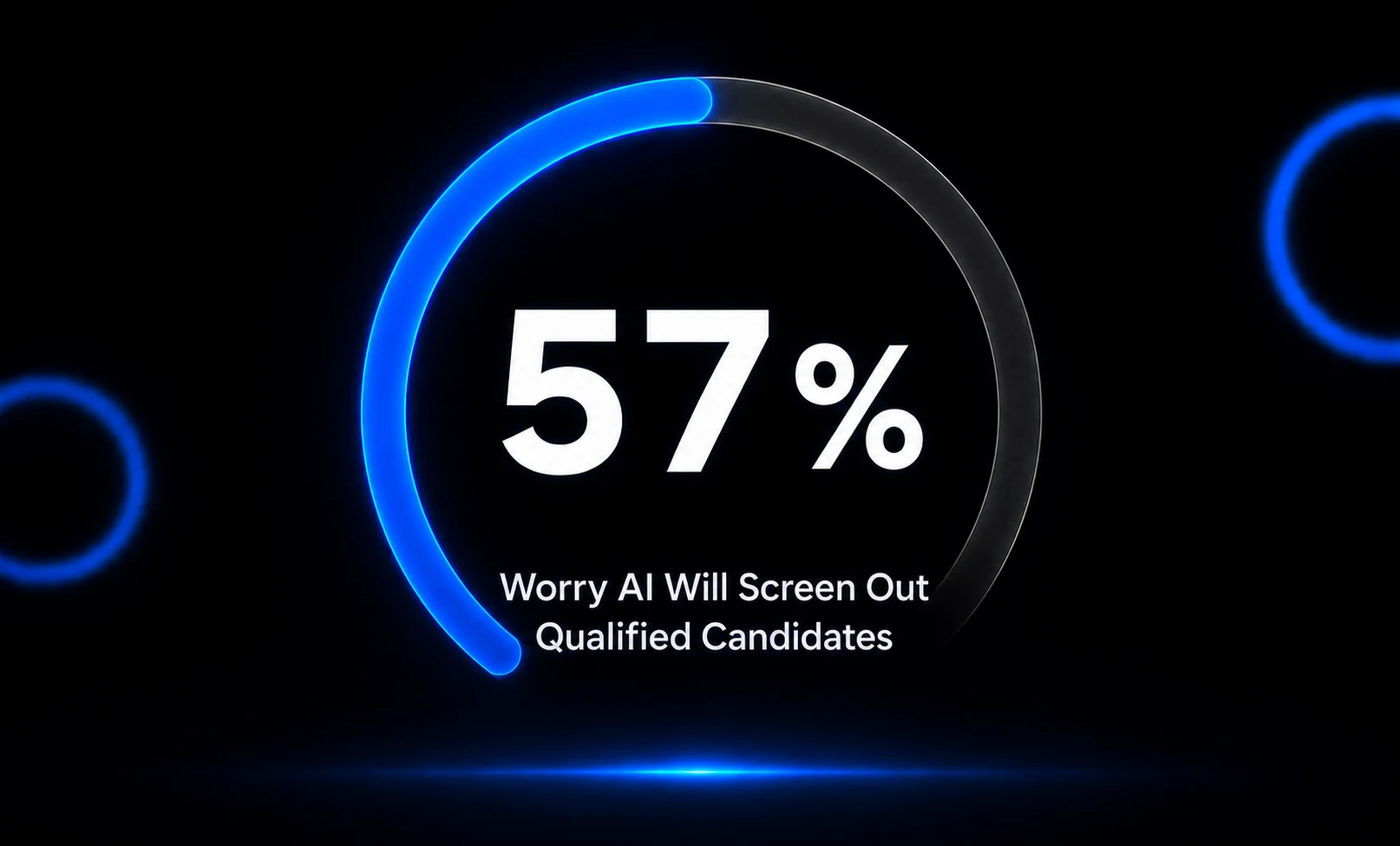
46. 57% Worry AI Will Screen Out Qualified Candidates
Employer Branding News, 57% of companies cite AI screening out qualified candidates as a major concern. The concern focuses on the possibility that automated screening systems may incorrectly eliminate candidates who could otherwise be suitable.
Recruitment Impact: Organizations need to validate screening models and maintain appropriate human oversight when using AI for candidate filtering.
47. Amazon Abandoned an AI Resume Screener After Bias Concerns
Amazon abandoned an experimental AI resume-screening system after it was found to disadvantage resumes containing references to women's colleges and organizations. The case became a widely cited example of how historical data can introduce bias into AI recruitment systems.
What the Research Shows: AI systems can reproduce or amplify patterns present in the data used to develop them.
48. HireVue Dropped Facial-Expression Analysis in January 2021
HireVue discontinued facial-expression analysis in January 2021 following criticism concerning potential disability bias. The decision illustrates the scrutiny surrounding AI systems that attempt to infer candidate characteristics from facial behavior.
Key Takeaway: Not every AI-based assessment method is equally accepted by candidates, regulators, or the broader HR community.
AI's Impact on Hiring Efficiency
49. AI Writing Assistance Increased Hires by 7.8%
A randomized controlled trial involving 480,948 job seekers found that AI writing assistance increased hiring outcomes by 7.8%. The study examined the effect of algorithmic writing assistance on job seekers' resumes.
What the Research Shows: AI assistance can influence measurable employment outcomes, not simply the appearance of application materials.
50. AI Writing Assistance Increased Wages by 8.4%
The same NBER study found that AI writing assistance increased wages by 8.4%. The finding suggests that the effects of AI-assisted application writing can extend beyond the probability of being hired.
51. AI Writing Assistance Had the Largest Effect on Non-Native English Writers
The NBER study found that the positive effects of AI writing assistance were particularly large among non-native English writers. AI writing support may therefore help reduce some language-related barriers in the job application process.
Key Takeaway: The impact of AI writing assistance may vary significantly depending on the candidate group.
52. Recruiters Using GenAI Save About 20% of Their Workweek
According to LinkedIn's Future of Recruiting report, recruiters using generative AI reportedly save approximately 20% of their workweek. The reported savings can come from accelerating or automating repetitive recruitment tasks.
Recruitment Impact: Time saved through AI can potentially be redirected toward candidate engagement, sourcing, and strategic workforce planning.
53. AI Screening Can Reduce Time-to-Hire by Up to 75%
According to Talentmsh's hiring and recruiting research, AI screening tools have reportedly reduced time-to-hire by as much as 75% in some recruitment implementations. Faster screening can help organizations move qualified candidates through the hiring funnel more quickly.
54. AI-Enabled Recruitment Can Produce 25% Faster Hiring
According to Deloitte’s 2023 Human Capital Trends Study, Organizations leveraging AI in recruitment reportedly achieve 25% faster hiring. The improvement is associated with automating recruitment activities and reducing manual processing time.
Key Takeaway: Speed is one of the clearest potential advantages organizations associate with AI-enabled recruitment.
Industry-Specific Hiring Trends
55. Product Management Has an 80% Silent-Rejection Rate
According to Enhancv's research, 80% of product-management candidates reported receiving a rejection without human feedback. This was the highest silent-rejection rate among the job functions highlighted in the research.
What the Data Shows: Candidate experiences with automated or low-touch hiring can vary significantly by job function.

56. 73.3% of Consulting Candidates Experienced Silent Rejections
According to Enhancv's research, 73.3% of consulting candidates reported receiving a rejection without human feedback. The figure shows that silent rejection extends beyond technology-focused positions.
57. 59.4% of Finance Candidates Experienced Silent Rejections
According to Enhancv's research, 59.4% of finance candidates reported receiving a rejection without human feedback. More than half of candidates in this category therefore reported experiencing a low-touch rejection process.
58. 59.1% of Customer Support Candidates Experienced Silent Rejections
According to Enhancv's research, 59.1% of customer-support candidates experienced silent rejection without human feedback. The finding indicates that automated or low-touch rejection experiences affect candidates across a wide range of job functions.
59. 57.6% of Sales Candidates Experienced Silent Rejections
According to Enhancv's research, 57.6% of sales candidates reported receiving a rejection without human feedback. The figure places sales among the job categories where more than half of candidates reported silent rejection.
60. 53.3% of Software Engineering Candidates Experienced Silent Rejections
According to Enhancv's research, 53.3% of software-engineering candidates reported rejection without human feedback. This means more than half of candidates in the category experienced a rejection without direct human feedback.
61. Healthcare Had a 44.3% Silent-Rejection Rate
Healthcare had a 44.3% silent-rejection rate, the lowest among the major industries highlighted by Enhancv. Even at this lower rate, more than four in ten candidates reported receiving no human feedback.
In Context: Silent rejection appears across industries, but its frequency varies considerably by job category.
Candidate Trust and Transparency in AI Hiring
62. Only 26% Trust AI to Evaluate Them Fairly
Only 26% of applicants trust AI to evaluate them fairly, according to Gartner, Inc.
Key Takeaway: Candidate trust in AI-driven evaluation remains substantially lower than employer adoption.
63. 67% of Job Seekers Are Uncomfortable With AI Hiring
According to ServiceNow's research, 67% of job seekers said they are uncomfortable with employers using AI to review resumes and make hiring decisions. The research also found that 90% of job seekers want companies to be transparent about their use of AI in recruiting and hiring.
Candidate Impact: The findings highlight the importance of transparency and human involvement when organizations use AI in hiring.
64. 66% of U.S. Adults Would Not Want to Apply if AI Is Used
A Pew Research Center survey found that 66% of U.S. adults would not want to apply for a job if AI were used in hiring decisions. The survey included 11,004 U.S. adults.
What the Research Shows: Resistance to AI-assisted hiring is not limited to active job seekers; broader public attitudes also show substantial concern.
65. Only 9.7% of Candidates Were Clearly Told AI Was Used
Only 9.7% of candidates surveyed by Enhancv said an employer clearly told them AI was used to evaluate their application. This suggests that explicit disclosure remains uncommon.
66. 68.5% Were Not Told AI Was Used
68.5% of candidates surveyed by Enhancv said they were not told AI was used during the hiring process.
Key Takeaway: Most candidates in the survey did not receive clear information about whether AI influenced their evaluation.
67. 84.7% of Candidates Were Operating Without Clear AI Disclosure
According to a survey by Enhancv, combining the 68.5% who were not told with the 16.2% who did not know, 84.7% of candidates did not have a clear answer about whether AI was used.
What the Data Shows: AI disclosure remains a significant transparency gap in the candidate experience.
68. Candidates Told About AI in Fine Print Had 65% Bias Agreement
According to a survey by Enhancv, candidates who were told about AI only through fine print had 65% net agreement that AI hiring was biased. Among candidates who did not know AI was used, the corresponding figure was 35.8%.
In Context: How employers disclose AI use may influence how candidates perceive the fairness of the hiring process.
AI Use by Job Seekers
69. 5.6% Have Used AI Live During an Interview
A survey by Enhancv, 5.6% of candidates reported using AI live during an interview to provide themselves with answers. This is distinct from using AI beforehand for interview preparation.
70. 8% of Candidates Aged 18–24 Used AI Live
A survey by Enhancv, 8% of candidates aged 18–24 reported using AI live during interviews. This was higher than the overall rate of 5.6%.
In Context: Younger candidates in the survey reported higher rates of live AI use than several older age groups.
71. 6.3% of Candidates Aged 25–34 Used AI Live
A survey by Enhancv, 6.3% of candidates aged 25–34 reported using AI live during interviews. The rate was also above the overall candidate figure.
72. 5.8% of Candidates Aged 35–44 Used AI Live
A survey by Enhancv, 5.8% of candidates aged 35–44 reported using AI live during interviews. This was slightly above the overall rate of 5.6%.
73. 5.3% of Candidates Aged 45–54 Used AI Live
A survey by Enhancv, 5.3% of candidates aged 45–54 reported using AI live during interviews. The figure was close to the overall candidate rate.
74. 1% of Candidates 55+ Used AI Live
A survey by Enhancv, only 1% of candidates aged 55 and older reported using AI live during interviews. This was substantially lower than the rates reported among younger candidates.
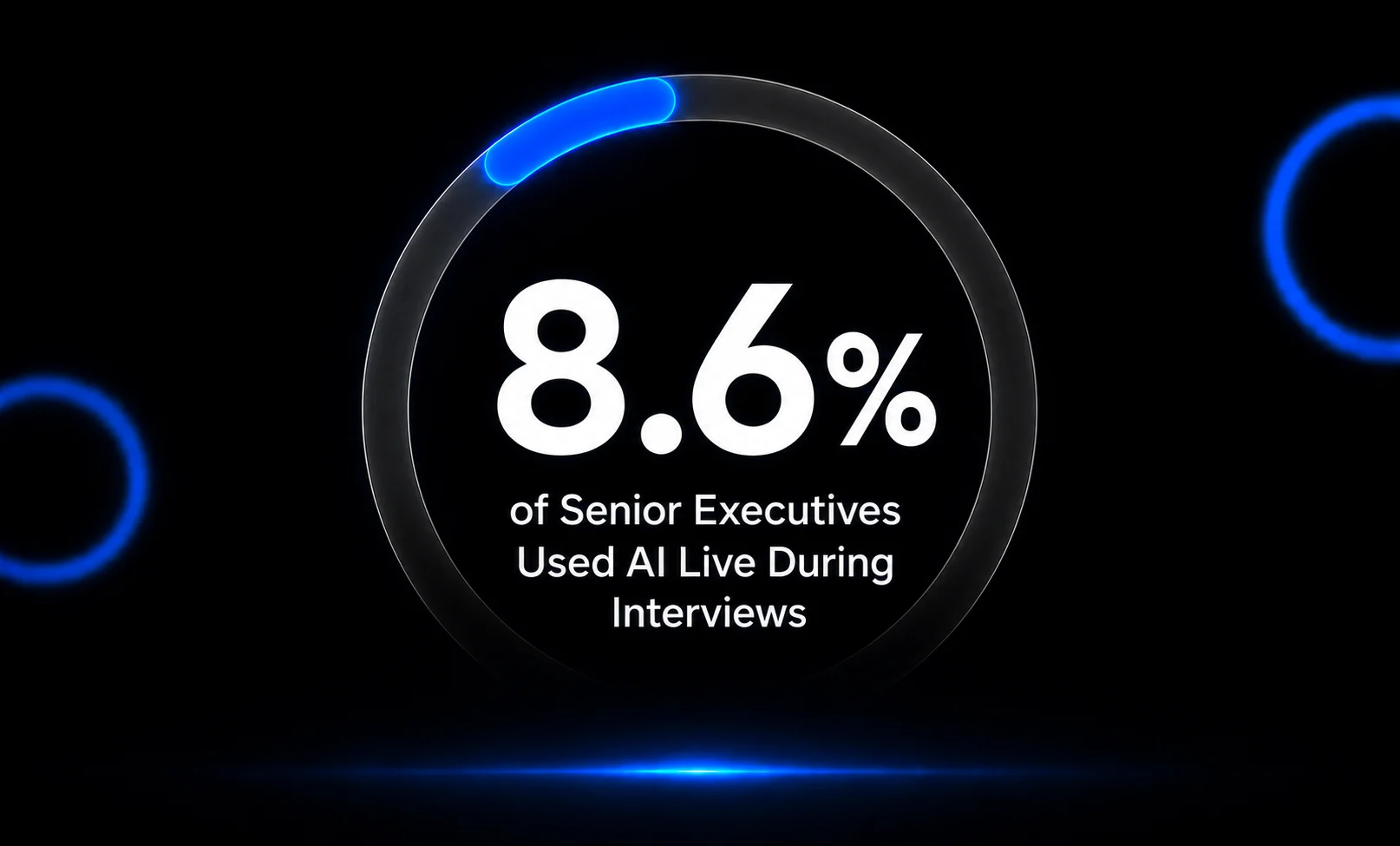
75. 8.6% of Senior Executives Used AI Live During Interviews
A survey by Enhancv, 8.6% of senior executives and C-suite candidates reported using AI live during interviews. This was one of the highest rates among the candidate groups analyzed.
What the Data Shows: Live AI use is not limited to entry-level candidates and can also occur among experienced professionals.
76. 8.5% of Unemployed Candidates Used AI Live
A survey by Enhancv, 8.5% of unemployed or currently seeking candidates reported using AI live during interviews. This was substantially above the overall candidate rate of 5.6%.
Candidate Impact: Candidates actively seeking employment may be more likely to use AI during interviews as they compete for opportunities.
77. 7.9% of Mid-Level Managers Used AI Live
A survey by Enhancv, 7.9% of mid-level managers reported using AI live during interviews. The rate was notably higher than the overall candidate figure.
78. 6% of Freelancers Used AI Live
A survey by Enhancv, 6% of freelancers and gig workers reported using AI live during interviews. The rate was slightly above the overall candidate average.
79. 1.8% of Entry-Level Candidates Used AI Live
A survey by Enhancv, only 1.8% of entry-level candidates reported using AI live during interviews. This was considerably lower than the rate among several experienced candidate groups.
Regulation and Compliance in AI Hiring
80. Hiring AI Is Classified as High-Risk Under the EU AI Act
AI systems used for employment and worker management are classified as high-risk under the EU AI Act. The classification brings additional requirements for covered systems, including risk management and oversight obligations.
Why It Matters: Organizations deploying AI for employment decisions need to consider regulatory requirements alongside performance and efficiency.
81. New York City Requires Bias Audits for Certain Automated Employment Tools
New York City's Local Law 144 requires certain automated employment decision tools to undergo annual bias audits and includes candidate notification requirements.
What the Data Shows: Regulation of automated employment decision tools is moving from general AI governance toward specific requirements for hiring technology.
82. AI Hiring Tools Must Comply With the Americans With Disabilities Act
According to the U.S. Equal Employment Opportunity Commission (EEOC), employers' use of software, algorithms, and artificial intelligence to assess job applicants and employees can create risks under the Americans with Disabilities Act (ADA). The EEOC warns that AI tools can potentially screen out people with disabilities even when they are able to perform the job with or without reasonable accommodation.
Hiring Implication: Using an AI or algorithmic hiring tool does not remove an employer's responsibility to comply with federal disability-discrimination requirements.
83. Workday AI Bias Case Was Authorized as a Collective Action
According to research cited by Employer Branding News, in February 2026, a federal court authorized an AI hiring discrimination case involving Workday as a collective action. The case concerns allegations that AI screening tools discriminated against certain applicants.
In Context: Legal scrutiny is becoming an important part of the discussion around AI-powered employment decisions.
AI Hiring Trends Over Time
84. Generative AI Adoption Increased From 33% to 71%
According to research cited by Employer Branding News, generative AI adoption reportedly increased from 33% in 2023 to 71% in 2024. That represents more than a doubling of adoption in a single year.
What the Data Shows: The rapid increase demonstrates how quickly generative AI moved from emerging technology to a mainstream business tool.
85. AI Adoption Among HR Professionals Rose From 58% to 72%
According to research cited by Employer Branding News, AI adoption among HR professionals increased from 58% in 2024 to 72% in 2025. This represents a 14-percentage-point increase in one year.
Key Takeaway: HR is becoming one of the business functions where AI adoption is accelerating most rapidly.
86. 77% of HR Leaders Plan to Expand AI in Recruiting
According to Paylocity's 2026 State of Employee Recruitment Report, 77% of HR leaders plan to expand their use of AI in recruiting over the next 12 months. The study surveyed more than 1,000 U.S.-based HR and recruitment leaders and found that AI has become increasingly important for managing growing application volumes.
Hiring Implication: The continued expansion of AI suggests that recruitment teams will increasingly use automation to manage application volume, screening, and other repetitive hiring tasks.

87. Fewer Than 5% of Companies Report Transformational AI Hiring Outcomes
According to The New Talent Equation, a 2026 report commissioned by ManpowerGroup Talent Solutions and developed by Everest Group, more than 90% of organizations have deployed AI in talent acquisition, but fewer than 5% report transformational outcomes. The research surveyed 80 C-suite, CHRO, and senior talent acquisition leaders in the U.S. and UK.
What the Data Shows: AI adoption in recruitment is widespread, but organizations are still struggling to translate implementation into transformational results.
88. 48% of Employers Are Actively Increasing AI Investment
According to Lighthouse Research & Advisory's 2026 research for iCIMS, 48% of high-volume and frontline employers are actively increasing their AI investment based on results they have already seen. The research surveyed 463 employers and found that resume and profile screening was the area where employers reported the most genuine AI value.
Hiring Implication: Employers are increasingly moving from experimenting with AI to expanding investment in tools that demonstrate measurable recruitment value.
Additional AI in Hiring Statistics
89. Approximately 11,000 Job Applications Were Submitted Per Minute in 2024
LinkedIn reported approximately 11,000 job applications per minute in 2024. The volume illustrates the enormous number of applications employers and recruiters may need to process.
Recruitment Impact: As application volumes rise, automation and AI-assisted screening become increasingly relevant to high-volume recruitment.
90. Applicant-to-Interview Ratio Fell to 3% in 2024
According to CareerPlug's 2025 Recruiting Metrics Report, the average applicant-to-interview ratio fell to just 3% in 2024, meaning that only three out of every 100 applicants were invited to interview. CareerPlug's analysis covered more than 10 million applications.
For comparison, Jobvite's recruitment benchmark data reported an 8.4% applicant-to-interview rate in 2023, down from 15.25% in 2016.
What the Data Shows: The sharp decline in the applicant-to-interview rate highlights how competitive the hiring funnel has become and how selective the initial screening stage is.
91. 53% of Candidates Believe AI Has Rejected Them Without Human Review
According to CV-Library's 2026 AI in Recruitment Survey, 53% of candidates believe they have been rejected from a job by AI without any human review. The survey was conducted in March 2026 and included more than 1,000 candidates and nearly 500 recruiters.
What the Data Shows: Candidate concerns about automated rejection are significant, particularly when applicants do not know whether a human was involved in the decision.
92. Job Seekers Submit 32 to 200+ Applications Before Landing an Offer
Job seekers reportedly submit between 32 and more than 200 applications before securing an offer, depending on the candidate and job market. The wide range illustrates how dramatically the effort required to secure employment can vary.
In Context: High application volumes on the candidate side also contribute to the growing importance of AI-assisted job searching and application preparation.
93. 25.9% of Employers Used AI in Recruitment in 2025
According to iHire's 2025 State of Online Recruiting report, 25.9% of employers said they were using AI in their recruitment efforts in 2025, compared with 14.7% in 2024 and 4.9% in 2023. This represents a 76.2% increase from 2024 and a 428.7% increase from 2023.
What the Data Shows: Employer adoption of AI in recruitment has grown rapidly over the past three years.

94. 73% of AI-Using Employers Use AI to Write Job Ads
According to iHire's 2025 State of Online Recruiting report, 73% of employers using AI in recruitment use it to write job advertisements. This makes job-ad creation the most common AI application among the AI-using employers surveyed.
Key Takeaway: AI is being used heavily at the beginning of the hiring funnel, before candidates even apply.
95. 32.1% of AI-Using Employers Use AI to Screen Applicants
According to iHire's research, 32.1% of employers that use AI in recruitment use it to screen applicants and resumes. This was up significantly from 11.6% in 2024.
What the Data Shows: AI-powered candidate screening is becoming considerably more common as employers adopt recruitment automation.
96. 16.1% of AI-Using Employers Use AI to Interview Candidates
According to iHire's 2025 recruitment research, 16.1% of employers using AI said they use it to interview candidates. The same use case was reported by 0% of employers in iHire's 2024 survey.
Recruitment Impact: AI interviewing moved from virtually nonexistent in the previous survey to an emerging recruitment application in 2025.
97. 92% of Recruiting Executives Expect AI-Generated Job Content to Increase
According to SHRM's 2026 Recruiting Executives Priorities and Perspectives research, 92% of recruiting executives expect the use of generative AI to create job descriptions and recruitment content to become more prevalent. Nearly 40% expect it to become much more prevalent.
Key Takeaway: AI-generated recruitment content is expected to become a mainstream part of talent acquisition rather than a niche use case.
98. 87% of Recruiting Executives Expect More AI Automation
According to SHRM's 2026 research, approximately 87% of recruiting executives expect increased use of AI and automation across general recruiting processes.
What the Research Shows: Recruiting leaders expect AI to expand beyond individual tasks into broader recruitment workflows.
99. 74% of Companies Say Candidates Are Using AI in Their Job Search
According to a 2026 study from iCIMS and Aptitude Research, nearly three out of four companies (74%) report that candidates are now using AI during their job search. The research examined how AI is being used by both candidates and employers across sourcing, screening, interviewing, and candidate communication.
Candidate Impact: AI is transforming both sides of the hiring process, with candidates adopting the technology alongside employers.
100. 21% of U.S. Candidates Say Most Employers Use AI Responsibly and Transparently
According to Greenhouse's 2026 Candidate AI Interview Report, only 21% of U.S. candidates believe most employers are using AI responsibly and transparently. The finding comes from research covering 2,950 job seekers across the U.S., UK, Ireland, Germany, and Australia.
Bottom Line: AI adoption is advancing faster than candidate confidence in how employers are deploying the technology.
Conclusion: AI Is Reshaping the Hiring Process
The latest AI in hiring statistics for 2026 show that artificial intelligence is rapidly becoming part of the recruitment process—from writing job descriptions and screening resumes to conducting interviews, communicating with candidates, and analyzing applications.
At the same time, the data reveals a clear trust gap. Employers are increasingly turning to AI for efficiency and automation, while candidates continue to raise concerns about transparency, fairness, bias, and the lack of human involvement.
The numbers also show that AI is transforming both sides of the hiring process. Recruiters are using AI to handle growing application volumes and streamline repetitive work, while job seekers are using AI to improve resumes, prepare for interviews, and navigate the application process.
For employers, the goal should not simply be to automate as much of recruitment as possible. The strongest hiring strategies will likely combine AI-driven efficiency with human judgment, transparent communication, meaningful candidate evaluation, and appropriate oversight.
As AI adoption continues to grow in 2026 and beyond, organizations that can balance automation with trust and human connection will be better positioned to build an effective and candidate-friendly hiring process.