Back to all blogs
Learn 10 expert tips for conducting remote interviews successfully. Improve candidate experience, interview accuracy, and remote hiring with Sherlock AI.

Conducting remote interviews has become a critical part of modern hiring. As companies expand beyond geographic boundaries and compete for top talent, virtual interviews are now a standard step in the recruitment process. However, interviewing candidates remotely requires more than simply joining a video call. Hiring teams need a structured process to assess skills, communication, authenticity, and culture fit effectively.
The importance of conducting remote interviews correctly continues to grow. According to LinkedIn data, remote jobs make up a smaller share of job postings but attract a disproportionately higher number of applications, making it harder for recruiters to identify the right candidates quickly. In the U.S., only 8% of job postings were remote, yet they received 35% of all applications, showing how competitive remote hiring has become.
At the same time, candidate experience directly affects hiring outcomes. Research shows companies delivering excellent hiring experiences see 70% higher offer acceptance rates, making a well-structured interview process more important than ever.
However, conducting remote interviews successfully requires more than simply scheduling a video call. Hiring teams need a clear interview structure, the right technology, standardized evaluation methods, and stronger candidate verification processes to make confident hiring decisions.
In this guide, we will cover practical tips for conducting remote interviews, common mistakes to avoid, and best practices to improve hiring outcomes in virtual environments.
10 Tips for Conducting Remote Interviews Successfully
Conducting remote interviews requires more planning than traditional face-to-face interviews. Recruiters must manage communication, technology, candidate experience, and evaluation accuracy while ensuring a fair hiring process. A well-structured virtual interview can help organizations identify the right candidates faster and improve hiring outcomes.
Below are 10 practical tips for conducting remote interviews successfully.
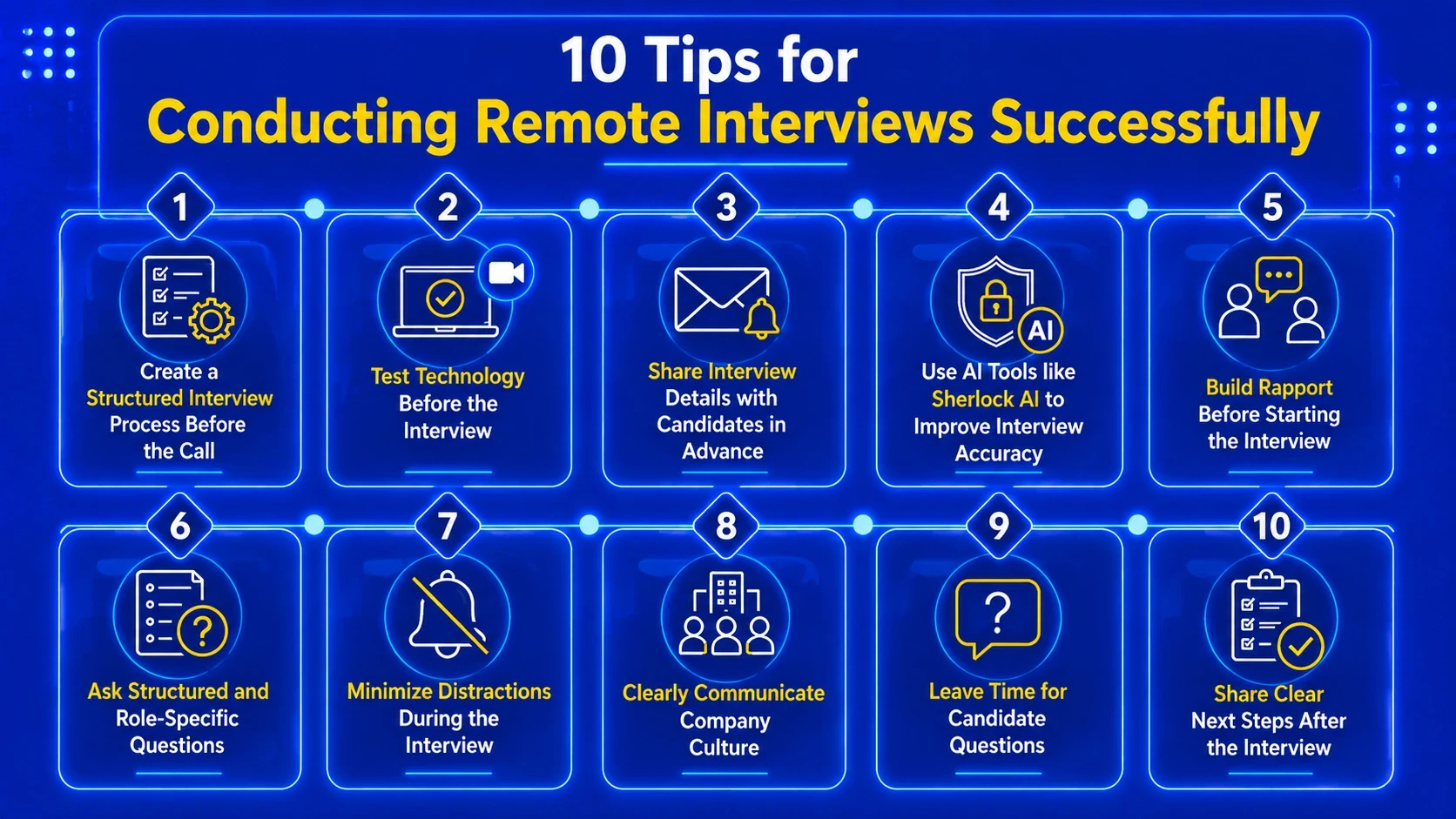
1. Create a Structured Interview Process Before the Call
A successful remote interview starts long before the video call begins. One of the most important tips for conducting remote interviews is creating a clear and consistent interview structure.
Without a standardized process, hiring managers may ask inconsistent questions, overlook important skills, or evaluate candidates unfairly. A structured interview framework helps recruiters compare candidates more objectively and improves hiring accuracy.
Before the interview, define:
The interview stages
Skills being evaluated
Role-specific questions
Candidate scoring criteria
Interviewer responsibilities
For example, if multiple interviewers are involved, assign clear responsibilities to avoid repeated questions and confusion. One interviewer can assess technical expertise while another focuses on communication skills or cultural fit.
A structured remote interview process also improves the candidate experience because applicants understand what to expect and receive a more organized hiring journey.
Pro Tip: Use an interview scorecard to evaluate every candidate consistently and reduce unconscious bias during remote hiring.
3. Share Interview Details with Candidates in Advance
Clear communication is essential when conducting remote interviews. Candidates often perform better when they know exactly what to expect before the interview begins.
Unlike in-person interviews, virtual interviews rely heavily on preparation and technology. If candidates are unsure about the interview format, timing, or platform, it can increase stress and negatively affect performance.
Before the interview, share important details such as:
Interview date and time
Video meeting link
Platform instructions
Expected interview duration
Names or roles of interviewers
Topics that may be discussed
Providing this information early helps candidates prepare properly and creates a smoother interview experience. It also reduces last-minute confusion and technical delays.
A well-informed candidate is more likely to feel confident, communicate effectively, and engage meaningfully during the interview.
Pro Tip: Send interview instructions at least 24 to 48 hours before the meeting and include a backup contact method in case technical issues arise.
4. Use AI Tools like Sherlock AI to Improve Interview Accuracy
Conducting remote interviews becomes more challenging when recruiters need to evaluate candidates virtually while ensuring authenticity and fairness. Without in-person interaction, it can sometimes be difficult to verify identities, monitor interview integrity, or maintain consistent evaluations.
This is where AI-powered hiring tools can make a difference.
Sherlock AI help organizations improve remote interview accuracy through intelligent candidate verification and interview monitoring capabilities. Instead of relying only on manual observation, recruiters can add an extra layer of confidence to the hiring process.
For example, Sherlock AI helps with:
Candidate verification to reduce impersonation risks
Real-time interview monitoring for greater interview transparency
More secure virtual hiring workflows
Better hiring confidence during remote interviews
Using the right hiring technology can help recruiters conduct remote interviews more efficiently while improving trust in hiring decisions.
Pro Tip: Combine structured interviews with AI-powered verification tools like Sherlock AI to create a more reliable and scalable remote hiring process.
Smarter remote hiring starts with Sherlock AI |
5. Build Rapport Before Starting the Interview
Remote interviews can sometimes feel formal or uncomfortable, especially when candidates are speaking through a screen. Taking a few minutes to build rapport at the beginning can help candidates feel more relaxed and communicate more naturally.
Instead of immediately jumping into questions, start with a brief introduction and casual conversation. This helps create a comfortable environment and encourages more authentic responses.
You can begin by:
Introducing yourself and your role
Briefly explaining the interview agenda
Asking light icebreaker questions
Giving a short overview of the company or role
Creating a comfortable environment is important because candidates often perform better when they feel less pressured. According to Indeed, 37% of job seekers feel less intimidated during virtual interviews, showing how remote interviews can improve candidate comfort when managed effectively.
Pro Tip: Spend the first 2 to 3 minutes building a connection before moving into evaluation questions.
6. Ask Structured and Role-Specific Questions
One common mistake in conducting remote interviews is relying too much on unstructured conversations. Without a clear question framework, recruiters may evaluate candidates inconsistently or overlook important skills.
Prepare a standardized list of questions based on the job role and required competencies. This makes it easier to compare candidates fairly and improve hiring consistency.
Include a mix of:
Behavioral interview questions
Situational questions
Technical or role-specific assessments
Problem-solving scenarios
For example, instead of asking broad questions like “Tell me about yourself,” ask targeted questions such as “Can you describe a time you solved a difficult problem while working remotely?”
Structured interviews often lead to more objective hiring decisions and reduce unconscious bias.
Pro Tip: Use the same core questions for every candidate to maintain fairness and improve comparison.
7. Minimize Distractions During the Interview
Distractions can reduce interview quality and make it difficult to evaluate candidates properly. Background noise, interruptions, notifications, or multitasking can negatively affect communication during remote interviews.
To create a professional virtual interview environment:
Choose a quiet location
Turn off phone and desktop notifications
Avoid multitasking during the discussion
Maintain eye contact through the camera
Ensure proper lighting and audio quality
Candidates also notice interviewer behavior. Staying focused during the interview helps create a more professional experience and reflects positively on your employer brand.
A distraction-free interview environment improves communication, keeps conversations productive, and allows recruiters to evaluate candidates more accurately.
Pro Tip: Inform team members in advance to avoid interruptions during scheduled remote interviews.
8. Clearly Communicate Company Culture
One challenge of conducting remote interviews is helping candidates understand what it is actually like to work at your organization. Since candidates are not visiting the office or interacting with teams in person, they may struggle to evaluate company culture during the hiring process.
In fact, many job seekers say understanding workplace culture is harder in virtual interviews, making recruiter communication even more important.
During the interview, take time to explain:
Company values and mission
Team collaboration style
Communication expectations
Work environment and flexibility
Learning and career growth opportunities
This helps candidates determine whether the role aligns with their expectations and long-term goals.
You can also share examples of team interactions, internal communication practices, or employee experiences to make the culture feel more tangible.
Pro Tip: Instead of simply describing company culture, share real examples of how teams collaborate and solve problems.
9. Leave Time for Candidate Questions
Remote interviews should feel like a two-way conversation, not just an evaluation process. Giving candidates time to ask questions helps improve engagement and creates a better interview experience.
When candidates ask thoughtful questions, recruiters can also better understand their interests, priorities, and seriousness about the role.
Candidates commonly ask about:
Team structure
Daily responsibilities
Career growth opportunities
Remote work expectations
Performance measurement
Leaving enough time for discussion also strengthens employer branding and helps candidates make informed decisions.
A strong candidate experience often increases hiring success because candidates feel valued and better informed about the opportunity.
Pro Tip: Reserve at least 10 to 15 minutes at the end of the interview for candidate questions.
10. Share Clear Next Steps After the Interview
One of the biggest frustrations candidates face during hiring is poor communication after interviews. Unclear timelines or delayed updates can negatively affect candidate experience and employer reputation.
Before ending the interview, explain what happens next in the hiring process.
This may include:
Expected decision timelines
Additional interview rounds
Assessment stages
Feedback timelines
Final hiring decisions
Providing clarity helps reduce uncertainty and keeps candidates engaged throughout the recruitment process.
Clear follow-up communication also reflects professionalism and improves the overall remote interview experience.
Pro Tip: Send a follow-up email after the interview summarizing next steps and expected timelines to maintain transparency.
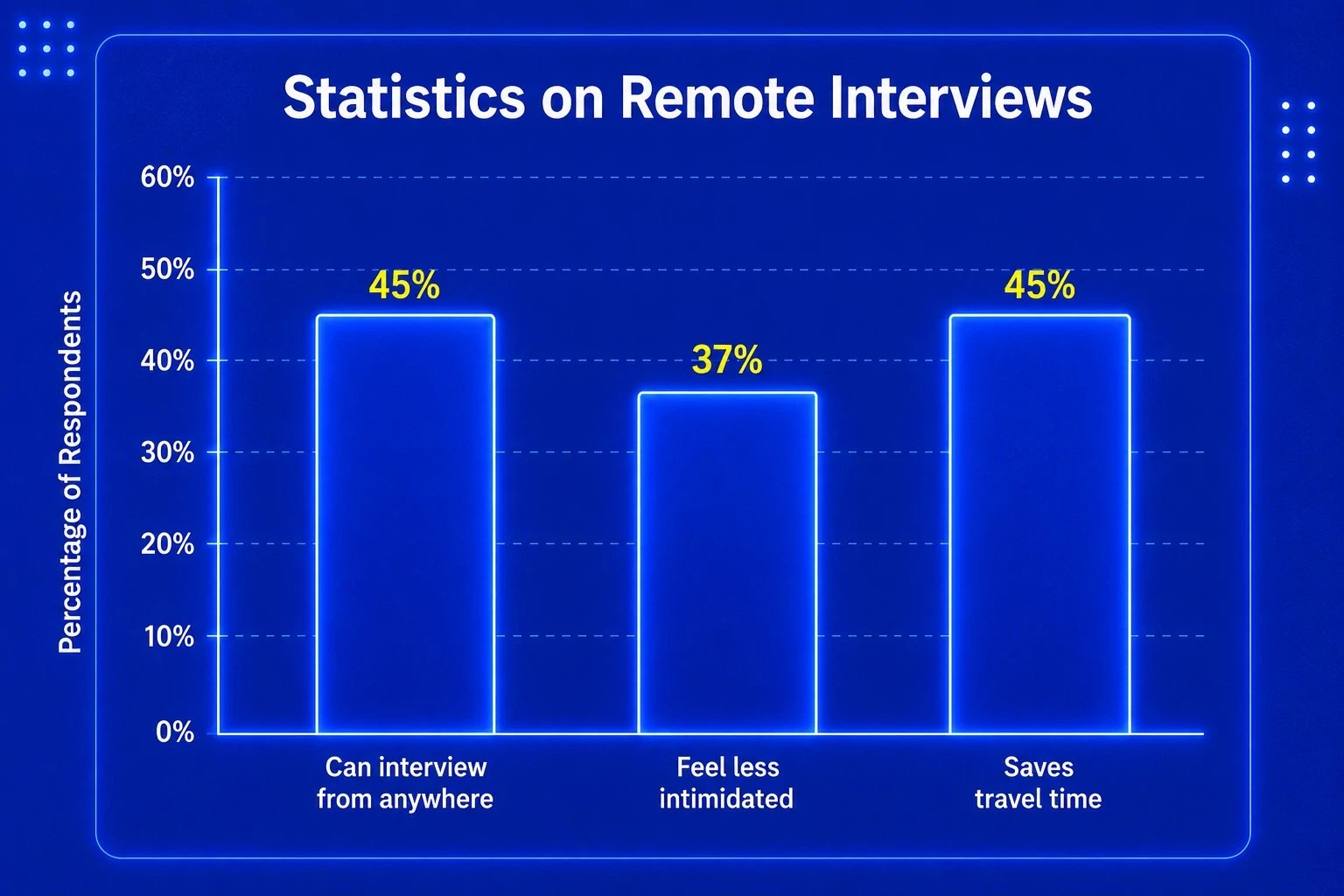
Source: Indeed Report
How Sherlock AI Helps Improve Remote Interviews
Conducting remote interviews can be challenging, especially when recruiters need to evaluate candidates accurately while maintaining interview integrity. Since hiring managers are not meeting candidates in person, issues such as identity verification, proxy interviews, and inconsistent evaluations can sometimes affect hiring confidence.
This is where Sherlock AI helps organizations improve remote interviews through smarter hiring technology.
1. AI-Powered Candidate Verification
One of the biggest challenges in remote hiring is confirming candidate authenticity. In virtual interviews, recruiters may find it difficult to verify whether the person attending the interview is the actual applicant.
Sherlock AI helps organizations strengthen remote hiring through AI-powered candidate verification, helping reduce impersonation risks and improving trust in hiring decisions.
This creates a more secure interview environment and allows recruiters to move forward with greater confidence.
2. Real-Time Interview Monitoring
Maintaining fairness and interview transparency can be difficult during remote interviews. Sherlock AI supports organizations with real-time interview monitoring, helping recruiters identify suspicious behavior and maintain interview integrity throughout the hiring process.
This can help reduce risks associated with proxy interviews and improve confidence in candidate evaluations.
3. Better Hiring Confidence in Virtual Environments
Remote interviews often require recruiters to make decisions based on limited interactions. Sherlock AI helps improve hiring confidence by providing additional support for candidate authenticity and interview reliability.
This enables hiring teams to make more informed decisions during virtual recruitment.
4. More Reliable Remote Hiring Processes
As companies scale remote hiring, maintaining consistency becomes increasingly important. Sherlock AI helps organizations create a more reliable remote interview process by supporting secure and structured hiring workflows.
This is especially valuable for companies conducting high-volume remote recruitment or hiring across multiple locations.
By combining structured interviews with AI-powered hiring support, organizations can conduct remote interviews more securely, reduce hiring risks, and improve overall recruitment quality.
Conclusion: How to Conduct Remote Interviews More Effectively
Conducting remote interviews has become an essential part of modern hiring. While virtual interviews offer greater flexibility, faster hiring, and access to a wider talent pool, they also require a more structured and thoughtful approach.
From preparing interview questions and testing technology to improving candidate communication and reducing distractions, every step plays an important role in creating a better hiring experience. Organizations that follow a consistent remote interview process are often better positioned to evaluate candidates fairly and make stronger hiring decisions.
At the same time, remote hiring also introduces challenges such as candidate verification, interview integrity, and maintaining consistency across evaluations. This is where technology can support better hiring outcomes.
As remote hiring continues to evolve, companies that invest in structured interview practices and smarter hiring technology will be better prepared to attract, evaluate, and hire top talent successfully.
Make remote hiring smarter with Sherlock AI. Reduce interview fraud and improve hiring accuracy with AI-powered interview intelligence. |