Back to all blogs
Learn what deepfake detection is, how deepfakes are created, common detection methods, key challenges, and strategies organizations use to prevent fraud, candidate impersonation, and identity-based attacks.

Deepfake detection is the process of identifying AI-generated or manipulated videos, images, audio recordings, and digital identities that are designed to appear authentic. As generative AI technologies become more advanced, deepfakes are increasingly being used for fraud, impersonation, identity theft, and recruitment scams. For organizations that rely on remote hiring and virtual interviews, the ability to detect deepfakes has become a critical security requirement rather than an optional safeguard.
The rapid growth of deepfake technology is creating new challenges for recruiters and hiring teams. According to a 2026 fraud study by the Association of Certified Fraud Examiners (ACFE) and SAS, 77% of fraud professionals reported an increase in deepfake-based social engineering attacks, making it one of the fastest-growing AI-powered fraud threats worldwide. Furthermore, only 7% of organizations believe they are highly prepared to detect and prevent AI-driven fraud.
For hiring teams, deepfake candidates can use AI-generated faces, voice cloning technology, pre-recorded videos, or virtual camera software to misrepresent their identity during interviews. These attacks can lead to hiring fraud, unauthorized access to company systems, financial losses, and significant security risks.
This is why modern organizations are investing in advanced deepfake detection solutions that combine AI-powered identity verification, behavioral analysis, liveness detection, and interview integrity checks. Platforms such as Sherlock AI help employers verify candidate authenticity throughout the hiring process, reducing the risk of impersonation and ensuring that the person being interviewed is genuinely who they claim to be.
In this guide, we will explore how deepfake detection works, why it matters in recruitment, common deepfake interview fraud techniques, and how organizations can strengthen hiring security using AI-powered verification technology.
What Is Deepfake Detection?
Deepfake detection is the process of identifying whether a video, image, audio recording, or live digital interaction has been manipulated or generated using artificial intelligence. The goal of deepfake detection is to determine if a person appearing in digital content is genuine or if the content has been altered to deceive viewers.
In recruitment, deepfake detection focuses on verifying candidate authenticity during the hiring process. As organizations increasingly rely on virtual interviews, remote assessments, and online identity verification, cybercriminals and fraudulent applicants are finding new ways to exploit AI-generated content to impersonate legitimate candidates.
A deepfake can involve a manipulated face, cloned voice, synthetic identity, or entirely AI-generated digital persona. During a virtual interview, a fraudster may use deepfake technology to alter their appearance in real time, making themselves look like another individual. In other cases, attackers may use voice cloning tools to mimic a candidate’s speech patterns or create fake video recordings that appear authentic.
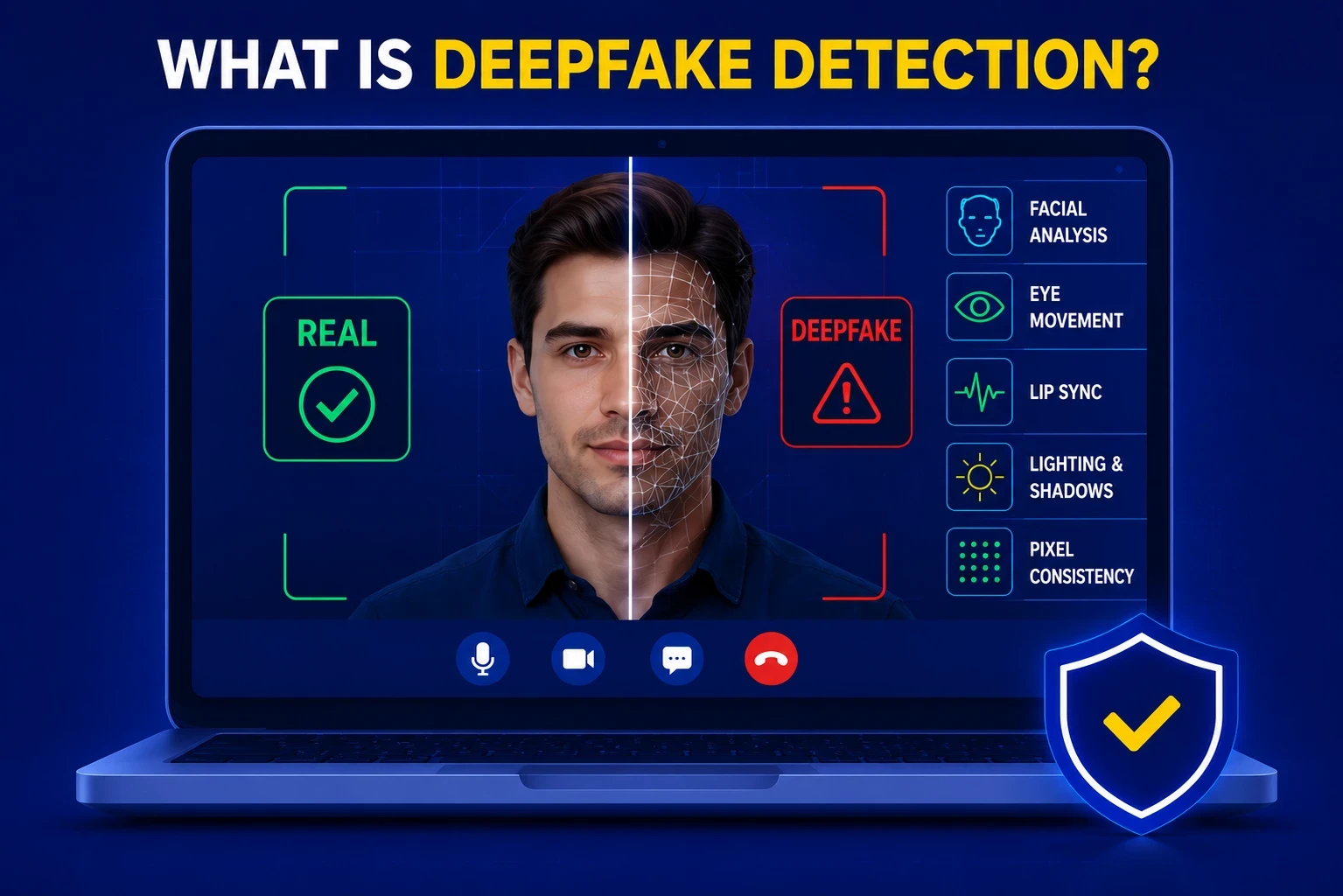
Deepfake detection technologies analyze multiple signals within digital interactions to identify signs of manipulation. These systems evaluate facial movements, voice characteristics, behavioral patterns, biometric indicators, and technical artifacts that may reveal AI-generated content.
How Are Deepfakes Created?
To understand how deepfake detection works, it is important to first understand how deepfakes are created. Deepfakes are generated using artificial intelligence and machine learning models that can analyze, replicate, and manipulate human faces, voices, and behaviors with remarkable accuracy.
Originally developed for entertainment and content creation, these technologies are now being exploited by fraudsters to bypass identity verification systems, impersonate job candidates, and commit recruitment fraud.
In hiring environments, deepfakes can be used to create fake candidate profiles, manipulate video interviews, clone voices, and even conduct entire interviews using synthetic identities. As these technologies become more accessible, organizations need stronger safeguards to verify candidate authenticity.
1. Generative Adversarial Networks (GANs)
Generative Adversarial Networks, commonly known as GANs, are one of the foundational technologies behind deepfakes.
A GAN consists of two AI models working against each other:
A generator that creates synthetic content
A discriminator that evaluates whether the content appears real
The generator continuously improves its output until the discriminator can no longer easily distinguish between genuine and fake content.
This process allows attackers to create highly realistic facial images, videos, and digital identities that closely resemble real people.
Recruitment Risk
Fraudsters can use GAN-generated images to create fake LinkedIn profiles, resumes, and job applications. These synthetic identities may appear completely legitimate during initial screening stages, making it difficult for recruiters to identify fraud through manual review alone.
2. Diffusion Models
Diffusion models are a newer class of AI systems capable of generating highly realistic images and videos.
Unlike GANs, diffusion models start with random visual noise and gradually transform it into a realistic image based on learned patterns. These models often produce higher-quality outputs with fewer visual artifacts, making deepfakes even harder to detect.
Many modern AI image-generation tools use diffusion-based architectures because they can generate highly detailed and convincing human faces.
Recruitment Risk
Attackers can use diffusion-generated images to build synthetic candidate identities that do not belong to any real person. These identities may pass basic visual verification checks because the images appear natural and unique.
3. Face-Swapping Technology
Face-swapping is one of the most common forms of deepfake creation.
This technique replaces one person’s face with another person’s face in a photo, video, or live video stream. Advanced face-swapping tools can synchronize facial expressions, head movements, and eye movements in real time.
In a virtual interview, an attacker may use face-swapping software to appear as a completely different individual while maintaining natural conversation.
Recruitment Risk
A candidate may submit legitimate identification documents but use real-time face-swapping technology during the interview process. As a result, recruiters may unknowingly evaluate and hire someone other than the actual applicant.
4. Voice Cloning
Voice cloning uses artificial intelligence to replicate a person’s voice after analyzing speech samples.
Modern voice synthesis systems can reproduce:
Tone and pitch
Accent and pronunciation
Speaking style
Emotional expression
Conversational patterns
Some voice cloning tools require only a few seconds of recorded audio to generate a convincing imitation.
Recruitment Risk
Fraudsters can use cloned voices during screening calls, technical interviews, or identity verification processes. This can create the impression that a legitimate candidate is participating when the actual individual is not present.
5. Synthetic Identity Generation
Synthetic identity fraud combines real and fabricated information to create entirely new identities.
Attackers may generate:
AI-created profile photos
Fake employment histories
Fabricated educational credentials
Artificial social media profiles
False professional references
These synthetic identities can appear highly credible when reviewed individually, making them difficult to identify without comprehensive verification systems.
Recruitment Risk
Organizations may unknowingly hire individuals operating under fabricated identities, creating significant security, compliance, and insider threat risks.
6. Real-Time Deepfake Software
One of the most concerning developments in recruitment fraud is the rise of real-time deepfake technology.
Unlike traditional deepfakes that are created before being shared, real-time systems modify video and audio during live interactions.
These tools can:
Replace faces during video calls
Alter facial expressions
Modify voice characteristics
Generate synthetic avatars
Hide the true identity of participants
This capability has made virtual interview fraud significantly more difficult to detect through manual observation.
Recruitment Risk
Recruiters conducting remote interviews may believe they are interacting with a legitimate candidate when the visible face and voice have been artificially generated or modified in real time.
Source: iProov
Why Is Deepfake Detection Important in Recruitment?
Deepfake technology is creating new challenges for organizations that rely on virtual hiring. Fraudsters can use AI-generated faces, cloned voices, and synthetic identities to impersonate candidates during interviews and bypass traditional verification methods.
For recruitment teams, deepfake detection helps ensure that the person being interviewed is the same individual who applied for the role. This reduces the risk of hiring fraud, identity theft, and unauthorized access to company systems.
The Growing Threat of Deepfake Interview Fraud
Traditional hiring processes relied heavily on in-person interactions, making it easier to verify a candidate’s identity. Today, many organizations conduct interviews, assessments, onboarding, and identity verification entirely online.
While virtual hiring offers convenience and scalability, it also creates opportunities for attackers to use:
AI-generated candidate identities
Face-swapping technology
Voice cloning tools
Synthetic profiles
Proxy interview schemes
Real-time deepfake software
These tactics allow fraudsters to bypass standard hiring checks and secure positions under false identities.
Without effective deepfake detection measures, organizations may unknowingly hire individuals who have misrepresented their qualifications, identity, or intentions. This growing risk has made AI-powered identity verification and deepfake detection solutions increasingly important in modern recruitment. Tools like Sherlock AI help organizations verify candidate authenticity during virtual interviews, detect potential impersonation attempts, and reduce the risk of hiring fraud before it impacts the business.
Preventing Candidate Impersonation
Candidate impersonation is one of the most common forms of recruitment fraud. In these attacks, an individual may use deepfake technology or have another person complete interviews on their behalf to secure employment under false pretenses.
This creates significant risks because recruiters evaluate one person during the hiring process, while a different individual ultimately joins the organization. Deepfake detection helps verify that the candidate being interviewed matches the identity provided during the application process.
Common impersonation tactics include:
Proxy interview fraud
Real-time face swapping
AI-generated video feeds
Voice cloning during interviews
Synthetic candidate identities
Protecting Sensitive Company Systems
Many employees gain access to confidential information, internal systems, customer data, and intellectual property as part of their roles. A fraudulent hire may use this access for malicious purposes if their true identity remains undiscovered.
Organizations that fail to verify candidate authenticity face increased cybersecurity and operational risks. Deepfake detection helps identify suspicious activity before access to critical systems is granted.
Potential security risks include:
Data theft
Financial fraud
Unauthorized system access
Intellectual property theft
Corporate espionage
Reducing Insider Threat Risks
Not all security threats originate from external attackers. Individuals hired under false identities can become insider threats once they gain access to company resources and sensitive information.
By validating candidate authenticity throughout the hiring process, organizations can reduce the likelihood of identity-related security incidents and improve overall workforce trust.
Common insider threat concerns include:
Misuse of company data
Unauthorized access to systems
Credential sharing
Compliance violations
Security policy breaches
How Does Deepfake Detection Work?
Deepfake detection uses artificial intelligence, biometric analysis, and behavioral monitoring to determine whether a video, audio recording, or live interaction has been manipulated. In recruitment, these technologies help organizations verify candidate authenticity and prevent interview fraud.
1. Facial and Visual Analysis
Deepfake detection systems examine facial features, movements, and visual consistency to identify signs of AI-generated manipulation. Even advanced deepfakes can leave behind subtle visual artifacts that indicate tampering.
Common visual indicators include:
Unnatural facial movements
Inconsistent eye blinking
Lighting mismatches
Distorted facial edges
Irregular lip synchronization
2. Voice Analysis and Audio Forensics
Voice cloning tools can replicate a person’s speech patterns, tone, and accent. Deepfake detection systems analyze audio signals to identify signs of synthetic or manipulated speech.
Common audio indicators include:
Unnatural speech patterns
Robotic voice characteristics
Inconsistent tone variations
Audio compression artifacts
Delayed speech responses
3. Liveness Detection
Liveness detection verifies that a real person is present during an interview or identity verification session. It helps prevent the use of pre-recorded videos, synthetic avatars, or manipulated media.
Common liveness checks include:
Head movement verification
Facial expression analysis
Eye movement tracking
Real-time interaction prompts
Camera authenticity checks
4. Behavioral Analysis
Deepfake detection systems analyze candidate behavior during interviews to identify unusual or suspicious activity. Behavioral signals provide an additional layer of verification beyond facial and voice authentication.
Common behavioral signals include:
Response timing patterns
Speaking behavior
Facial reaction consistency
Interview engagement levels
Interaction authenticity
5. Cross-Modal Verification
Cross-modal verification compares multiple signals at the same time to confirm authenticity. For example, the system may check whether facial movements match the candidate’s speech.
Signals commonly compared include:
Lip movements and speech
Facial expressions and voice tone
Video and audio synchronization
Identity data and interview behavior
Biometric consistency checks
6. AI-Powered Interview Monitoring
Advanced recruitment security platforms continuously monitor interviews for signs of deepfake activity and candidate impersonation. This allows recruiters to identify potential risks before hiring decisions are made.
Key monitoring capabilities include:
Deepfake detection
Candidate authentication
Identity verification
Fraud risk assessment
Interview integrity monitoring
How to Detect Deepfakes
Deepfake detection involves analyzing multiple signals to determine whether video, audio, or digital content has been manipulated using artificial intelligence. Since modern deepfakes can closely resemble real people, organizations often rely on a combination of visual, audio, behavioral, and technical analysis.
1. Visual Artifacts
Deepfake videos may contain subtle visual inconsistencies that are difficult to detect with the naked eye.
Examples include unnatural lighting, distorted facial boundaries, irregular eye movements, and lip-syncing issues.
2. Audio Anomalies
AI-generated voices can mimic human speech, but they may still produce detectable irregularities.
Examples include unusual speech rhythm, unnatural tone changes, voice-mouth synchronization issues, and audio artifacts.
3. Behavioral Patterns
Deepfakes often struggle to accurately replicate natural human behavior during live interactions.
Examples include unusual response timing, repetitive expressions, inconsistent reactions, and communication patterns that differ from expected behavior.
4. Technical Signatures
Many deepfake generation tools leave behind digital traces that can be identified through advanced forensic analysis.
Examples include frame-level anomalies, rendering inconsistencies, synthetic audio markers, and AI model fingerprints.
5. Contextual Clues
The context surrounding an interaction can also help identify potential deepfakes.
Examples include suspicious requests, communication from unexpected channels, identity mismatches, and inconsistencies across candidate records.
6. AI-Powered Detection Systems
Modern deepfake detection platforms combine multiple detection methods to improve accuracy.
These systems analyze visual, audio, behavioral, and technical signals simultaneously to identify manipulation attempts and verify authenticity.
How to Spot a Deepfake Manually
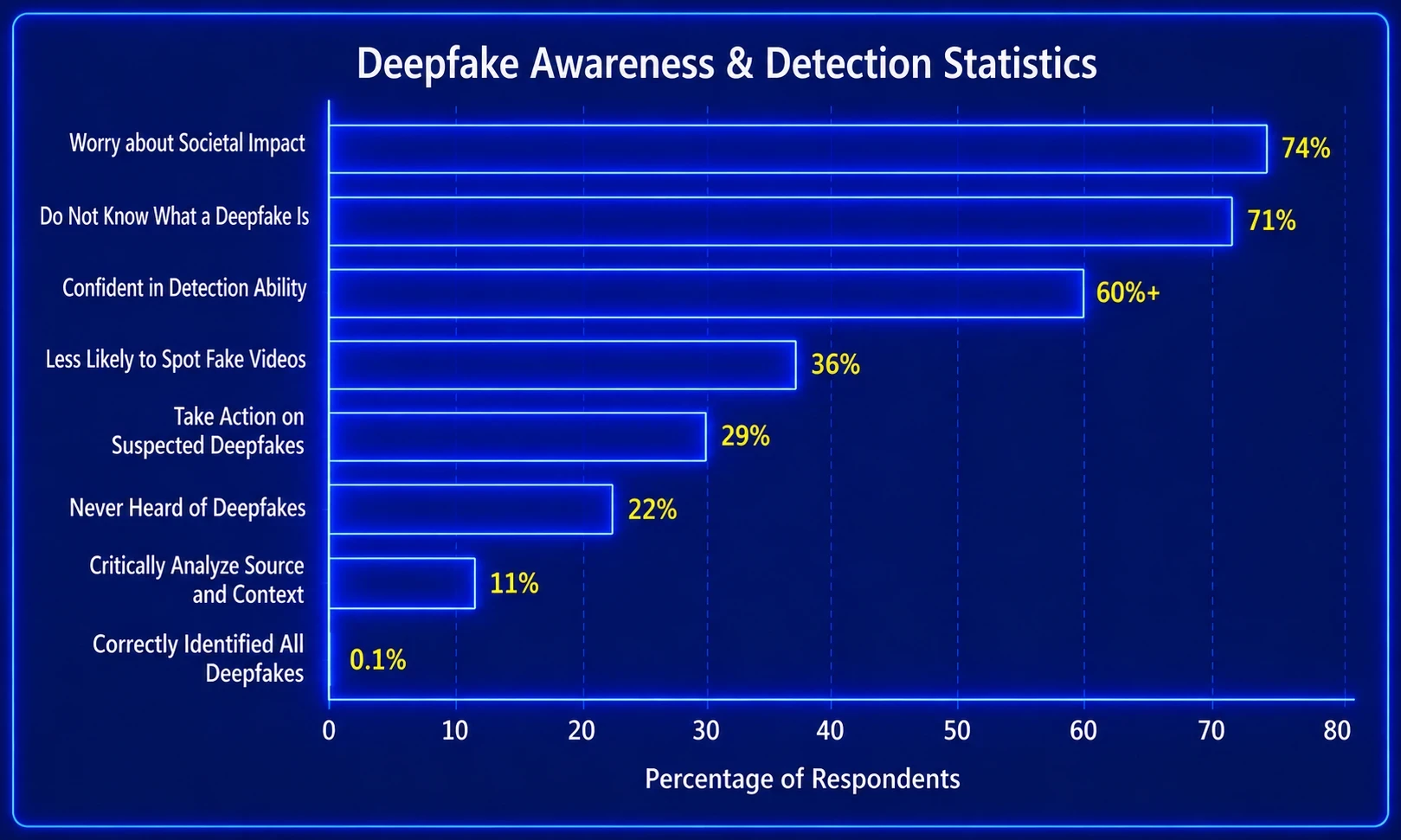
While AI-powered detection tools provide the most reliable way to identify deepfakes, recruiters and hiring teams can often spot signs of manipulation through careful observation. Deepfake content may contain visual, audio, and behavioral inconsistencies that indicate a video or live interaction has been altered using artificial intelligence. Globally, 71% of respondents say that they do not know what a deepfake is. Just under a third of global consumers say they are aware of deepfakes.
Key Visual Markers Include:
Unnatural skin texture or mismatched skin tones
Irregular blinking patterns or lifeless eyes
Poor lip synchronization with speech
Shadows casting in incorrect directions
Flickering or blurring around facial boundaries
Distorted facial expressions during movement
Inconsistent lighting across the face and background
Hands with distorted fingers or incorrect finger counts
Key Audio Indicators Include:
Robotic or synthetic-sounding speech
Unnatural pauses during conversation
Inconsistent tone or pitch changes
Delayed responses during interactions
Audio quality fluctuations within the same conversation
Key Behavioral Indicators Include:
Unusual response timing
Repetitive facial expressions
Limited natural head movement
Frequent avoidance of direct camera engagement
Inconsistent communication patterns throughout the interview
Why Manual Detection Has Limitations
Modern deepfakes are becoming increasingly sophisticated and can often bypass human observation. While manual review can help identify obvious signs of manipulation, organizations should combine it with AI-powered deepfake detection, identity verification, and liveness detection for more accurate results.
A multi-layered approach provides stronger protection against candidate impersonation, interview fraud, and synthetic identity attacks.
57% of global respondents say they think they could spot a deepfake. 43% admit they would not be able to tell the difference between a real video and deepfake.
Challenges of Deepfake Detection
As deepfake technology becomes more advanced, detecting manipulated content is becoming increasingly complex. AI-generated videos, voices, and digital identities are now more realistic than ever, making it difficult for both humans and traditional verification systems to distinguish genuine interactions from fraudulent ones.
For organizations conducting remote hiring, these challenges can increase the risk of candidate impersonation, interview fraud, and identity-based attacks. Understanding the limitations of deepfake detection is essential for building a more secure recruitment process.
1. Rapid Advancements in AI Technology
Deepfake generation models continue to improve at an unprecedented pace. New AI systems can produce highly realistic faces, voices, and video content with fewer detectable artifacts than earlier generations.
As detection technologies evolve, attackers constantly refine their techniques, creating an ongoing challenge for organizations trying to stay ahead of emerging threats.
2. Real-Time Deepfake and Face-Swapping Attacks
One of the biggest challenges in recruitment is the rise of real-time deepfake technology. Fraudsters can modify their appearance or voice during live interviews, making it difficult to identify impersonation attempts through manual observation alone.
Unlike pre-recorded deepfakes, real-time attacks occur during active interactions, requiring organizations to use advanced detection and monitoring solutions.
3. Limited Human Detection Capabilities
Humans are generally poor at identifying sophisticated deepfakes. As AI-generated content becomes more convincing, recruiters may overlook subtle signs of manipulation during virtual interviews.
This challenge is particularly significant in high-volume hiring environments where recruiters have limited time to assess each candidate interaction.
4. Poor Video and Audio Quality
Virtual interviews often take place under less-than-ideal conditions. Low-resolution cameras, unstable internet connections, poor lighting, and audio compression can reduce the effectiveness of deepfake detection efforts.
These issues may hide visual artifacts and audio inconsistencies that would otherwise help identify manipulated content.
5. Synthetic Identity and Multi-Layered Fraud
Modern recruitment fraud often extends beyond deepfake videos. Attackers may combine AI-generated profile photos, fake resumes, fabricated credentials, voice cloning, and deepfake interviews to create highly convincing synthetic identities.
Because multiple fraud techniques are used simultaneously, organizations need a layered approach that combines deepfake detection with identity verification and interview monitoring.
What Are Deepfake Detection Tools?
Deepfake detection tools are software solutions designed to identify AI-generated or manipulated videos, images, audio recordings, and live digital interactions. These tools analyze multiple signals to determine whether content is authentic or has been altered using deepfake technology.
As deepfakes become increasingly sophisticated, organizations can no longer rely solely on manual review to identify fraudulent content. Modern detection tools use artificial intelligence, biometric verification, and forensic analysis to uncover signs of manipulation that may not be visible to human observers.
In recruitment, deepfake detection tools help organizations verify candidate authenticity, prevent interview fraud, and strengthen identity verification throughout the hiring process.
Why Choose Sherlock AI for Deepfake Detection?
As deepfake interview fraud becomes more sophisticated, organizations need more than traditional identity verification methods to protect their hiring processes. Sherlock AI is designed specifically for recruitment teams, helping employers detect candidate impersonation, identify deepfake attacks, and verify authenticity throughout the hiring journey.
By combining deepfake detection, interview monitoring, identity verification, and behavioral analysis, Sherlock AI helps organizations build a secure and trustworthy remote hiring process.
1. Deepfake Detection for Virtual Interviews
Sherlock AI analyzes candidate video streams for signs of AI-generated manipulation, face-swapping, and synthetic media attacks. This helps recruiters identify suspicious activity during live interviews before hiring decisions are made.
Key capabilities include:
Deepfake detection
Face-swapping detection
Synthetic media identification
Interview integrity monitoring
Real-time risk analysis
2. Candidate Authentication and Identity Verification
Verifying that the interview participant is the same person who applied for the role is critical for preventing recruitment fraud. Sherlock AI helps organizations strengthen candidate verification throughout the hiring process.
Key capabilities include:
Candidate authentication
Identity verification
Candidate re-verification
Fraud prevention checks
Secure hiring workflows
3. AI-Powered Interview Monitoring
Sherlock AI continuously monitors interviews for suspicious activity and potential impersonation attempts. Recruiters receive actionable insights without disrupting the candidate experience.
Key capabilities include:
Real-time interview monitoring
Suspicious activity detection
Candidate behavior analysis
Interview integrity scoring
Recruitment risk alerts
4. Behavioral Analysis and Fraud Detection
Beyond facial and voice analysis, Sherlock AI evaluates behavioral patterns that may indicate fraud. This additional layer of intelligence helps organizations detect sophisticated attacks that may bypass traditional verification methods.
Key capabilities include:
Behavioral analysis
Fraud risk assessment
Candidate authenticity checks
Pattern recognition
Identity consistency validation
5. Scalable Protection for Remote Hiring
Whether organizations conduct a few interviews per week or thousands per month, Sherlock AI can be integrated into existing recruitment workflows to strengthen hiring security at scale.
Key capabilities include:
Enterprise-ready deployment
Remote hiring protection
Scalable interview monitoring
Recruitment workflow integration
Centralized fraud management
Building Trust in the Age of AI-Powered Hiring
Deepfake technology is reshaping the recruitment landscape, creating new challenges for organizations that rely on virtual interviews and remote hiring. From face-swapping and voice cloning to synthetic identities and proxy interviews, fraudsters now have access to sophisticated tools that can bypass traditional hiring checks.
As these threats continue to evolve, deepfake detection has become an essential component of modern recruitment security. By combining visual analysis, voice authentication, liveness detection, behavioral monitoring, and identity verification, organizations can better protect themselves from candidate impersonation and hiring fraud.
However, technology alone is not enough. Employers need a proactive and multi-layered approach that integrates deepfake detection directly into the hiring workflow. This ensures that every candidate interaction is authentic and every hiring decision is based on verified information.
Sherlock AI helps organizations stay ahead of emerging recruitment threats by providing advanced deepfake detection, candidate authentication, interview monitoring, and fraud prevention capabilities. With greater visibility into candidate authenticity, hiring teams can reduce risk, strengthen trust, and confidently hire the right talent.
As remote hiring continues to grow, organizations that prioritize recruitment security today will be better positioned to build a trustworthy workforce tomorrow.