Back to all blogs
Learn the top deepfake detection techniques used in interviews, including liveness detection, voice authentication, identity verification, and behavioral analysis. Discover how recruiters can identify AI-generated candidates and prevent interview fraud.

The growing adoption of remote hiring has made recruitment faster and more accessible, but it has also introduced new security risks. One of the most significant challenges facing recruiters today is the use of deepfake technology during virtual interviews. Fraudulent candidates can leverage AI-powered tools to manipulate their appearance, clone voices, or impersonate another individual, making it increasingly difficult for hiring teams to verify candidate authenticity through visual observation alone.
As deepfake technology becomes more advanced, traditional interview verification methods are no longer sufficient. Recruiters may unknowingly interview a different person than the one who submitted the application, leading to hiring fraud, security vulnerabilities, and compliance concerns. In technical and high-trust roles, the consequences can be particularly severe, as organizations may grant access to sensitive systems and confidential information based on a false identity.
The scale of the challenge is growing rapidly. According to an iProov study, only 0.1% of participants were able to accurately identify all deepfake and genuine content shown to them, demonstrating how difficult it has become for humans to detect AI-generated manipulation without specialized technology. As virtual interviews continue to dominate the hiring landscape, organizations need reliable ways to identify suspicious behavior and verify that candidates are who they claim to be. While concern about deepfakes is rising, many remain unaware of the technology. One in five consumers (22%) had never even heard of deepfakes before the study.
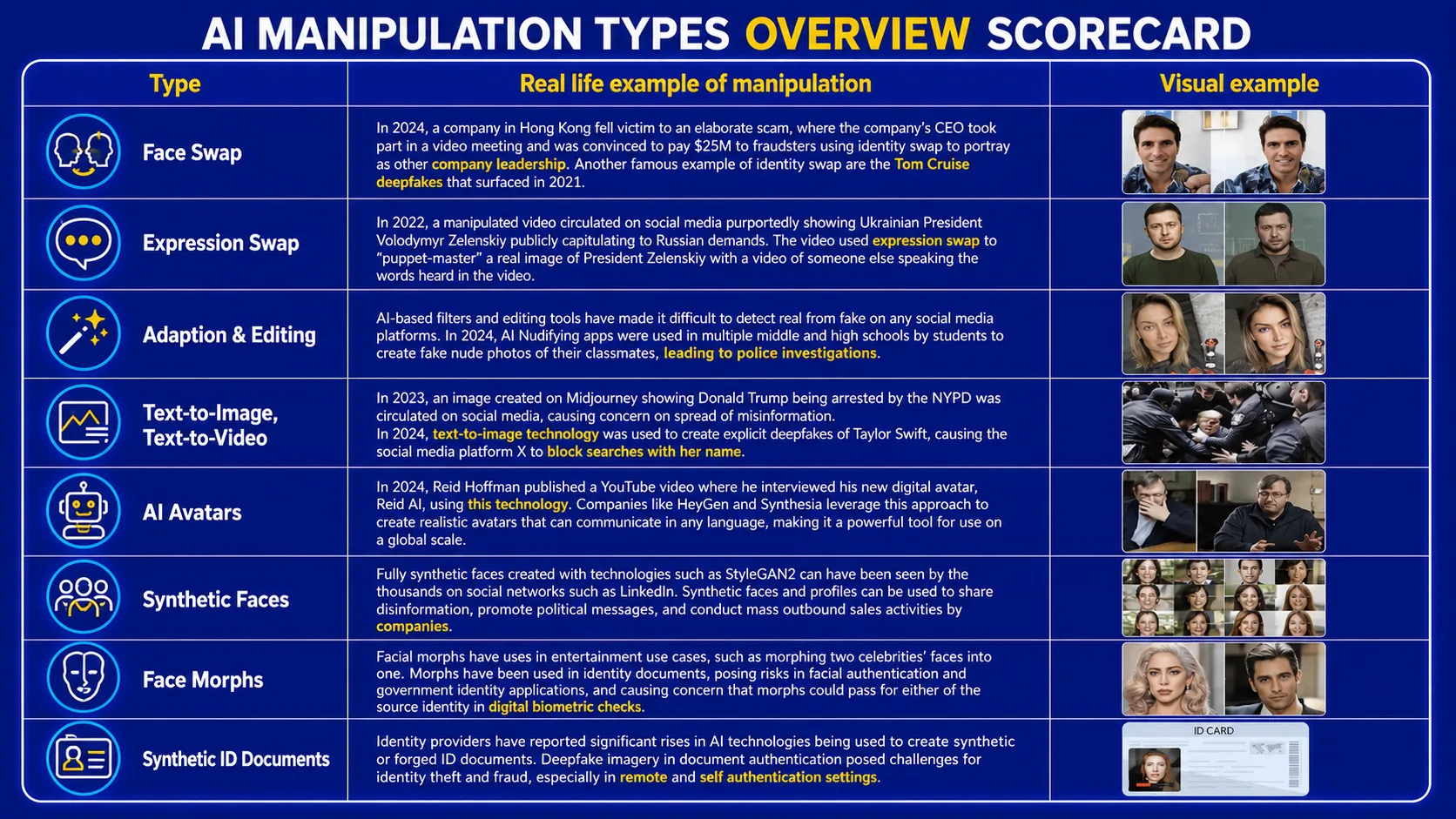
This is where deepfake detection techniques in interviews become essential. These techniques help recruiters identify signs of AI-generated manipulation by analyzing facial movements, voice characteristics, identity verification signals, behavioral patterns, and real-time video authenticity. By combining human oversight with AI-powered detection tools, organizations can significantly reduce the risk of candidate impersonation and strengthen the integrity of their hiring process.
Deepfake Detection Techniques
Below we explore the most effective deepfake detection techniques used during interviews and how organizations can protect their recruitment process from increasingly sophisticated AI-driven fraud.
1. Facial Movement Analysis
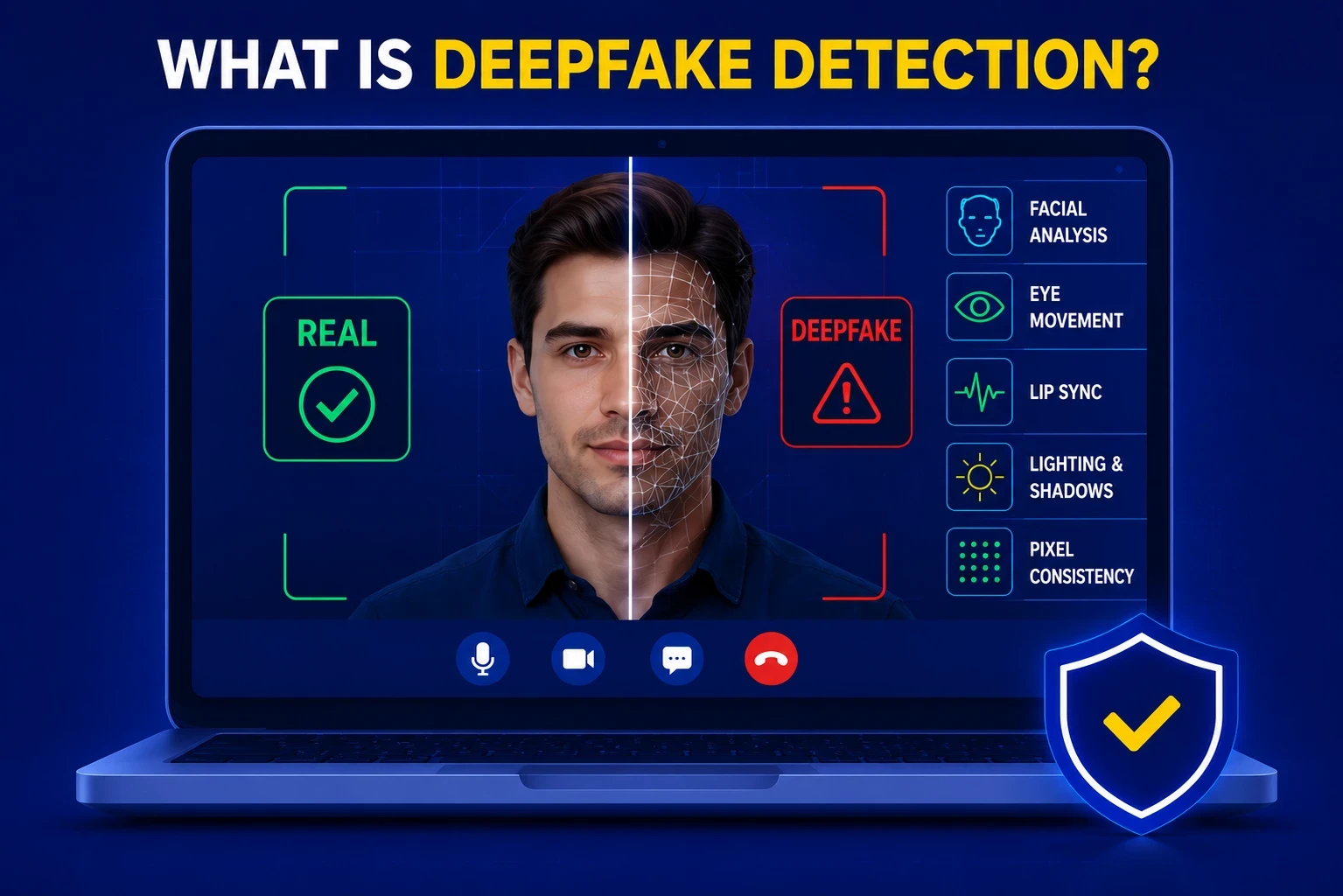
Facial movement analysis is one of the most effective deepfake detection techniques used in interviews. It examines a candidate’s facial behavior during a live video interview to identify signs of AI-generated manipulation. While modern deepfake tools can create realistic-looking videos, they often struggle to replicate natural facial movements and expressions consistently.
Deepfake detection systems analyze multiple facial signals in real time to verify authenticity and identify potential impersonation attempts.
Key indicators analyzed include:
Unnatural blinking patterns
Lip movements that do not align with speech
Delayed or inconsistent facial expressions
Distortions around the eyes, mouth, or jawline
Abnormal eye contact or gaze direction
Irregular head movements and facial tracking issues
Blurred facial boundaries during movement
Lighting and shadow inconsistencies across the face
Facial movement analysis is particularly valuable because it continuously monitors candidate behavior throughout the interview rather than relying on a single verification step. This helps recruiters identify suspicious activity even when deepfake technology appears convincing.
Example:
A candidate joins a remote interview for a technical role. During the conversation, the video appears normal at first. However, when the candidate turns their head, slight distortions appear around the jawline, and their lip movements briefly fall out of sync with their speech. While these inconsistencies may be difficult for a recruiter to notice, a facial movement analysis system can detect them and flag the interview for additional verification.
2. Voice Authentication
Voice authentication is a deepfake detection technique that analyzes a candidate’s speech patterns to determine whether the voice used during an interview is genuine or AI-generated. As voice cloning technology becomes more accessible, fraudsters can replicate a person’s voice using only a small audio sample, making voice verification increasingly important in remote hiring.
The rise of AI-generated identity fraud like deepfakes is alarming, with 37% of organizations experiencing deepfake voice fraud and 29% falling victim to deepfake videos, according to a survey by Regula, a global developer of forensic devices and identity verification (IDV) solutions. As organizations conduct more interviews online, verifying voice authenticity has become a critical step in preventing recruitment fraud.
Modern voice authentication systems evaluate unique vocal characteristics that are difficult to replicate consistently, even with advanced AI tools.
Key indicators analyzed include:
Voice pitch and tone consistency
Speech rhythm and cadence
Pronunciation and accent patterns
Pauses and breathing behavior
Emotional variation in speech
Real-time response consistency
Synthetic audio artifacts
Background noise irregularities
These systems can identify subtle signs that a voice may have been generated or altered using AI. While a cloned voice may sound convincing, it often lacks the natural variations, emotional shifts, and spontaneous speech patterns found in genuine human conversations.
Voice authentication is particularly valuable in technical and high-trust hiring scenarios where identity verification is essential. By continuously analyzing speech throughout the interview, organizations can detect suspicious activity and strengthen candidate verification without disrupting the interview experience.
Example:
A candidate joins a virtual interview for a customer support position and answers questions confidently. However, the voice authentication system detects unusually consistent speech patterns, limited emotional variation, and audio characteristics commonly associated with voice cloning software. The interview is flagged for additional verification, helping the organization identify a potential impersonation attempt before making a hiring decision.
3. Liveness Detection
Liveness detection is a deepfake detection technique used to verify that a real person is actively participating in an interview rather than a pre-recorded video, AI-generated avatar, or manipulated video stream. It helps recruiters confirm that the candidate on screen is physically present and interacting in real time.
As deepfake technology becomes more sophisticated, visual appearance alone is no longer enough to establish authenticity. Liveness detection adds an extra layer of security by analyzing real-time human responses and behaviors that are difficult for AI systems to replicate accurately.
Key indicators analyzed include:
Real-time facial movements
Natural eye blinking and eye tracking
Head movements and facial positioning
Response to dynamic prompts
Facial depth and 3D presence
Reaction time to interview instructions
Camera interaction patterns
Signs of replayed or pre-recorded video
Liveness detection systems may ask candidates to perform specific actions such as turning their head, looking in a certain direction, smiling, or reading a randomly generated phrase. These actions help verify that the candidate is physically present and not using manipulated media.
The importance of liveness detection continues to grow as identity fraud becomes more common. According to Regula’s Deepfake Trends Report, 49% of organizations have experienced audio or video deepfake fraud, highlighting the need for stronger verification measures throughout the hiring process.
Solutions like Sherlock AI incorporate liveness detection as part of a multi-layered interview security approach, helping recruiters verify candidate authenticity in real time and identify potential impersonation attempts before they impact hiring decisions. By validating that a real person is present during the interview, organizations can reduce fraud risks, strengthen candidate verification, and build greater trust in remote hiring processes.
By validating that a real person is present during the interview, liveness detection helps organizations reduce impersonation risks, strengthen candidate verification, and improve trust in remote hiring workflows.
Example:
A candidate joins a virtual interview for a finance role. As part of the verification process, they are asked to turn their head to both sides and read a randomly generated phrase displayed on the screen. While the video initially appears authentic, the liveness detection system identifies delayed responses and inconsistencies in facial tracking during the challenge. The interview is flagged for further review, helping recruiters identify a potential deepfake attempt before proceeding with the hiring process.
4. Identity Verification
Identity verification is a core deepfake detection technique used in interviews to ensure that the candidate participating in the interview is the same person who applied for the role. It combines document validation, biometric matching, and live video checks to prevent impersonation and fraudulent applications.
With the rise of remote hiring, identity fraud has become more common, especially in cases where candidates use edited documents or AI-generated identities to bypass screening processes. Identity verification helps close this gap by validating both static identity data and real-time interview presence.
Key indicators analyzed include:
Government-issued ID validation (passport, driver’s license, etc.)
Face match between ID photo and live video feed
Document authenticity checks (font, layout, metadata)
Cross-checking application details with live responses
Consistency in name, email, and profile information
Biometric matching using facial recognition
Verification of digital submission history
Detection of manipulated or tampered documents
Modern systems often use AI-based facial recognition to compare a candidate’s live appearance with their uploaded identification documents. Even small mismatches in facial structure, lighting inconsistencies, or altered ID images can indicate potential fraud.
By combining document checks with live biometric verification, companies can significantly reduce the risk of hiring individuals who are not who they claim to be.
Example:
A candidate applies for a software engineering role and submits a valid-looking government ID during onboarding. However, during the live interview, the identity verification system detects a mismatch between the facial structure in the ID and the live video feed. Further analysis reveals inconsistencies in the document formatting, suggesting that the ID may have been digitally altered. The recruitment team is alerted, and the application is flagged for investigation before any hiring decision is made.
5. Video Artifact Detection
Video artifact detection is a deepfake detection technique that identifies hidden visual inconsistencies in video streams caused by AI generation or manipulation. Even though modern deepfake videos can look highly realistic, they often contain small errors in pixel structure, motion consistency, and frame transitions that can be detected using advanced forensic analysis.
Even advanced detection systems also struggle when moved from controlled environments to real-world data. Industry benchmarks show that while lab-trained models may achieve up to 96% accuracy, their performance can drop significantly to around 50% in real-world conditions, due to new deepfake generation techniques and unseen manipulation styles.
These findings make video artifact detection a critical layer in modern deepfake detection techniques used in interviews, where subtle visual errors often become the only remaining clue of manipulation.
Key indicators analyzed include:
Frame-to-frame inconsistencies in facial structure
Blurring or distortion around facial edges during movement
Inconsistent lighting across frames
Unnatural skin texture or overly smooth facial regions
Compression artifacts around mouth and eyes
Background mismatch when the subject moves
Irregular pixel blending at facial boundaries
Temporal instability in expressions and motion
These artifacts occur because deepfake models generate videos frame by frame, making it difficult to maintain perfect consistency across motion, lighting, and timing. As a result, even highly advanced AI-generated videos can leave behind detectable traces.
Example:
A candidate appears for a remote interview for a data analyst role. At first, the video looks normal, but the system detects slight distortions around the jawline during fast speech and minor inconsistencies in facial texture when the candidate moves. Although these issues are subtle and easy for humans to miss, the video artifact detection system flags the session for further review, helping prevent a potential impersonation attempt.
6. Behavioral Analysis
Behavioral analysis is a deepfake detection technique that evaluates how a candidate behaves during an interview rather than focusing solely on their appearance or voice. It helps recruiters identify unusual patterns that may indicate impersonation, external assistance, or AI-generated manipulation.
Even when deepfake technology successfully mimics a person’s face and voice, it can be difficult to replicate natural human behavior consistently. Behavioral analysis examines how candidates respond to questions, interact with interviewers, and react to unexpected situations throughout the interview process.
Key indicators analyzed include:
Response time to questions
Consistency in communication style
Changes in speaking patterns
Unusual pauses before answering
Eye movement and attention shifts
Reactions to unexpected follow-up questions
Confidence and engagement levels
Behavioral consistency across multiple interview rounds
Behavioral analysis is particularly effective because it focuses on human authenticity rather than technical artifacts alone. For example, a candidate using external assistance may provide accurate answers but exhibit delayed responses when switching between prompts and receiving help from another source.
By combining behavioral analysis with facial movement analysis, voice authentication, liveness detection, identity verification, and video artifact detection, organizations can create a more comprehensive defense against interview fraud and candidate impersonation.
Example:
A candidate participates in a virtual interview for a software development role. While their identity and video feed appear authentic, the behavioral analysis system detects unusually long pauses before technical answers and inconsistent communication patterns when follow-up questions are asked. These signals suggest possible external assistance during the interview, prompting recruiters to conduct additional verification before moving the candidate to the next hiring stage.
7. Lip Sync Analysis
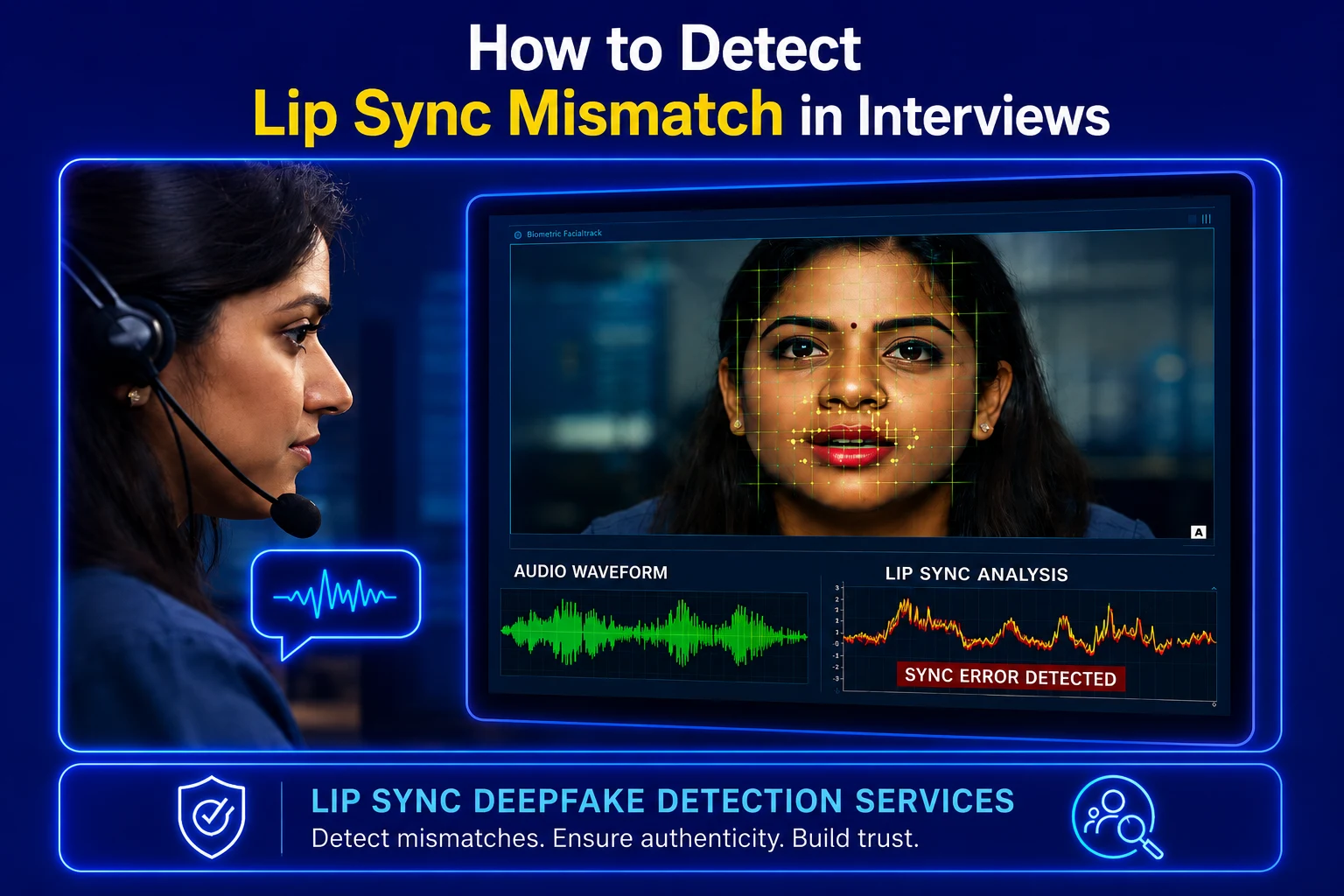
Lip sync analysis is a deepfake detection technique that examines whether a candidate’s lip movements accurately match the words being spoken during an interview. Since many deepfake systems generate facial movements separately from audio, slight mismatches can occur between speech and mouth movements.
Although these inconsistencies may be difficult for recruiters to notice, AI-powered detection systems can analyze video frames and audio signals simultaneously to identify synchronization issues.
Key indicators analyzed include:
Delayed lip movements during speech
Mouth shapes that do not match spoken sounds
Inconsistent timing between audio and video
Unnatural facial transitions while speaking
Distortions around the mouth region
Frame lag during rapid speech
Irregular pronunciation-to-mouth movement alignment
Visual artifacts during conversation
Lip sync analysis is particularly effective against real-time face-swapping and voice-cloning attacks because synchronizing generated facial movements perfectly with live audio remains a technical challenge for many deepfake systems.
According to the iProov Deepfake Blindspot Report, participants were 36% less likely to identify deepfake videos compared to deepfake images, demonstrating how convincing manipulated video content can be without specialized detection tools.
Example:
During a virtual interview, a candidate answers technical questions fluently. However, the lip sync analysis system detects slight delays between speech and mouth movements whenever the candidate speaks quickly. While these inconsistencies are almost invisible to the interviewer, the system flags the interview for additional verification, helping identify a potential deepfake attempt.
8. Eye Movement and Gaze Tracking
Eye movement and gaze tracking is a deepfake detection technique that analyzes how a candidate’s eyes move and focus during an interview. Human eye behavior is highly complex and often difficult for deepfake systems to reproduce accurately, making it a valuable signal for detecting AI-generated manipulation.
Advanced detection systems monitor eye movements throughout the interview to identify unnatural patterns that may indicate face-swapping, synthetic avatars, or real-time deepfake technology.
Key indicators analyzed include:
Natural eye blinking frequency
Eye movement consistency
Gaze direction and focus
Pupil movement patterns
Eye coordination during conversation
Response to visual prompts
Eye contact consistency
Facial and eye movement synchronization
Deepfake models often prioritize facial appearance over subtle eye behavior. As a result, manipulated videos may display unusual blinking patterns, fixed gaze positions, delayed eye movements, or unnatural eye contact that differs from normal human interaction.
Eye movement analysis is especially useful during remote interviews because candidates are expected to engage naturally with recruiters, presentation materials, and on-screen prompts. Any significant deviations from expected eye behavior may indicate manipulation or external assistance.
Example:
A candidate participates in a virtual interview for a product management role. Throughout the conversation, the detection system observes unusually fixed eye contact and limited natural eye movement when responding to questions. While the video appears authentic, the gaze tracking system identifies these irregularities as potential signs of AI-generated manipulation and recommends additional verification before the hiring process continues.
9. Metadata and Device Analysis
Metadata and device analysis is a deepfake detection technique that examines technical information associated with a candidate’s video, audio, and device environment during an interview. Unlike facial or voice-based detection methods, this approach focuses on the digital footprint left behind by the technology being used.
Every video stream, image, and device interaction contains metadata that can provide valuable clues about authenticity. Deepfake tools, virtual cameras, and video manipulation software often leave traces that can be identified through technical analysis.
Key indicators analyzed include:
Virtual camera usage
Device and browser information
Video source authenticity
Camera configuration inconsistencies
Unusual software signatures
Video encoding anomalies
Network and streaming patterns
Signs of screen injection or manipulation
Metadata and device analysis is particularly effective because it investigates the technology behind the interview rather than the candidate’s appearance or behavior. Even if a deepfake appears visually convincing, the software used to generate or transmit the manipulated content may reveal suspicious indicators.
Organizations can use this technique alongside other detection methods to identify hidden risks that may not be visible through facial, voice, or behavioral analysis alone. This creates a more comprehensive approach to interview security and candidate verification.
Example:
A candidate joins a virtual interview and appears completely authentic. However, the verification system detects that the video feed is being transmitted through a virtual camera application commonly used for face-swapping and video manipulation. Although no obvious visual anomalies are present, the metadata analysis raises a security alert, prompting recruiters to conduct additional verification before moving forward in the hiring process.
10. Challenge-Response Verification
Challenge-response verification is a deepfake detection technique that requires candidates to complete spontaneous actions or answer unexpected prompts during an interview. The goal is to verify that the person on screen is actively participating in real time and not relying on deepfake software, pre-recorded content, or external assistance.
Unlike traditional identity checks, challenge-response verification introduces unpredictable tasks that are difficult for AI-generated systems to anticipate and replicate accurately.
Key indicators analyzed include:
Response speed to unexpected requests
Ability to follow real-time instructions
Natural facial and body movements
Consistency between actions and verbal responses
Real-time interaction capabilities
Signs of delayed processing or manipulation
Candidate engagement during verification tasks
Synchronization between movement and speech
This technique is particularly effective because it forces candidates to react spontaneously. Deepfake systems and impersonators often struggle when required to perform actions that have not been prepared in advance.
Organizations can incorporate challenge-response verification at various stages of the interview process to strengthen candidate authentication and reduce the risk of impersonation.
Example:
During a virtual interview, the recruiter asks the candidate to look to the left, raise their right hand, and repeat a randomly generated phrase displayed on the screen. While a genuine candidate can complete these actions immediately, a candidate using deepfake software may show delayed reactions, synchronization issues, or facial distortions. The system detects these inconsistencies and flags the interview for further review.
How Sherlock AI Helps Detect Deepfakes in Interviews
Sherlock AI uses a multimodal approach to interview fraud detection, analyzing video, audio, behavioral, and device-level signals simultaneously. Instead of relying on a single indicator, it evaluates multiple authenticity signals throughout the interview to identify deepfakes, proxy candidates, AI-assisted answering, and identity fraud.
Real-Time AI Fraud Detection
Sherlock AI continuously monitors interviews as they happen and flags suspicious activity in real time. This allows recruiters to identify potential fraud during the interview rather than discovering it after the hiring decision has been made.
Deepfake and Synthetic Identity Detection
The platform analyzes video signals to identify indicators commonly associated with deepfake technology, including unnatural facial movements, rigid expressions, face-swapping behavior, and other visual inconsistencies that may suggest identity manipulation.
Voice Cloning and Audio Manipulation Detection
Sherlock AI evaluates speech patterns and audio signals to identify synthetic voices, transformed speech, voice-cloning attempts, and manipulated audio streams that may be used to impersonate candidates during interviews.
AI Copilot Detection
The platform detects signs of candidates using hidden AI assistants or real-time answer-generation tools during interviews. It can identify patterns associated with AI-generated responses, scripted reasoning, and external answer assistance.
Proxy Candidate Detection
Sherlock AI helps identify situations where someone other than the actual applicant is participating in the interview or assisting the candidate behind the scenes. It analyzes behavioral, voice, and interaction patterns to detect proxy participation.
Behavioral Intelligence Monitoring
Rather than focusing only on facial or audio cues, Sherlock AI evaluates candidate behavior throughout the interview. It monitors response timing, reasoning consistency, communication patterns, and behavioral changes that may indicate fraud or external assistance.
Device and Environment Analysis
Sherlock AI analyzes device-level and system-level signals that may reveal suspicious setups, hidden screens, unusual hardware configurations, virtual cameras, or other tools commonly used to facilitate interview fraud.
Continuous Identity and Consistency Verification
Instead of performing a one-time verification check, Sherlock AI continuously monitors candidate consistency across different interview stages. This helps identify situations where the same candidate does not exhibit consistent voice, behavioral, or interaction patterns over time.
Conclusion
As deepfake technology continues to evolve, organizations face increasing challenges in verifying candidate authenticity during remote interviews. From face-swapping and voice cloning to AI-assisted impersonation, recruitment fraud is becoming more sophisticated and difficult to detect through manual observation alone.
Implementing effective deepfake detection techniques is no longer optional for organizations that rely on virtual hiring. Techniques such as facial movement analysis, voice authentication, liveness detection, identity verification, behavioral analysis, and multi-factor candidate verification help recruiters identify suspicious activity and reduce the risk of hiring fraudulent candidates.
However, no single detection method can provide complete protection. The most effective approach combines multiple verification layers to analyze video, audio, behavioral, and identity signals throughout the interview process. This enables organizations to detect potential threats more accurately while maintaining a smooth candidate experience.
As remote and hybrid hiring continue to grow, businesses need solutions that can keep pace with increasingly advanced AI-generated deception. Sherlock AI helps organizations strengthen interview security by detecting deepfakes, identifying candidate impersonation, monitoring suspicious behavior, and providing recruiters with actionable fraud insights in real time.
By adopting a proactive approach to interview verification and leveraging AI-powered fraud detection tools, organizations can protect their hiring processes, improve hiring confidence, and ensure that every candidate is genuinely who they claim to be.
Ready to secure your hiring process? Explore how Sherlock AI can help detect deepfakes, prevent interview fraud, and build a more trustworthy recruitment workflow. |
|---|