Back to all blogs
Discover the 15 best remote hiring tools for recruiting teams in 2026. Compare platforms for sourcing, interviews, assessments, scheduling, and secure remote hiring.

Remote hiring is no longer an optional recruitment strategy. It has become the standard hiring model for companies building global, flexible, and distributed teams. From sourcing international talent to conducting virtual interviews and verifying candidate authenticity, businesses are increasingly relying on remote hiring tools to recruit faster and smarter.
The shift is massive. According to remote work research, more than 36 million professionals are expected to work remotely in 2026, while companies continue increasing investments in remote-first hiring infrastructure. Remote job opportunities are also growing rapidly as organizations prioritize flexibility, global hiring, and specialized talent acquisition.
But remote hiring comes with serious challenges.
Recruiters today are not just managing scheduling, assessments, and candidate communication. They are also dealing with interview impersonation, AI-generated responses, proxy candidates, deepfake interviews, and hiring fraud. Research shows that 17% of hiring managers have already encountered candidates using deepfake technology during video interviews, making remote recruitment verification more important than ever.
This is why modern recruiting teams need more than a traditional ATS or video interview platform. They need a complete remote hiring stack that helps source, evaluate, interview, verify, and securely hire candidates from anywhere.
In this guide, we cover the 15 best remote hiring tools for recruiting teams, including recruiting software, video interview platforms, technical assessment tools, scheduling solutions, and AI-powered hiring security platforms that help prevent remote interview fraud.
Whether you are a startup, enterprise recruiter, or global HR team, these tools can help you streamline hiring, improve candidate quality, and make remote recruitment more secure.
15 Must Have Best Remote Hiring Tools for Recruiting Teams
Choosing the right remote hiring tools can significantly improve how recruiting teams source, assess, interview, and verify candidates across distributed environments. The best platforms help reduce time to hire, improve candidate experience, automate repetitive tasks, and prevent hiring mistakes.
Below are the 15 best remote hiring tools for recruiting teams that can help companies streamline remote recruitment in 2026.
1. Sherlock AI: Interview Proctoring Agent for Secure and Trustworthy Remote Hiring
Best For: High stakes remote interviews where hiring teams need stronger candidate verification, protection against AI assisted cheating, and higher confidence in interview authenticity.

Remote hiring has created new opportunities for organizations to access global talent, but it has also introduced challenges that traditional interview processes were never designed to handle. Recruiters are increasingly facing situations where candidates rely on hidden assistance, impersonators, AI generated responses, or even synthetic media to perform better during interviews.
Sherlock AI helps organizations address these challenges by adding an intelligent trust layer to remote interviews. Built specifically for the realities of modern hiring, Sherlock AI helps recruiting teams validate candidate authenticity and surface suspicious interview behavior that may otherwise go unnoticed during live conversations.
Unlike standard remote interview platforms that mainly focus on communication and scheduling, Sherlock AI is designed to strengthen interview integrity. It works quietly alongside virtual interviews and evaluates behavioral, conversational, and technical signals that may indicate unusual activity or interview manipulation.
The platform operates seamlessly during live interviews on Zoom, Google Meet, and Microsoft Teams without interrupting the flow of conversation. This allows recruiters and hiring managers to focus on candidate evaluation while Sherlock AI continuously monitors for integrity risks in the background.
Sherlock AI is especially useful for technical hiring, executive recruitment, trust sensitive roles, and large scale remote hiring programs where interview authenticity has a direct impact on hiring quality. In environments where AI usage is permitted, Sherlock AI can also evaluate AI fluency, helping employers understand how effectively candidates use AI tools in practical scenarios.
Key Features
Detection of Hidden Interview Assistance: Identify signs of real time support tools, AI copilots, hidden prompts, or off screen assistance during interviews.
Candidate Impersonation Detection: Surface suspicious patterns that may suggest a proxy candidate or substitute interviewer is involved.
Behavioral Intelligence Analysis: Evaluate communication patterns, behavioral signals, and response consistency to identify anomalies during interviews.
Live Interview Integrity Signals: Generate real time insights that help recruiters recognize suspicious activity while interviews are in progress.
Deepfake Risk Detection: Analyze audio and video inconsistencies to identify signs of manipulated identity or synthetic content.
Automated Interview Summaries: Capture structured interview insights that combine candidate performance observations with integrity related signals.
AI Fluency: Measure how effectively candidates interact with AI tools when AI assisted workflows are part of the role.
Compatible with Leading Video Platforms: Works smoothly with Zoom, Google Meet, and Microsoft Teams to support existing hiring workflows.
Easy Workflow Adoption: Integrates naturally into remote hiring processes without requiring major operational changes.
Why It’s a Top Pick
Sherlock AI stands out because it focuses on a growing problem that many remote hiring tools overlook, which is interview trust and authenticity. While most hiring platforms help recruiters conduct interviews, Sherlock AI helps recruiters determine whether the interview itself can be trusted.
Its background monitoring approach makes the experience feel natural for both recruiters and candidates. There are no disruptive alerts or interview interruptions, allowing hiring teams to maintain a smooth candidate journey while still receiving meaningful interview integrity insights.
As remote hiring becomes more dependent on AI enabled workflows, Sherlock AI helps organizations move beyond intuition and make hiring decisions supported by objective signals. For companies hiring remotely at scale, especially in technical or sensitive positions, this additional layer of verification can significantly reduce hiring risks.
Pricing
Sherlock AI offers tiered monthly pricing based on interview volume and hiring requirements. Entry plans typically start at around $100 per month for 10 interviews, while growth focused plans scale up to approximately $1,500 per month for 300 interviews. Enterprise packages with advanced capabilities, premium support, and customized configurations are available upon request.
2. LinkedIn Recruiter
LinkedIn Recruiter helps hiring teams source candidates for remote roles by providing access to LinkedIn’s professional network. For companies recruiting across different cities or countries, the platform can simplify talent discovery and candidate outreach.
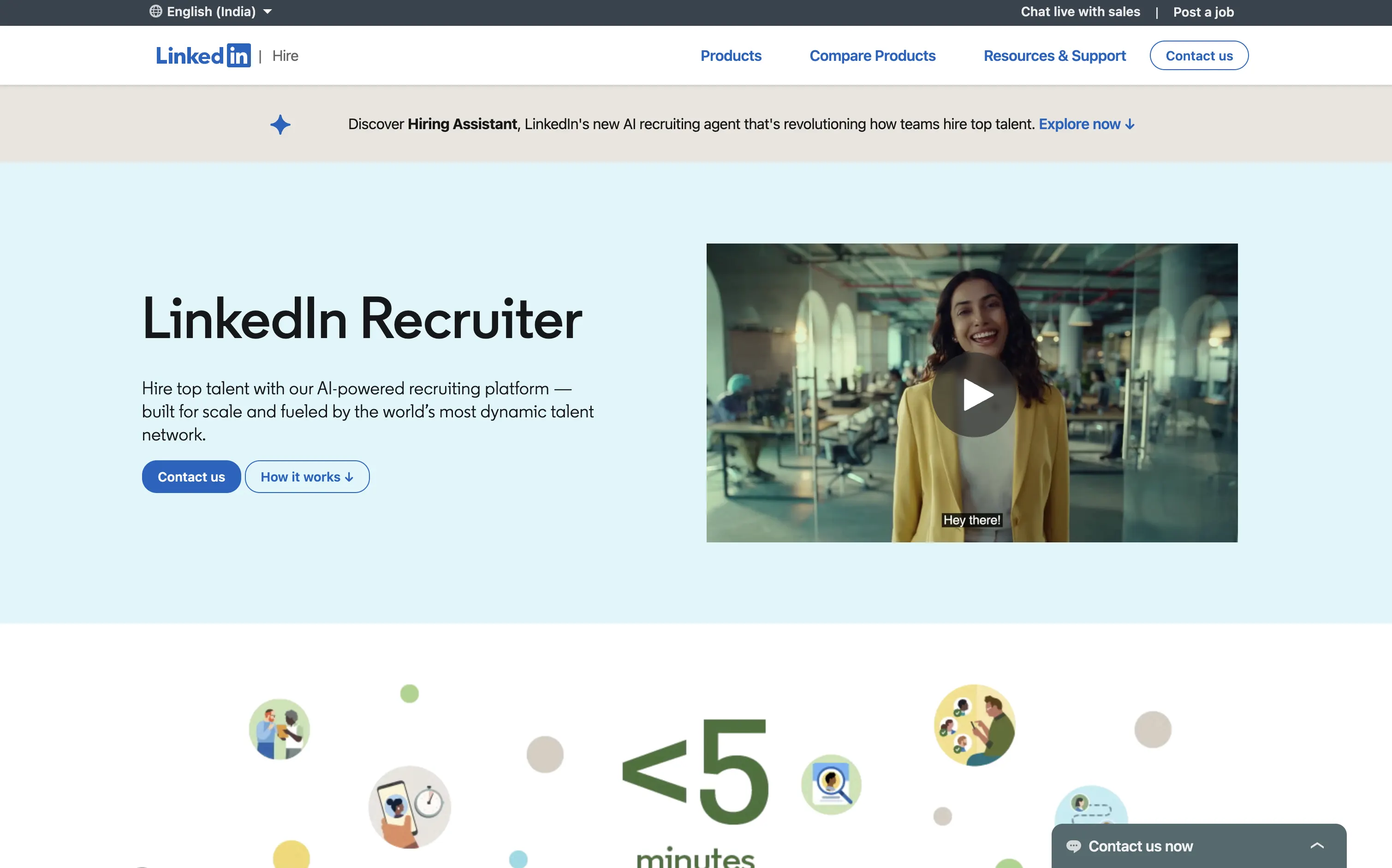
Remote hiring often requires recruiters to go beyond traditional job boards and actively search for candidates with specific experience, technical skills, or location preferences. LinkedIn Recruiter supports this process by helping teams identify both active job seekers and passive candidates who may be open to remote opportunities.
The platform also supports recruiter productivity through candidate recommendations, search filters, and hiring insights that can help teams manage distributed recruitment more efficiently.
Key Features
Advanced Search Filters: Use more than 40 filters to search candidates based on skills, experience, location, education, industry, job title, and remote work preferences.
AI Powered Candidate Recommendations: Receive candidate suggestions aligned with hiring needs, recruiter activity, and job requirements.
Direct Candidate Outreach: Contact professionals through InMail messaging, including candidates outside your immediate network.
Talent Pipeline Management: Save candidate profiles and organize talent pools for ongoing or future hiring needs.
Recruiter Collaboration Tools: Share profiles, notes, and feedback across hiring teams to improve collaboration.
3. Workable
Workable is a hiring platform that helps recruiting teams manage different stages of the remote recruitment process from candidate sourcing to interview scheduling and hiring collaboration. For companies managing distributed hiring, having multiple recruitment functions in a single system can help simplify workflows and reduce manual coordination.
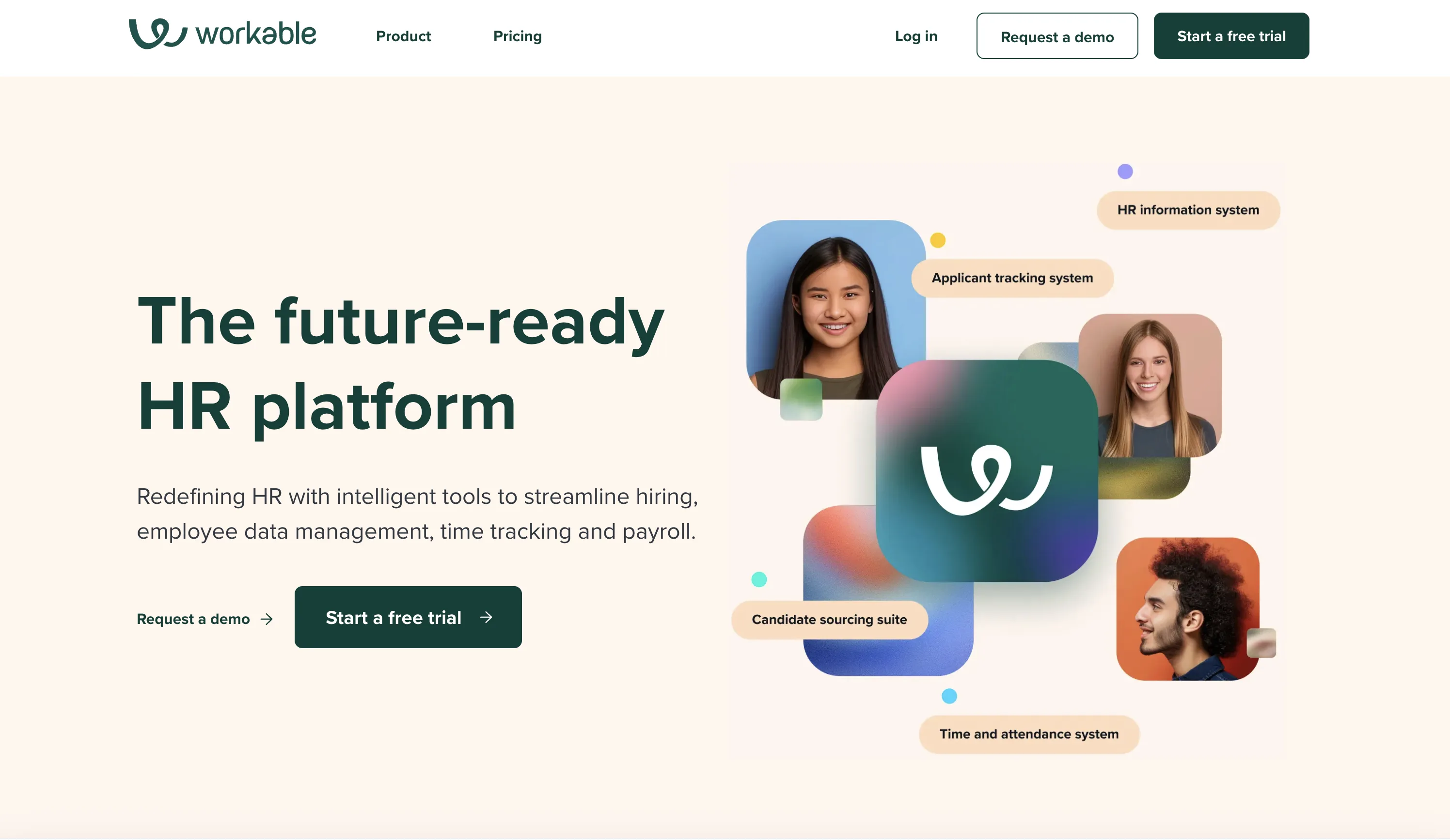
The platform allows recruiters to post jobs across multiple job boards, manage applicants in one place, and coordinate interviews with hiring teams. Since remote hiring often involves candidates across different locations and time zones, Workable also includes automation features to support communication and scheduling.
Workable can help organizations centralize recruitment activities while improving visibility across hiring pipelines and interview stages.
Key Features
Multi Platform Job Posting: Publish job openings across multiple job boards and hiring channels from a single dashboard.
Candidate Pipeline Management: Track applicants through hiring stages and organize recruitment workflows efficiently.
Interview Scheduling Tools: Coordinate interviews with built in scheduling features to reduce manual communication.
Collaborative Hiring Workflows: Enable recruiters and hiring managers to share feedback, notes, and candidate evaluations.
Candidate Communication Automation: Send automated emails, interview reminders, and status updates to improve candidate engagement.
4. Greenhouse
Greenhouse is a hiring platform that helps recruiting teams organize and manage remote recruitment workflows through structured hiring processes. For companies hiring across multiple locations, the platform supports collaboration between recruiters and hiring managers while keeping candidate information centralized.
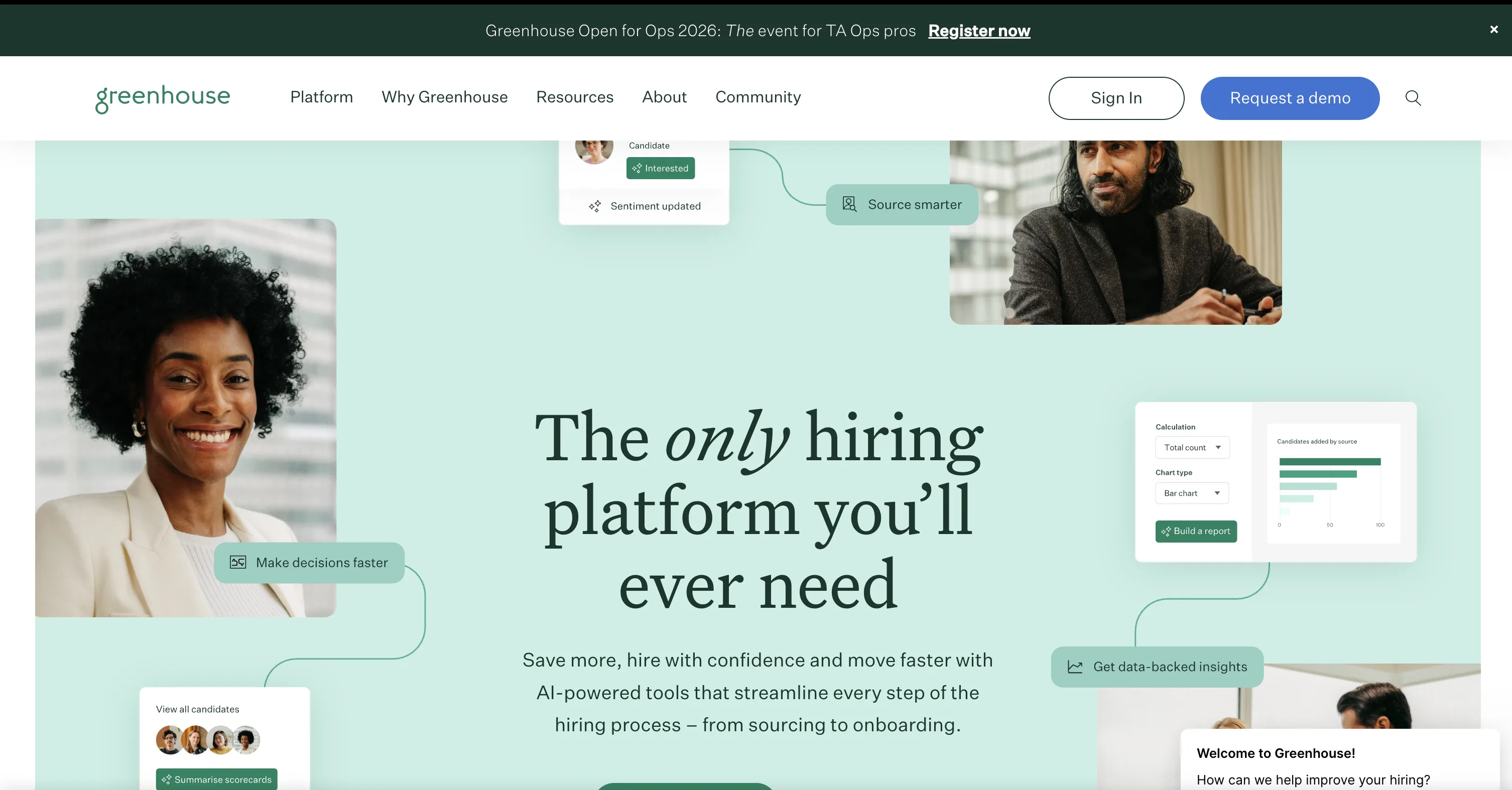
The platform includes tools for interview planning, candidate tracking, and team feedback, which can help organizations maintain consistency during remote hiring.
Key Features
Structured Hiring Workflows: Create standardized hiring stages to improve recruitment consistency.
Interview Scorecards: Collect structured feedback from interviewers to support fair candidate evaluations.
Candidate Pipeline Tracking: Monitor applicants throughout different hiring stages.
Team Collaboration Tools: Share candidate feedback and hiring notes across recruiting teams.
ATS Integrations: Connect with recruiting and HR systems to streamline hiring workflows.
5. HireVue
HireVue supports remote hiring through video interviews and candidate assessments. The platform helps recruiters conduct interviews virtually, evaluate applicants, and standardize candidate screening processes.
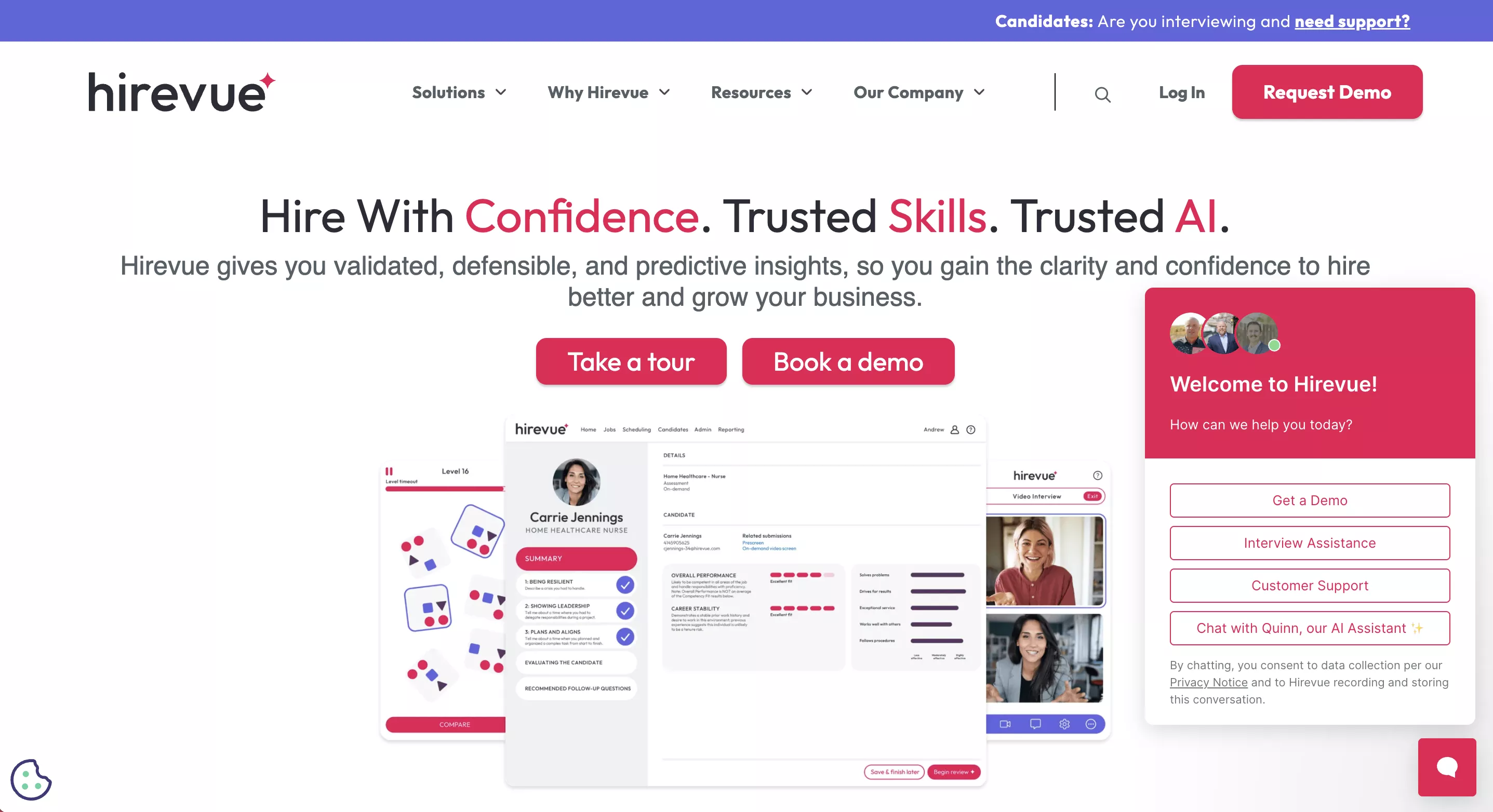
Organizations hiring at scale often use HireVue to reduce scheduling challenges and improve screening efficiency during remote recruitment.
Key Features
Video Interviewing: Conduct live and pre recorded virtual interviews.
Candidate Assessments: Evaluate skills and job readiness through assessments.
Interview Scheduling: Simplify coordination between recruiters and candidates.
Structured Candidate Evaluation: Standardize interview scoring and feedback.
Hiring Workflow Integrations: Connect with applicant tracking systems and HR tools.
👉 Looking for more options? Explore HireVue alternatives. |
6. CoderPad
CoderPad helps recruiting teams evaluate technical candidates through live coding interviews and skill assessments. For companies hiring remote developers, engineers, and technical professionals, verifying practical coding ability during virtual interviews can improve hiring confidence.
The platform allows recruiters and hiring managers to assess coding skills in real time through collaborative programming environments. This can help reduce hiring bias by focusing on practical problem solving and technical performance instead of resumes alone.
Key Features
Live Coding Interviews: Conduct real time coding assessments during technical interviews.
Multi Language Support: Evaluate candidates across various programming languages and frameworks.
Collaborative Coding Environment: Allow candidates and interviewers to work together during assessments.
Technical Skill Evaluation: Assess problem solving, logic, and coding ability.
Interview Replay and Notes: Review interview performance and technical feedback later.
👉 Looking for something beyond CoderPad? Check out these CoderPad alternatives. |
7. Checkr
Checkr helps organizations conduct background verification for remote hiring by automating employment screening and compliance checks. Since remote recruitment often involves candidates from different regions, background verification can help employers make more informed hiring decisions.
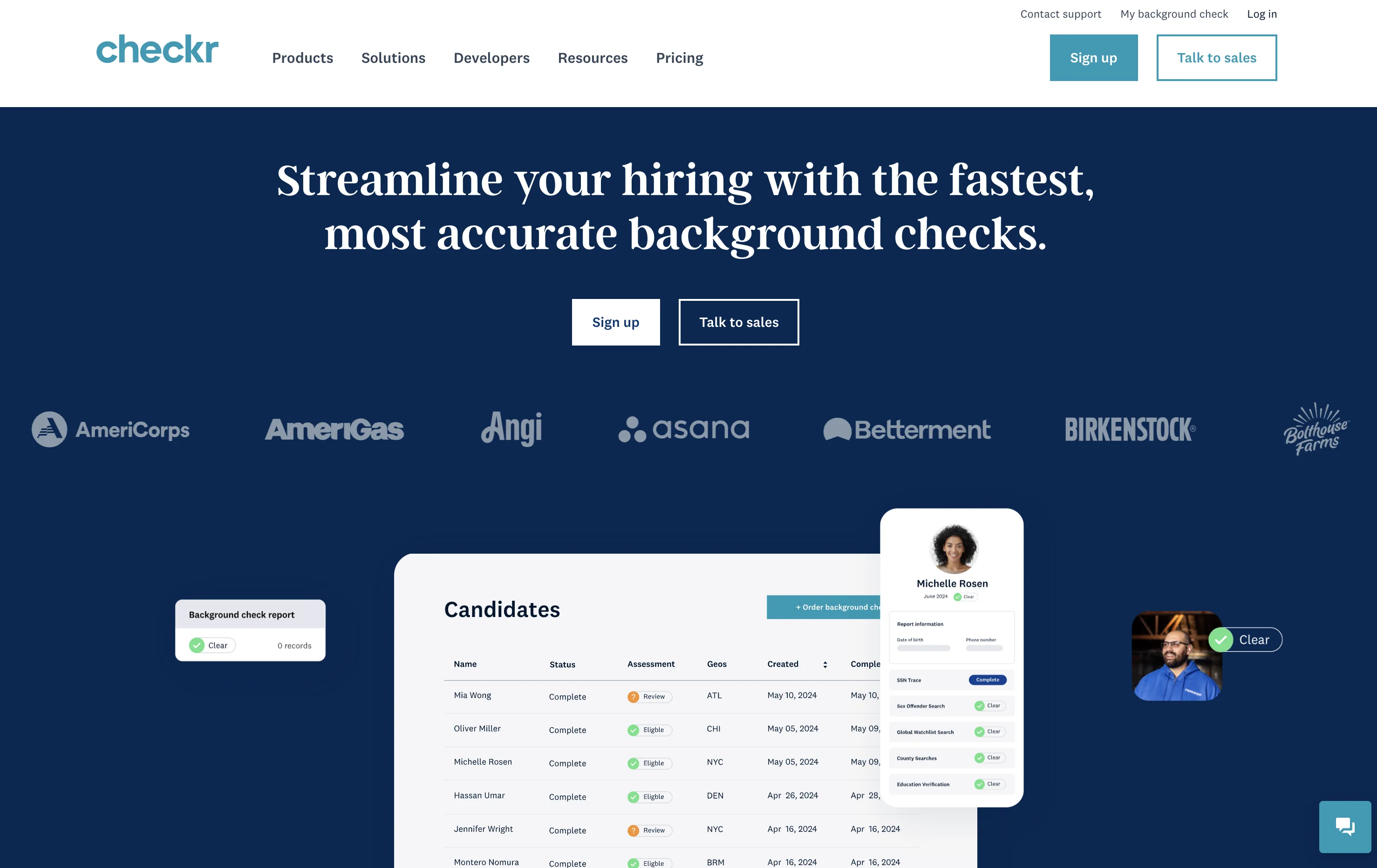
The platform supports criminal background checks, identity verification, and employment screening while simplifying compliance requirements.
Key Features
Background Verification: Conduct employment and criminal background checks.
Identity Verification: Verify candidate identity during hiring workflows.
Compliance Management: Support region specific hiring regulations and compliance.
Automated Screening Workflows: Reduce manual verification effort through automation.
Candidate Status Tracking: Monitor verification progress within recruitment workflows.
8. Testlify
Testlify helps recruiters assess candidate skills through online pre employment testing. For companies conducting remote hiring, evaluating technical, cognitive, and job specific skills before interviews can help improve candidate quality and reduce screening time.
The platform supports assessment based hiring by allowing recruiters to evaluate candidates through customizable skill tests.
Key Features
Pre Employment Assessments: Evaluate candidates through role specific skill tests.
Technical Skill Testing: Assess coding, software, and technical capabilities.
Aptitude and Cognitive Tests: Measure logical reasoning and problem solving ability.
Custom Test Creation: Build assessments tailored to specific hiring needs.
Candidate Performance Reports: Generate detailed reports for recruiter evaluation.
👉 Compare top Testlify alternatives |
9. VidCruiter
VidCruiter supports remote hiring through structured video interviews and recruitment automation. The platform helps organizations standardize hiring processes by enabling virtual interviews, scheduling, and candidate evaluations.
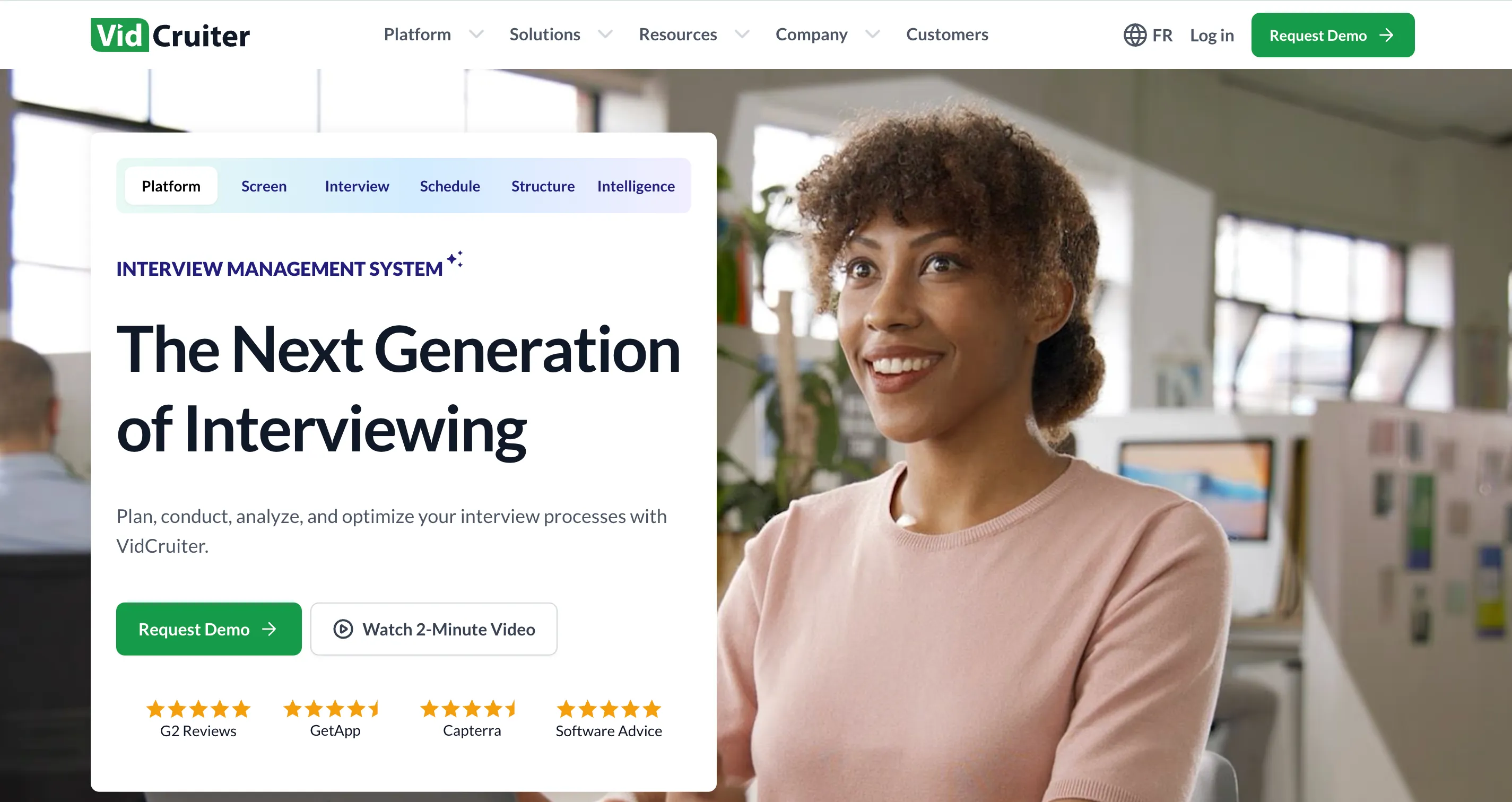
For recruiting teams managing large hiring volumes, VidCruiter can help simplify interview coordination while maintaining consistency across evaluations.
Key Features
Video Interviewing: Conduct live and pre recorded interviews remotely.
Structured Interview Workflows: Standardize interview processes for consistent hiring.
Interview Scheduling Automation: Reduce manual scheduling coordination.
Candidate Evaluation Tools: Share structured feedback and scorecards internally.
Recruitment Workflow Integrations: Connect with applicant tracking and HR systems.
10. BambooHR
BambooHR helps organizations manage HR operations and employee information during hiring and onboarding. For companies hiring remote employees, the platform can simplify onboarding documentation, employee records, and workforce management.
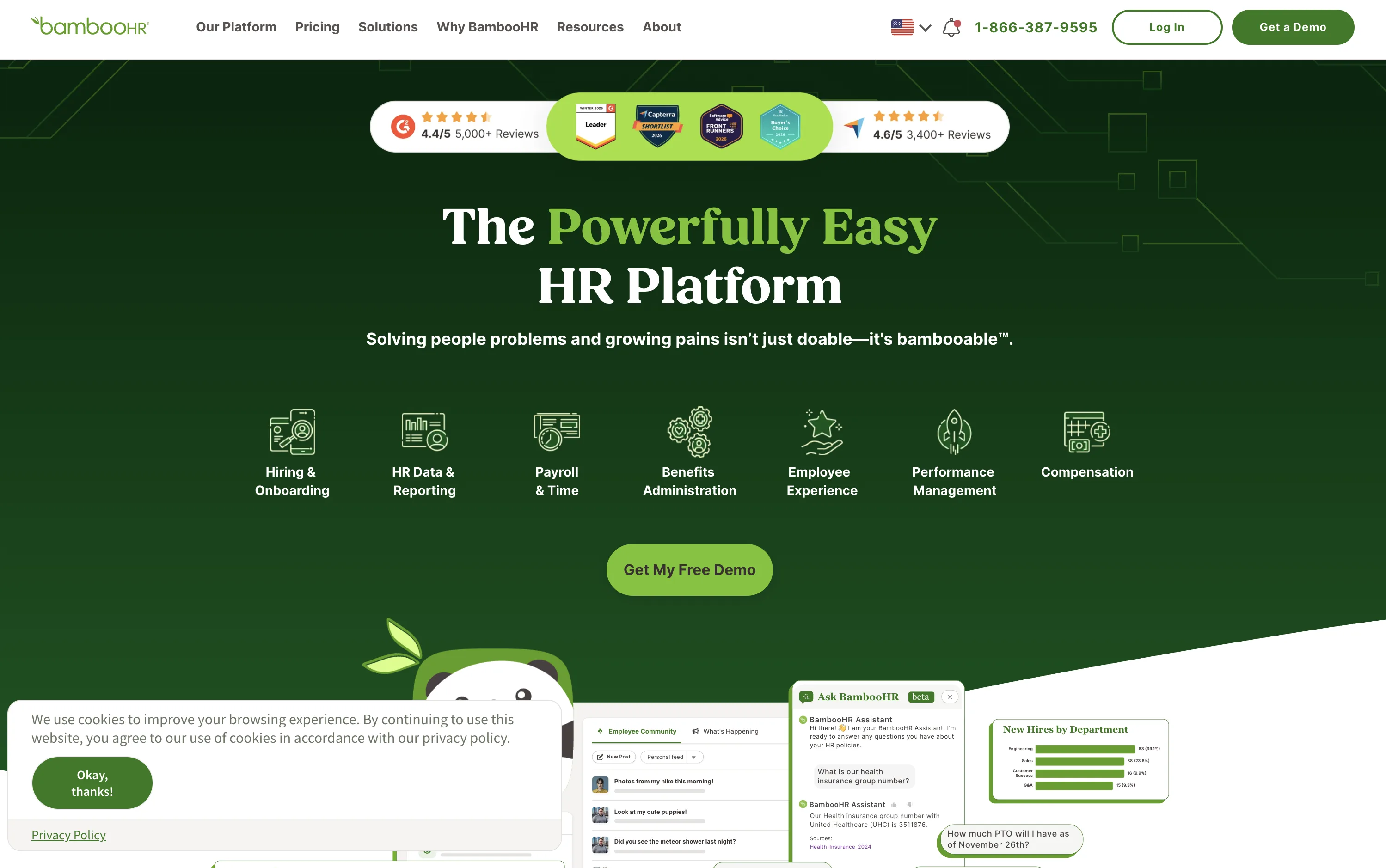
The system supports HR teams by centralizing employee data and streamlining administrative tasks.
Key Features
Employee Record Management: Centralize workforce information in one system.
Remote Employee Onboarding: Simplify onboarding for distributed employees.
Document Management: Manage contracts, forms, and employee records digitally.
Time Off Tracking: Monitor employee leave and attendance.
HR Reporting: Generate workforce and hiring related insights.
11. SmartRecruiters
SmartRecruiters helps recruiting teams manage candidate sourcing, applicant tracking, and collaborative hiring processes. For remote hiring teams, the platform centralizes recruitment workflows and improves coordination between recruiters and hiring managers.
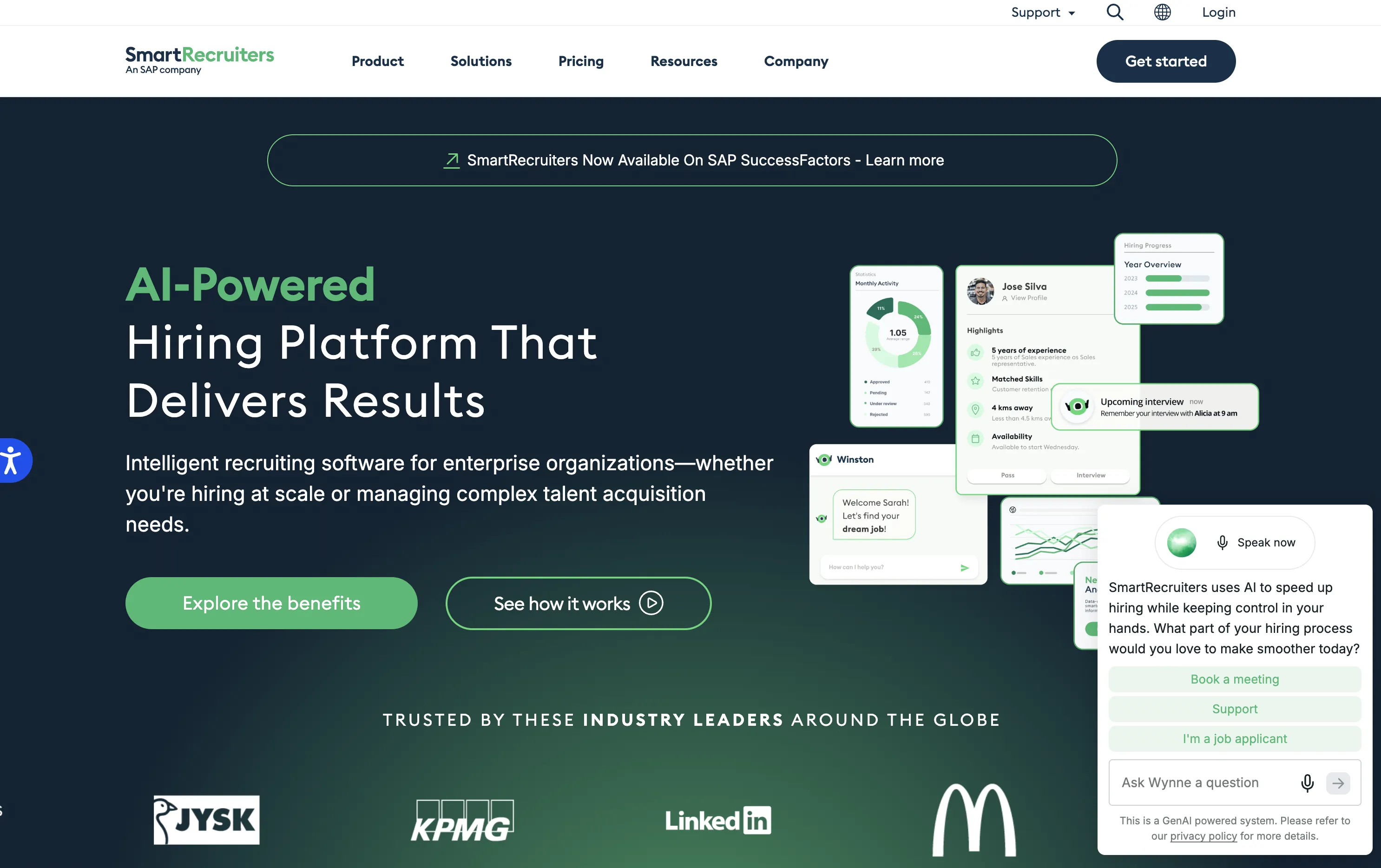
It supports businesses hiring across locations by simplifying hiring pipelines and interview management.
Key Features
Applicant Tracking System: Organize applications and hiring workflows centrally.
Collaborative Hiring: Enable hiring teams to share feedback and candidate evaluations.
Interview Scheduling: Coordinate remote interviews efficiently.
Job Distribution: Publish job listings across multiple hiring channels.
Recruitment Analytics: Access hiring performance and pipeline insights.
12. TestGorilla
TestGorilla helps organizations screen candidates through pre employment assessments before interviews begin. For remote hiring teams, skill based evaluations can help identify qualified candidates early and reduce manual screening effort.
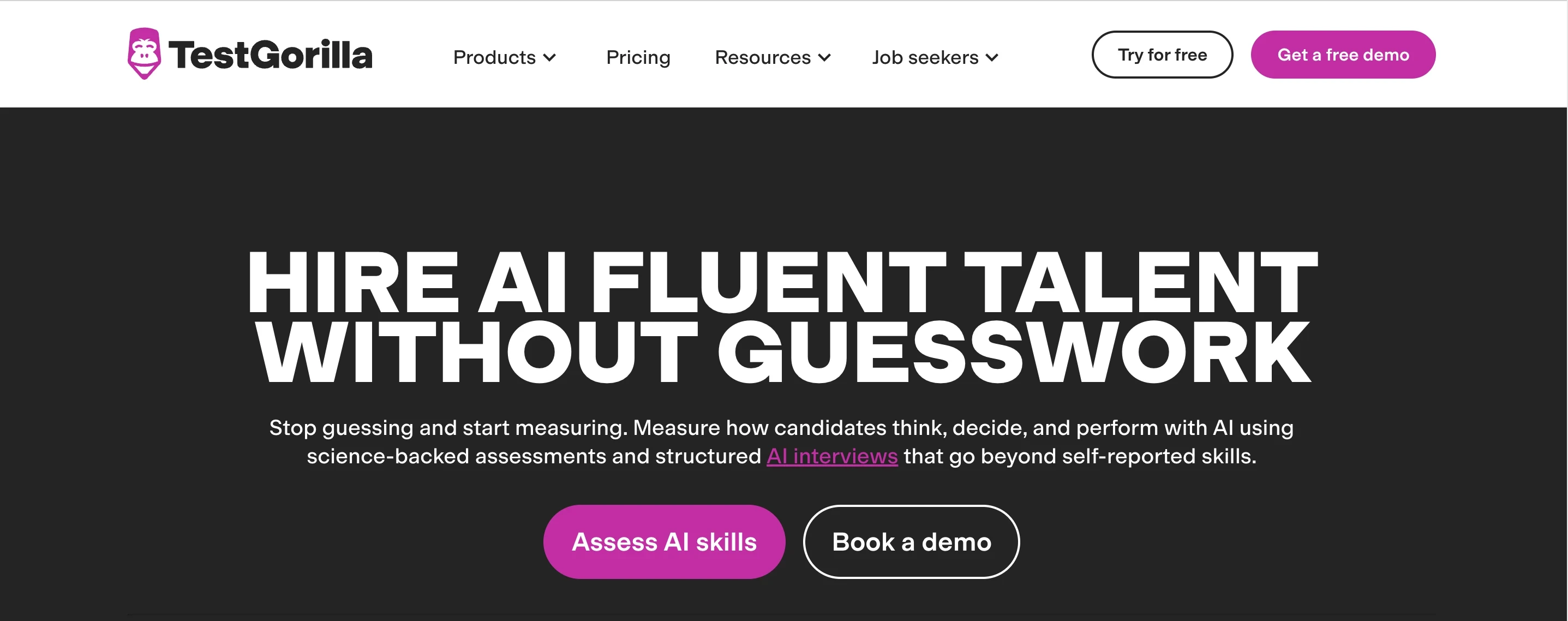
The platform supports hiring decisions by allowing recruiters to assess technical skills, cognitive ability, language proficiency, and job readiness.
Key Features
Pre Employment Skill Assessments: Evaluate candidate ability before interviews.
Technical and Coding Tests: Assess role specific technical skills.
Cognitive Ability Testing: Measure problem solving and reasoning skills.
Customizable Assessments: Build role based evaluations tailored to hiring needs.
Candidate Performance Reports: Review assessment results through detailed reports.
13. Willo
Willo supports remote hiring through asynchronous video interviews, allowing candidates to complete interviews at their convenience without requiring live scheduling. For recruiting teams hiring across multiple time zones, this can help reduce interview coordination challenges and improve candidate flexibility.
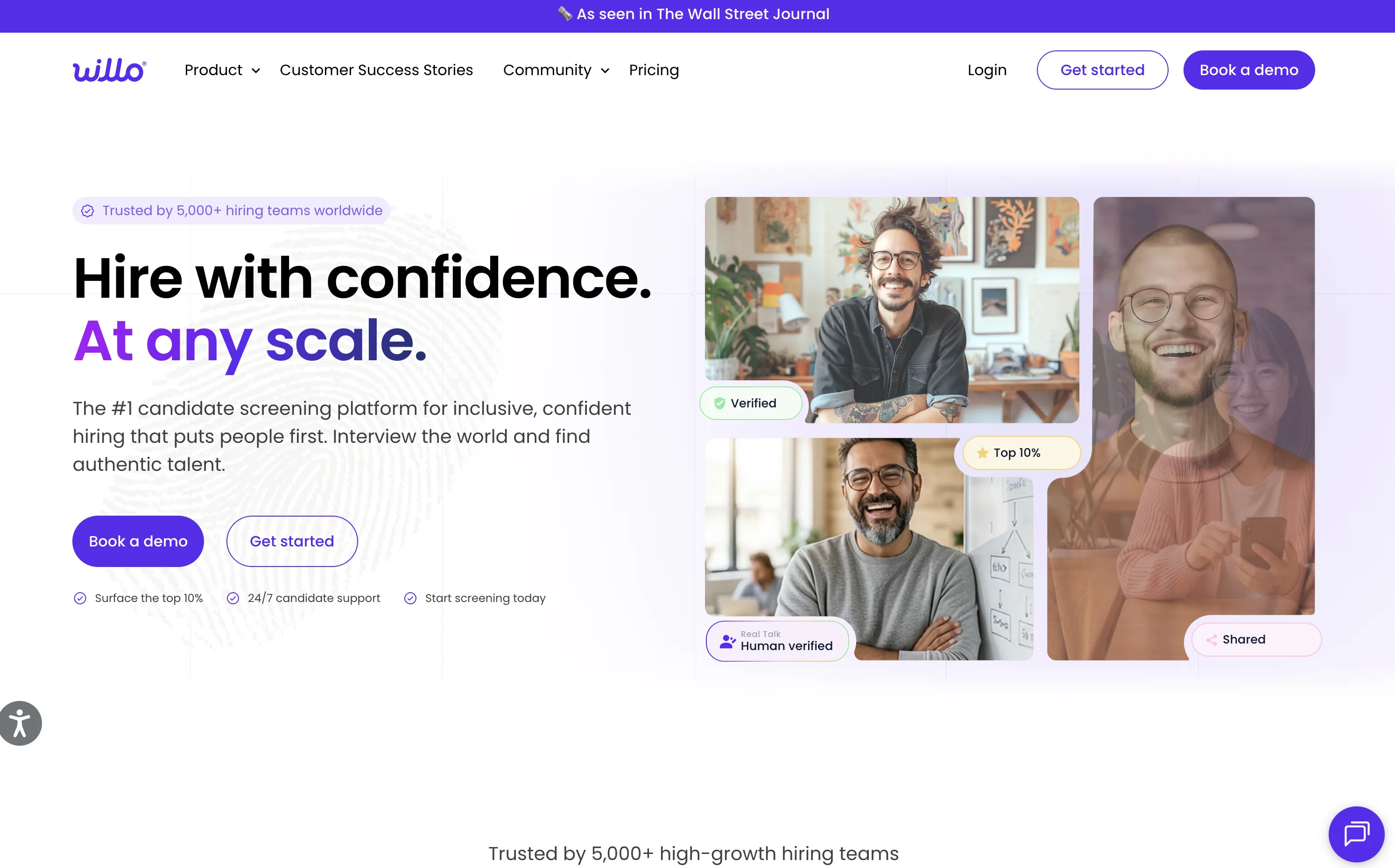
The platform allows recruiters to pre set interview questions and review recorded responses later, making it useful for early stage candidate screening and high volume recruitment.
Key Features
One Way Video Interviews: Allow candidates to complete interviews asynchronously.
Custom Interview Templates: Create standardized interview workflows for different roles.
Candidate Response Recording: Review recorded candidate answers at any time.
Hiring Team Collaboration: Share candidate responses and feedback internally.
Interview Scheduling Flexibility: Reduce time zone and scheduling challenges during remote hiring.
14. Rippling
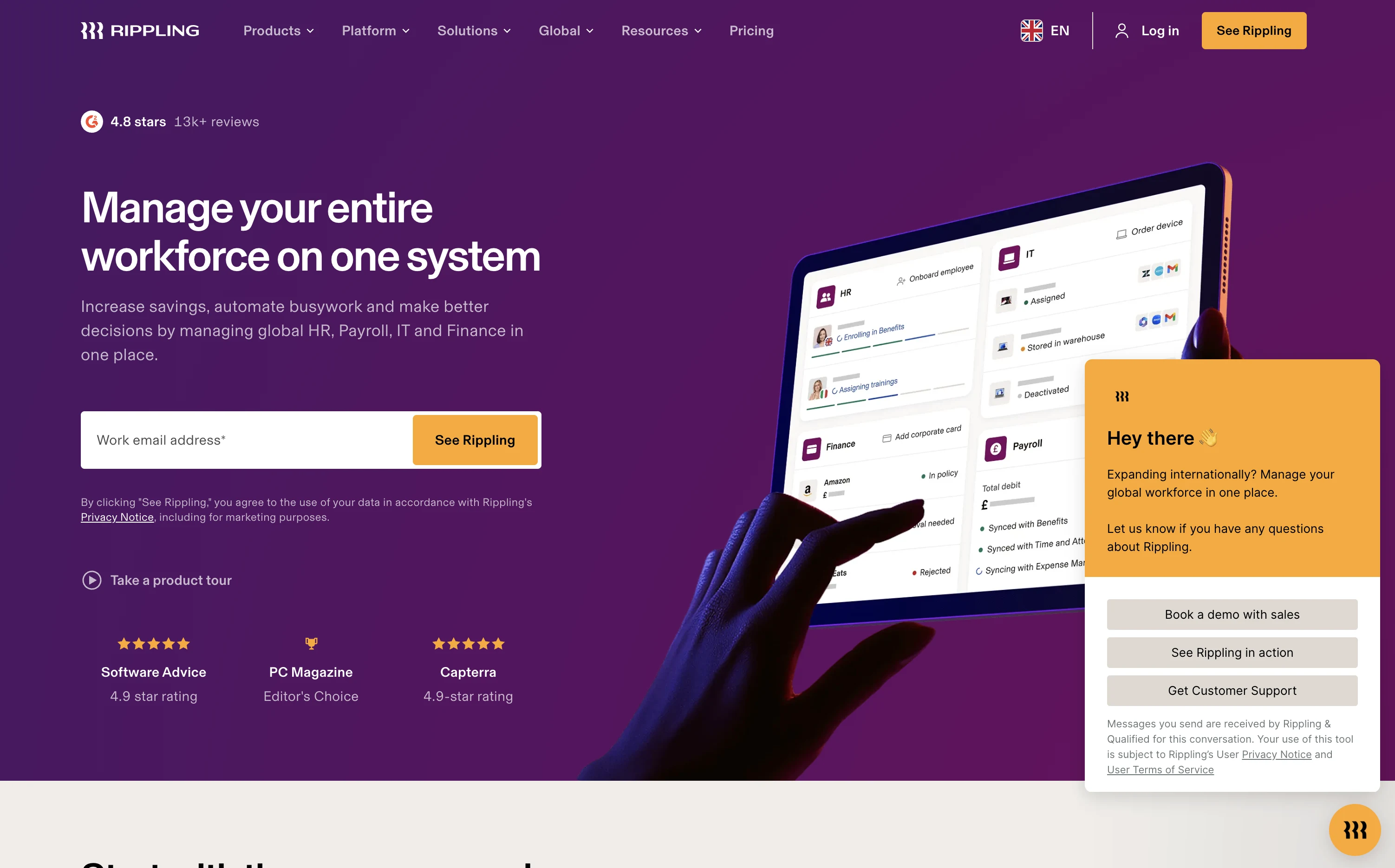
Rippling helps organizations manage employee onboarding, payroll, HR, and IT operations in one system. For companies hiring remote employees across regions, managing workforce administration can become complex, especially when onboarding distributed teams.The platform centralizes employee management by helping businesses handle payroll, benefits, device management, and onboarding from a single dashboard.
Key Features
Employee Onboarding Automation: Simplify onboarding for remote employees.
Global Payroll Management: Process employee payments across different regions.
HR and Workforce Management: Manage employee records, benefits, and HR workflows.
IT Device Management: Configure and manage employee devices remotely.
Workflow Automation: Automate repetitive HR and administrative tasks.
15. Breezy HR
Breezy HR helps recruiting teams manage remote hiring through applicant tracking, candidate sourcing, and interview coordination. For organizations hiring across distributed locations, the platform centralizes recruitment workflows and helps teams manage candidates from application to offer stage.
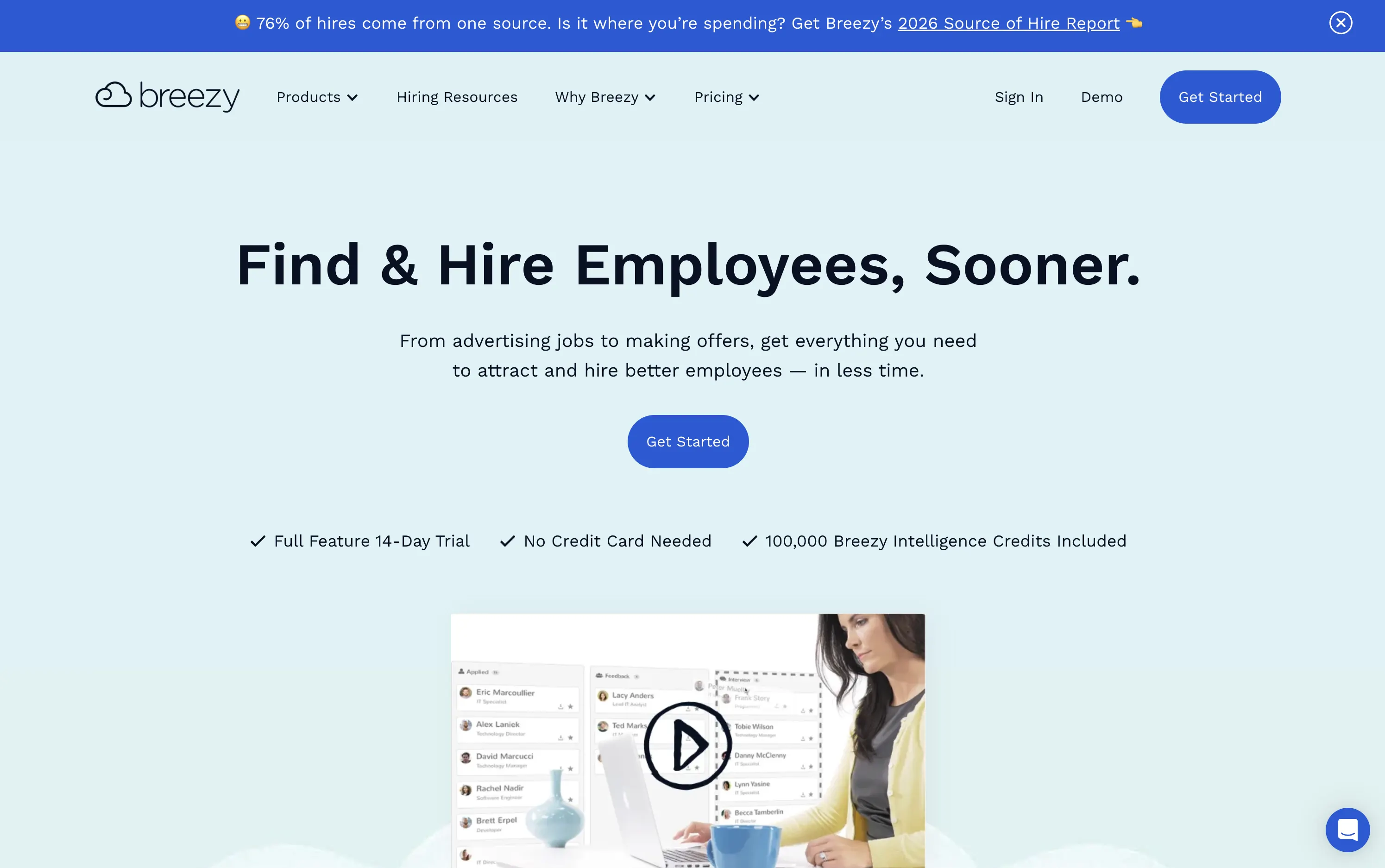
The platform includes automation features that can reduce repetitive recruitment tasks while improving visibility into hiring pipelines and candidate progress.
Key Features
Applicant Tracking System: Organize applications and manage hiring pipelines in one place.
Candidate Sourcing Tools: Publish job openings across multiple hiring channels.
Interview Scheduling: Coordinate interviews with candidates and hiring teams more efficiently.
Collaborative Hiring Workflows: Share feedback, scorecards, and evaluation notes internally.
Recruitment Automation: Automate repetitive hiring tasks and candidate communication.
How Sherlock AI Strengthens Trust in Remote Hiring
Remote hiring has made recruitment faster and more accessible, but it has also introduced new risks that traditional interview methods struggle to detect. Hiring teams today face challenges such as candidate impersonation, hidden interview assistance, AI generated responses, proxy interviewers, and deepfake enabled fraud during virtual interviews.
As hiring shifts toward video based assessments and global recruitment, relying solely on recruiter observation is often not enough to verify interview authenticity. This is where Sherlock AI helps organizations build trust into remote hiring.
Sherlock AI acts as an interview proctoring and integrity layer for remote recruitment. Instead of interrupting interviews or creating friction for candidates, the platform runs silently alongside live interviews and helps recruiters identify signals that may indicate suspicious behavior.
Whether organizations are hiring for technical positions, leadership roles, or trust sensitive jobs, Sherlock AI provides objective interview intelligence to support more confident hiring decisions.
👉 Ready to strengthen your remote interviews? Schedule a Sherlock AI demo today. |
Final Thoughts
Remote hiring has transformed the way organizations recruit talent, making it possible to hire skilled professionals from anywhere in the world. However, as remote recruitment becomes more common, hiring teams also face new challenges related to interview coordination, candidate verification, hiring efficiency, and interview authenticity.
This is why choosing the right remote hiring tools is more important than ever. At the same time, modern hiring environments require more than workflow automation alone.
By helping recruiters identify suspicious interview behavior and strengthen candidate verification, Sherlock AI supports more confident hiring decisions without disrupting candidate experience. For organizations conducting high trust remote hiring, especially for technical, leadership, and sensitive roles, interview integrity is becoming just as important as candidate evaluation itself.
The future of remote hiring will depend not only on speed and scalability, but also on trust, transparency, and hiring confidence. Companies that invest in secure and structured remote hiring processes will be better positioned to build stronger distributed teams in the years ahead.