Back to all blogs
Explore the top 15 remote proctoring tools for secure remote hiring. Compare features, proctoring methods, and find the right solution to maintain candidate integrity.


Remote proctoring software helps organizations monitor candidates during online exams, assessments, and remote hiring processes. These platforms use technologies such as AI-powered behavior monitoring, identity verification, webcam and screen monitoring, browser controls, and session recording to detect suspicious activity and protect assessment integrity.
As more exams, skills assessments, and interviews move online, choosing the right remote proctoring solution has become increasingly important. The best platform depends on your use case, security requirements, candidate volume, integrations, and whether you need automated, live, or hybrid proctoring.
In this guide, we compare 15 of the best remote proctoring software and tools in 2026, covering their key features, best use cases, and strengths to help you choose the right solution for secure online assessments and remote hiring.
What to Look for in Remote Proctoring Software Tools?
When choosing remote proctoring software, focus on the features that help verify candidate identity, monitor activity, and detect suspicious behavior during online assessments and remote interviews.
1. AI-Powered Proctoring
AI-powered proctoring can analyze candidate behavior and automatically flag potentially suspicious activity during an assessment or interview, reducing the need for continuous manual monitoring.
2. Identity Verification
Identity verification helps confirm that the person taking an assessment or participating in an interview is the registered candidate. This may include ID verification, facial matching, and other authentication methods.
3. Webcam and Screen Monitoring
Webcam and screen monitoring can detect unusual activity, candidate absence, multiple people in the frame, tab switching, unauthorized applications, or other activity that may require review.
4. Cheating and AI Assistance Detection
Modern proctoring platforms can analyze multiple signals to identify potential cheating, unauthorized assistance, or the use of AI tools during assessments and interviews.
5. Live and Automated Proctoring
Organizations may need automated monitoring, human supervision, or a combination of both. Look for platforms that support the proctoring method that fits your assessment or hiring workflow.
6. Reporting and Session Recording
Session recordings, event logs, alerts, and integrity reports help reviewers investigate suspicious activity and maintain an audit trail for each assessment or interview.
15 Best Remote Proctoring Software Tools
The best remote proctoring software depends on the type of assessment, level of security required, and how candidates need to be monitored. Some platforms focus on online exams and certifications, while others are built for hiring assessments and remote interviews.
Below, we compare 15 remote proctoring tools based on their key features, proctoring capabilities, and best use cases. The list includes AI-powered, automated, live, and hybrid solutions for organizations looking to secure online assessments and verify candidate authenticity.
Sherlock AI
Best for: Remote hiring, interviews, and AI-assisted cheating detection
Sherlock AI is built specifically for remote interviews, where verifying candidate authenticity is often the biggest challenge. It acts as an AI proctor that monitors interviews in real time and helps detect cheating without interrupting the flow of the conversation.

It uses a multimodal approach, combining video, audio, and behavioral signals to identify suspicious patterns during interviews. Instead of relying on basic rule-based flags, it analyzes how candidates interact and detects when behavior appears assisted or unnatural.
Key features:
AI copilot and live assistance detection: Identifies when candidates are using AI copilots or receiving live external help during interviews by analyzing response patterns and timing anomalies.
Proxy and impersonation detection: Flags cases where another person may be assisting or replacing the candidate using face mismatch, voice inconsistency, and behavioral signals.
Deepfake detection: Detects synthetic video or audio manipulation to prevent candidates from using deepfake tools to fake identity or presence.
Multimodal monitoring: Combines video, audio, screen behavior, and interaction signals to build a more complete view of candidate activity.
Real-time alerts during interviews: Notifies interviewers instantly when suspicious behavior is detected, allowing immediate follow-up or intervention.
Post-interview integrity reports: Provides detailed breakdowns of flagged moments, including timestamps and explanations for easier review and decision-making.
Behavioral pattern analysis: Goes beyond rule-based flags by analyzing how candidates think, respond, and interact to detect unnatural or assisted behavior.
AI fluency assessment (optional): Differentiates between genuine candidate responses and AI-generated answers, especially in environments where AI use may be partially allowed.
Session recording and audit trails: Captures interview sessions with contextual metadata so teams can revisit and validate decisions when needed.
Seamless integration with interview workflows: Works alongside common video interview tools without disrupting the candidate experience or requiring complex setup.

Sherlock AI is a strong fit for teams that want deeper visibility into candidate behavior without adding friction to the interview process. It works in the background so recruiters can stay focused on evaluating candidates.
2. Talview
Talview is a remote proctoring platform that combines AI-powered monitoring with live and automated proctoring for online assessments, certifications, and hiring evaluations. It helps organizations verify candidate identity, monitor test activity, and identify suspicious behavior during remote assessments.
The platform supports different levels of supervision, allowing organizations to choose between automated monitoring, live proctoring, and review-based workflows depending on their assessment requirements. Its combination of identity verification, secure testing controls, and AI-based detection makes it suitable for organizations conducting assessments at scale.

Key features:
AI and live proctoring: Supports automated, live, and record-and-review proctoring for different assessment requirements.
Identity verification: Uses identity checks and facial recognition capabilities to help verify candidates and detect potential impersonation.
Secure browser and environment controls: Helps restrict unauthorized activity and maintain a controlled assessment environment.
AI-based behavior detection: Monitors candidate activity and flags potentially suspicious behavior for further review.
Real-time monitoring and alerts: Helps assessment teams identify and respond to suspicious events during a session.
Talview is designed for organizations that need scalable remote proctoring across hiring assessments, professional certifications, and online exams. Its combination of automated monitoring and human proctoring provides flexibility for organizations with different security and supervision requirements.
👉 Looking for more options? Explore Talview alternatives.
3. Honorlock
Honorlock is a remote proctoring software designed primarily for online exams and assessments. It combines AI-powered monitoring with live human intervention to identify potential misconduct while minimizing interruptions for candidates.
The platform monitors video, audio, and desktop activity while providing controls to restrict unauthorized websites, applications, AI tools, and devices during an assessment. When potentially suspicious behavior is detected, AI can alert a live proctor for review and intervention when necessary.

Key Features:
AI + Live Proctoring: Combines automated AI monitoring with human proctors who review potentially suspicious activity and intervene when necessary.
AI Tool Detection and Blocking: Helps prevent unauthorized use of AI tools and chatbots during online assessments.
Browser Lockdown: Restricts access to unauthorized websites, applications, and keyboard shortcuts such as copy and paste.
Device Detection: Uses AI to detect cell phones and other unauthorized devices during proctored exams.
Identity Verification and Reporting: Verifies candidate identity and provides exam reports with recordings and flagged events for post-assessment review.
Honorlock is particularly focused on protecting the integrity of online exams while reducing unnecessary interruptions for test takers. Its combination of automated monitoring, live proctor intervention, browser controls, and device detection provides multiple layers of exam security.
👉 Not the right fit? See Top 15 Honorlock Alternatives
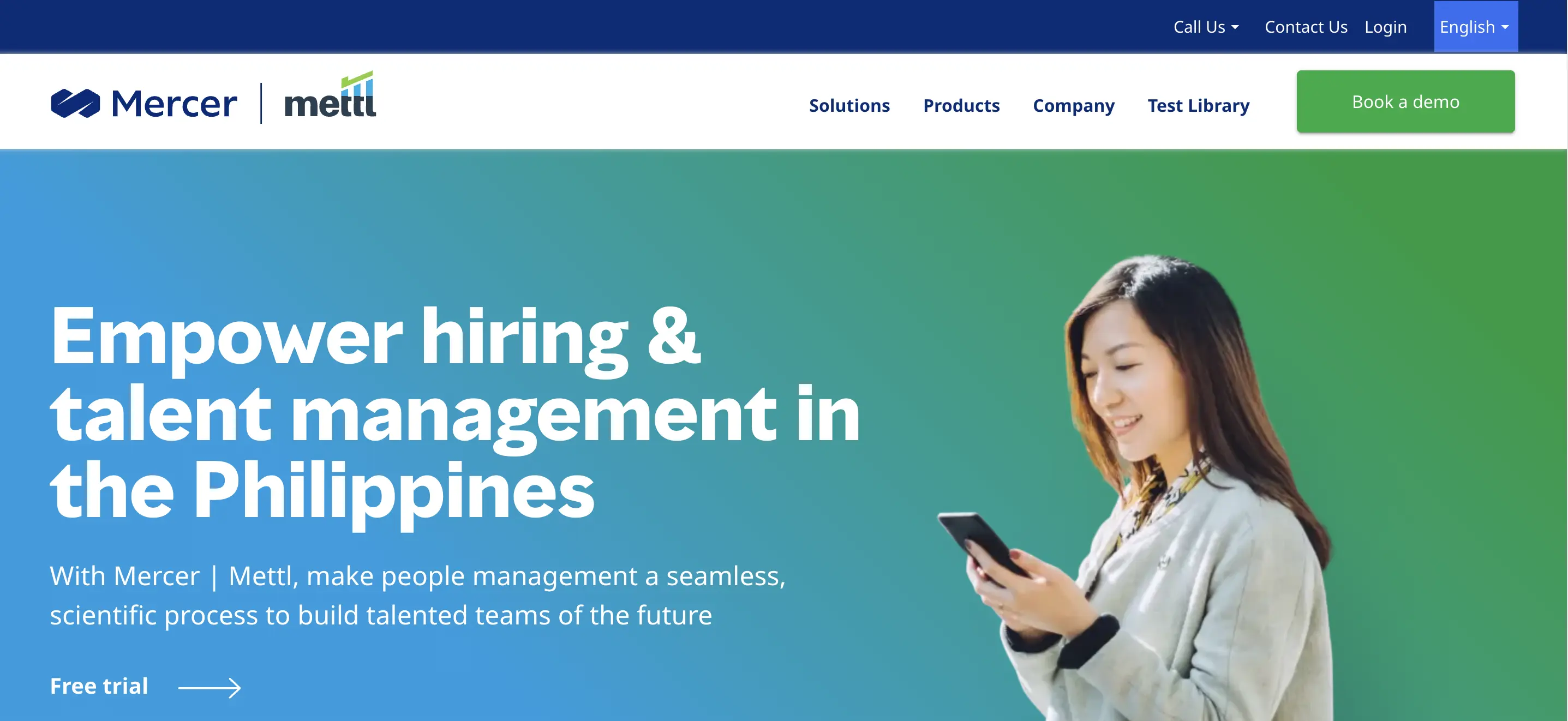
4. Mercer | Mettl
Mercer | Mettl is a remote proctoring and assessment platform designed for hiring, certification, and academic exams. It combines AI-powered monitoring with human proctoring to help organizations verify candidates, detect suspicious activity, and maintain assessment integrity during remote tests.
The platform provides multiple proctoring options, including automated AI monitoring, live human supervision, and record-and-review workflows. It also offers a secure browser and additional monitoring capabilities for organizations conducting high-stakes assessments at scale.
Key Features:
AI-Based Proctoring: Uses video and audio analytics to flag suspicious activity such as face visibility issues, additional people, distractions, and mobile phone use.
Live and Record-and-Review Proctoring: Supports real-time human monitoring as well as recorded sessions that can be reviewed after an assessment.
Secure Browser: Restricts access to unauthorized websites, applications, navigation, and other system functions during assessments.
Identity Verification: Supports candidate authentication through methods such as facial verification and multi-step authentication.
Dual-Camera Monitoring: Enables an additional camera view to provide broader visibility of the candidate and testing environment.
Mercer | Mettl offers a combination of automated and human-led remote proctoring for organizations conducting online exams, certifications, and pre-employment assessments. Its range of monitoring and security controls makes it suitable for organizations that need flexible proctoring options across different assessment environments.
👉 Looking for other options? Explore Mercer | Mettl alternatives.
5. Examity
Examity is a remote proctoring software that provides flexible monitoring options for online exams, certifications, and assessments. It combines automated technology with human proctoring to help organizations verify candidate identity, monitor exam sessions, and maintain assessment integrity.
The platform allows organizations to select different levels of supervision based on the security requirements of an assessment. Its combination of live monitoring, automated proctoring, and post-exam review provides flexibility for institutions and organizations conducting remote assessments.
Key Features:
Multiple Proctoring Modes: Supports automated, live human, and record-and-review proctoring options for different assessment requirements.
Identity Verification: Uses identity authentication and verification processes to help confirm that the correct candidate is taking the assessment.
Secure Exam Environment: Provides controls designed to restrict unauthorized activity and maintain a controlled testing environment.
Live Proctoring: Human proctors can monitor candidates in real time and intervene when suspicious activity requires attention.
Session Reporting and Review: Provides session recordings, flagged events, logs, and reports to support post-assessment review and auditing.
Examity provides organizations with a flexible approach to remote proctoring by combining automated monitoring with human oversight. Its range of proctoring options makes it suitable for online exams, professional certifications, and other assessments where candidate identity and test integrity are important.
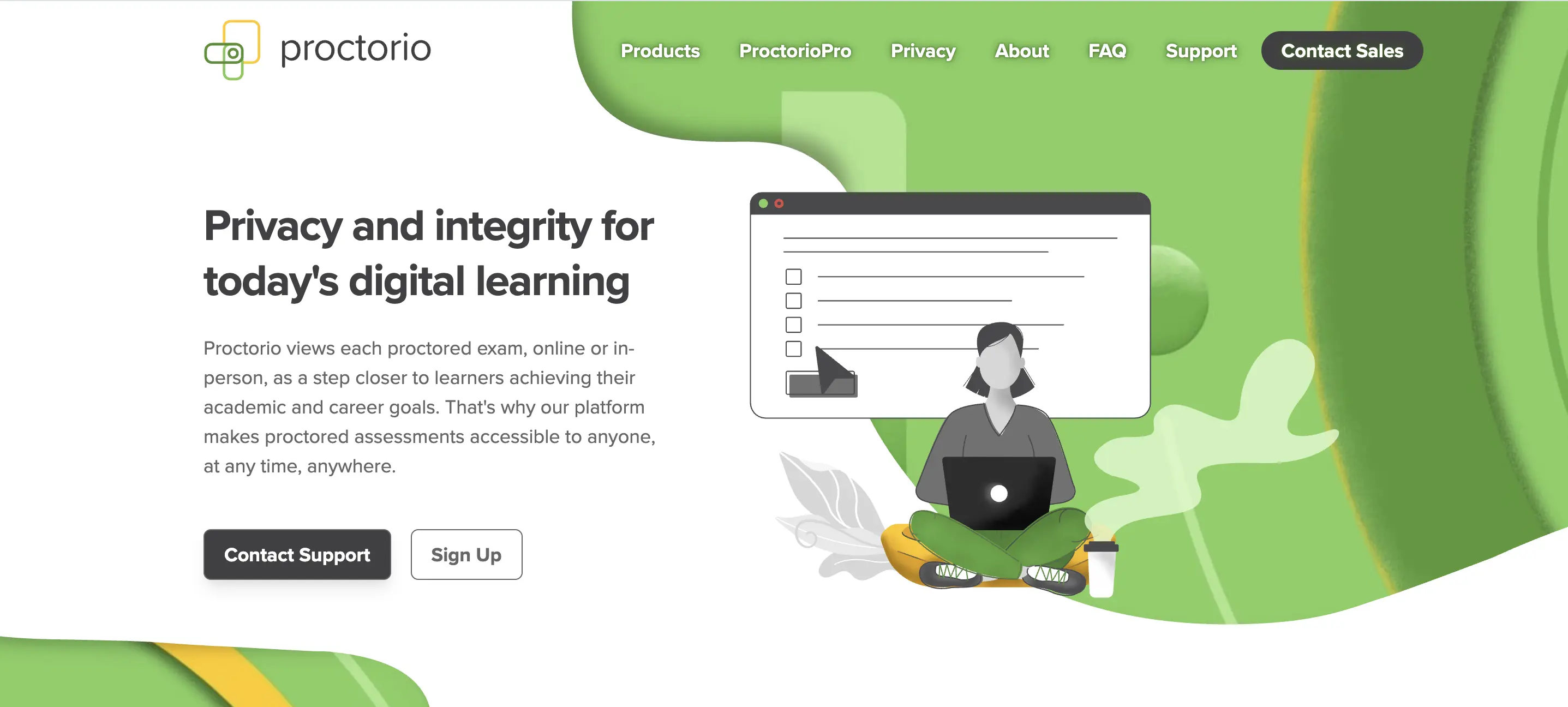
6. Proctorio
Proctorio is a remote proctoring software designed to secure online exams through automated monitoring and configurable security controls. It enables institutions and organizations to monitor candidates, verify identity, and detect potentially suspicious activity without requiring continuous live supervision.
The platform works within the browser and provides organizations with control over which activities are monitored or restricted during an assessment. This makes it suitable for large-scale online testing where automation, flexibility, and exam security are important.
Key Features:
Automated Proctoring: Uses AI-based monitoring to identify potentially suspicious behavior during online exams.
Browser Lockdown: Restricts access to unauthorized websites, tabs, applications, and other browser activities during assessments.
Identity Verification: Supports identity verification methods to help confirm the candidate's identity before or during an exam.
Video, Audio, and Screen Recording: Captures relevant session activity to provide evidence for reviewing flagged events.
Configurable Security Controls: Allows institutions to customize monitoring and security settings according to the requirements of individual assessments.
Proctorio provides an automated approach to remote proctoring, helping organizations secure online assessments without relying entirely on live human proctors. Its configurable monitoring and browser-based security controls make it suitable for institutions conducting assessments at scale.
👉 Exploring alternatives? Check out our guide to Proctorio alternatives
7. ExamSoft
ExamSoft is a digital assessment platform that provides secure exam delivery and remote proctoring through tools such as ExamID and ExamMonitor. It is designed for organizations that need to deliver controlled online assessments while verifying candidate identity and monitoring exam activity.
ExamID authenticates candidates before the assessment, while ExamMonitor records video, audio, and screen activity during the exam for remote proctoring and review. ExamSoft also supports offline exam delivery, allowing candidates to complete assessments without continuous internet connectivity and securely upload exam data afterward.

Key Features:
Identity Verification: ExamID uses the candidate's camera to authenticate their identity before the assessment begins.
Video, Audio, and Screen Monitoring: ExamMonitor records the candidate's webcam, microphone, and screen activity throughout the exam.
AI-Assisted Monitoring: ExamMonitor can identify and flag potential anomalies or incidents for further review.
Offline Exam Capability: Allows candidates to complete exams without continuous internet access and upload encrypted assessment data afterward.
Secure Assessment Delivery: Provides a controlled assessment environment designed to protect exam content and maintain assessment integrity.
ExamSoft combines secure digital assessment delivery with identity authentication and remote exam monitoring. Its ExamID and ExamMonitor tools make it suitable for institutions and organizations that need structured, secure, and reviewable online assessments.
8. Proctortrack
Proctortrack is a remote proctoring software that uses AI and automated monitoring to verify candidate identity and detect potentially suspicious activity during online exams and assessments. It combines identity verification, activity monitoring, and secure testing controls to help organizations maintain assessment integrity at scale.
The platform offers multiple proctoring levels, ranging from automated monitoring to human-in-the-loop and live proctoring. It also supports integrations with major learning and assessment platforms, allowing organizations to incorporate remote proctoring into existing testing workflows.

Key Features:
AI-Powered Automated Proctoring: Uses AI and machine learning to analyze candidate activity and flag potential testing violations.
Continuous Identity Verification: Uses biometric authentication, including facial and ID verification, to help confirm candidate identity throughout the assessment.
Secure Browser and Lockdown: Restricts unauthorized websites, applications, extensions, and other activities that could compromise exam security.
Screen, Video, and Audio Monitoring: Records relevant candidate and desktop activity to provide evidence for reviewing potentially suspicious events.
Live and Hybrid Proctoring: Offers automated, human-in-the-loop, and live proctoring options for different assessment security requirements.
Proctortrack provides a scalable approach to remote proctoring, combining automated monitoring with optional human oversight. Its identity verification, secure testing environment, and flexible proctoring models make it suitable for online exams, certifications, and other high-stakes assessments.
👉 Want to evaluate more options? Explore Proctortrack alternatives
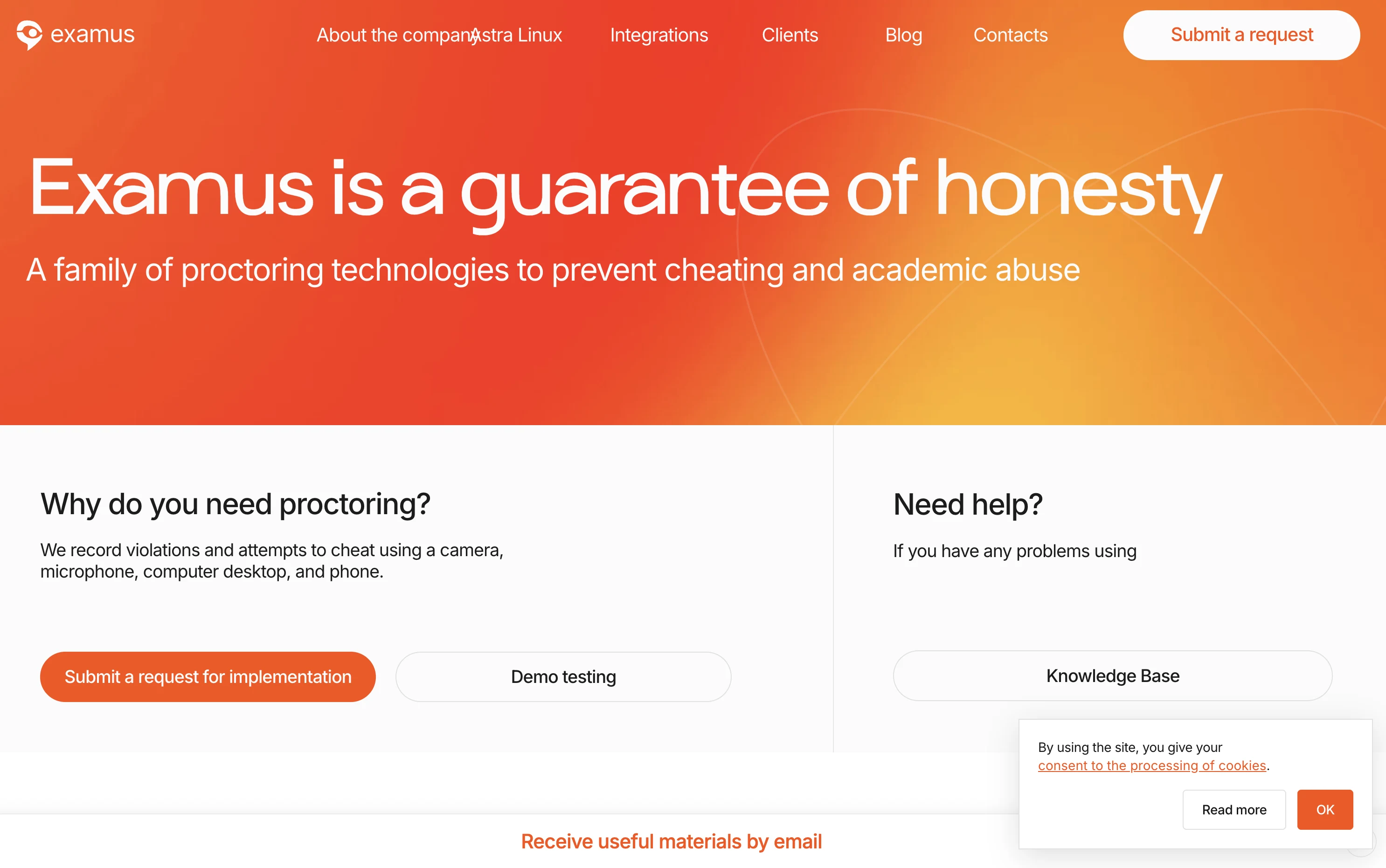
9. Examus
Examus is a remote proctoring software that helps organizations monitor candidates during online exams and assessments. The platform supports both automated and human-supervised proctoring, using webcam, microphone, and screen monitoring to help identify potential violations during testing.
Examus provides different proctoring modes depending on the assessment requirements. Its automated approach can analyze candidate behavior and record sessions for later review, while synchronous proctoring allows human proctors to monitor candidates and communicate with them during an exam.
Key Features:
Automated Proctoring: Uses AI-based monitoring to analyze candidate behavior and identify potential violations during assessments.
Live Proctoring: Allows human proctors to monitor candidates in real time and communicate with them through an integrated chat.
Identity Verification: Uses candidate photos, selfies, and ID verification options to help authenticate test takers.
Webcam, Audio, and Screen Monitoring: Uses the candidate's webcam, microphone, and screen sharing to provide visibility into the testing session.
Violation Alerts and Session Recording: Generates alerts for detected rule violations and records asynchronous proctoring sessions for review by exam organizers.
Examus provides flexible remote proctoring options for organizations that need either automated monitoring or human supervision during online assessments. Its combination of identity verification, screen and video monitoring, AI-based detection, and live proctoring supports different levels of assessment security.
10. Proctor360
Proctor360 is a remote proctoring software designed to secure online exams and assessments through AI-powered, live, and multi-camera proctoring. It helps organizations verify candidates, monitor testing environments, and identify potential violations during remote assessments.
The platform provides different levels of proctoring, from automated AI monitoring to live human supervision and its 360° Total View solution. This allows organizations to select the level of monitoring appropriate for each assessment, including high-stakes exams that require broader visibility of the testing environment.

Key Features:
AI Auto-Proctoring: Uses AI-assisted monitoring to identify potential incidents during an exam and provides recordings and flagged events for review.
Identity Verification: Supports automated candidate check-in and ID verification before an assessment begins.
Multi-Camera Proctoring: Allows additional camera views, including a candidate's mobile phone as a second camera, to provide greater visibility into the testing environment.
360° Total View: Uses a 360-degree camera headset to capture a broader view of the candidate's testing environment, including areas that a standard webcam may not show.
Live and Record-and-Review Proctoring: Supports real-time human supervision as well as recorded sessions that can be reviewed after an assessment.
Proctor360 provides a flexible remote proctoring approach for organizations conducting online exams, professional certifications, and other high-stakes assessments. Its combination of AI monitoring, human proctoring, multi-camera options, and 360° room visibility allows organizations to adjust security based on the requirements of each assessment.
👉 Not sure Proctor360 is the right fit? Compare Proctor360 alternatives
11. OnVUE (Pearson VUE)
OnVUE is Pearson VUE's online proctoring platform for delivering secure, remotely proctored exams and assessments. It combines artificial intelligence with live human monitoring to help verify candidates, monitor exam sessions, and protect assessment integrity.
Candidates can take supported exams remotely using their own computer and webcam, while OnVUE monitors the testing session and applies security controls throughout the assessment. The platform is widely used for certification and high-stakes exams where secure remote delivery is required.

Key Features:
AI and Live Proctoring: Combines assistive AI tools with human proctors to monitor candidates and identify potentially suspicious behavior.
Identity Verification: Uses ID verification and face-matching technology to authenticate candidates before an exam.
Browser Lockdown: Restricts unauthorized applications and activities during the assessment to maintain a controlled testing environment.
Session Recording: Records exam sessions, including relevant audio and video, to support security, quality, and post-exam review.
360° Room Scan: Requires candidates to scan their testing environment during check-in to help verify that the space meets exam security requirements.
OnVUE provides a secure way to deliver certification and other high-stakes exams remotely while maintaining many of the security controls associated with traditional testing environments. Its combination of AI-assisted monitoring, live proctoring, identity verification, and remote testing controls makes it a widely used online proctoring solution.
12. Questionmark
Questionmark is an online assessment and remote proctoring platform designed for secure exams, certifications, and high-stakes assessments. It provides multiple proctoring options, including live human proctoring, AI-powered monitoring, and record-and-review, allowing organizations to choose the level of supervision required for each assessment.
The platform combines proctoring with secure assessment delivery, identity verification, and browser controls. This makes it suitable for organizations that need to deliver assessments at scale while maintaining exam integrity and providing candidates with flexible testing options.

Key Features:
AI Proctoring: Uses automated monitoring and AI-assisted analysis to identify potential violations and flag sessions for review.
Live Online Proctoring: Human proctors verify candidate identity, monitor the exam through webcam and audio, and can intervene when suspicious behavior is detected.
Record and Review: Records exam sessions and automatically flags potential anomalies, allowing organizations to review incidents after the assessment.
Secure Browser: Restricts access to unauthorized digital materials and helps maintain a controlled testing environment.
Identity Verification: Uses candidate ID and authentication checks to help confirm that the correct person is taking the assessment.
Questionmark provides flexible remote proctoring options for organizations conducting certification exams, compliance assessments, and other high-stakes online tests. Its combination of automated monitoring, human supervision, identity verification, and secure browser controls supports different levels of assessment security.
13. DigiProctor
DigiProctor is an AI-powered remote proctoring software designed to secure online exams and assessments. It combines automated monitoring with human invigilation to verify candidates, monitor their testing environment, and identify potentially suspicious behavior during a test.
The platform uses webcam and mobile-camera monitoring along with screen recording to provide visibility into candidate activity. Its AI algorithms can automatically detect non-permitted behavioral patterns, while human proctors can review and respond to flagged events when required.

Key Features:
AI-Based Proctoring: Uses artificial intelligence to detect non-permitted behavioral patterns and potential violations during online assessments.
AI-Assisted Human Proctoring: Allows human invigilators to monitor candidates while AI helps identify suspicious activity for closer review.
Face Recognition and Identity Verification: Captures and verifies the candidate's face to help detect impersonation and unauthorized test takers.
Screen and Camera Monitoring: Records the candidate's computer screen and uses webcam or mobile-camera feeds to monitor both the candidate and their environment.
Real-Time Alerts: Provides alerts and warnings when the system detects behavior that violates the assessment rules, with human proctors able to intervene when needed.
DigiProctor provides a combination of AI-powered monitoring and human oversight for organizations conducting secure online examinations. Its support for multiple camera sources, identity verification, behavioral detection, and real-time alerts makes it suitable for academic, certification, and other remote assessments.
14. TestDome
TestDome is an online testing platform focused on pre-employment assessments, particularly technical and coding evaluations. It includes built-in anti-cheating measures that help employers monitor candidate activity and maintain the integrity of skills-based tests.
Rather than relying on traditional live proctoring, TestDome uses automated controls and activity monitoring to identify suspicious behavior during assessments. This makes it more focused on secure hiring assessments than traditional remote exam proctoring.

Key Features:
Anti-Cheating Safeguards: Uses measures such as question randomization, time limits, and plagiarism detection to reduce opportunities for cheating.
Webcam Monitoring: Captures periodic webcam snapshots during tests to help verify candidate presence.
Copy-Paste and Tab Detection: Detects activities such as copying content or switching away from the assessment environment.
Coding and Skills Assessments: Provides technical, coding, and non-technical tests for evaluating candidates during hiring.
Automated Scoring and Reports: Automatically evaluates submissions and provides results and assessment insights for recruiters.
TestDome is primarily suited to organizations using skills-based pre-employment testing as part of their hiring process. Its automated anti-cheating controls and assessment features help recruiters evaluate candidates while adding an additional layer of test integrity.
👉 Need more options for remote proctoring? Explore TestDome Proctoring Alternatives
15. PSI Bridge
PSI Bridge is an online proctoring solution from PSI designed to deliver secure remote exams and assessments. It combines live human proctoring and record-and-review options with identity verification, secure browser controls, and environmental checks.
The platform allows candidates to take exams remotely while proctors and technology help monitor the testing session. PSI also provides AI-enhanced security capabilities across its online proctoring platform to support identity verification, fraud prevention, and suspicious-behavior detection.

Key Features:
Live Online Proctoring: Trained human proctors monitor candidates in real time and can provide assistance during the assessment.
Record and Review: Records remote exam sessions so PSI-approved proctors can review them after the test.
Identity Verification: Uses ID authentication, selfies, and biometric checks to help verify candidate identity.
Secure Browser: Helps restrict unauthorized applications, websites, and activities during an online exam.
AI-Enhanced Security: Uses technologies such as video indexing, room scans, and fraud-detection capabilities to support proctors and identify potential security issues.
PSI Bridge provides a combination of human proctoring, automated security controls, and flexible exam-delivery options for organizations conducting certification, professional, and high-stakes assessments remotely.
How to Choose the Right Tool?
Choosing the right remote proctoring tool depends on your assessment type, security requirements, and candidate volume. Focus on these five factors before making a decision:
1. Identity Verification: Look for identity verification features such as ID checks, facial verification, and authentication to ensure the right candidate is completing the assessment.
2. AI-Powered Cheating Detection: Choose a tool that can identify suspicious behavior, unauthorized assistance, and potential AI-assisted cheating. This is especially important for remote hiring and high-stakes assessments.
3. Monitoring and Proctoring Options: Consider whether you need automated, live, or hybrid proctoring. The right option depends on the level of supervision required and the scale of your assessments.
4. Candidate Experience: Security should not create unnecessary friction. Evaluate setup requirements, device compatibility, browser access, and how simple the verification and assessment process is for candidates.
5. Reporting and Integrations: Look for detailed reports, flagged events, session recordings, and audit trails. Also check whether the platform integrates with your existing LMS, ATS, assessment, or interview platform.
Conclusion
Remote proctoring has become an important part of maintaining trust in online exams, assessments, and remote hiring. The right remote proctoring software can help organizations verify candidate identity, monitor assessments, detect suspicious activity, and maintain a reliable evaluation process.
The 15 remote proctoring tools covered in this guide offer different approaches, from automated AI-powered monitoring to live and hybrid proctoring. Your choice ultimately depends on the type of assessment, security requirements, candidate experience, and level of monitoring you need.
For organizations hiring remotely, however, protecting assessment integrity is only part of the challenge. Sherlock AI goes beyond traditional proctoring to help detect AI assistance, proxy candidates, impersonation, and deepfakes during remote interviews.
Looking for a Remote Proctoring Solution? See how Sherlock AI helps organizations detect AI-assisted cheating, proxy candidates, impersonation, and deepfakes during remote interviews. |
|---|
Frequently Asked Questions About Remote Proctoring Software
1. What is remote proctoring software?
Remote proctoring software monitors candidates during online exams, assessments, and other remote evaluations to help maintain assessment integrity. Depending on the platform, it can use AI, identity verification, webcam and screen monitoring, audio analysis, browser controls, and session recording to identify suspicious activity.
2. How does remote proctoring software work?
Remote proctoring software typically verifies the candidate's identity, monitors relevant activity during the assessment, and uses automated detection or human proctors to identify potential violations. Depending on the solution, monitoring may include webcam video, microphone audio, screen activity, browser behavior, and other candidate signals.
3. What platform monitors candidates during remote testing?
Remote proctoring platforms such as Sherlock AI, Talview, Mercer | Mettl, Examity, Proctorio, ExamSoft, Proctortrack, Examus, Proctor360, OnVUE, and Questionmark can monitor candidates during remote testing. The right platform depends on whether you need automated, live, or hybrid proctoring and whether the assessment is an exam, hiring assessment, or remote interview.
4. What tools help verify candidates during remote interviews?
Remote interview verification tools help organizations confirm candidate identity and detect risks such as impersonation, proxy candidates, AI assistance, and deepfakes. Sherlock AI is designed specifically for remote interview integrity, while some broader assessment and proctoring platforms also provide candidate verification and monitoring capabilities.
5. What features should you look for in a remote proctoring solution?
Important features include identity verification, AI-powered cheating detection, webcam and screen monitoring, automated or live proctoring, session recording, reporting, integrations, and privacy controls. The most important features depend on the type and security level of your assessment.
6. Can remote proctoring software detect AI-assisted cheating?
Some modern remote proctoring solutions can identify signals associated with AI-assisted cheating and unauthorized assistance. However, detection capabilities vary between platforms. Organizations should evaluate how each tool analyzes candidate behavior, screen activity, audio, video, and other signals rather than relying on a single detection method.
7. What is the difference between remote proctoring and remote interview monitoring?
Remote proctoring traditionally focuses on securing online exams and assessments by monitoring candidates and preventing unauthorized assistance. Remote interview monitoring focuses more heavily on verifying candidate authenticity and detecting risks such as proxy candidates, impersonation, deepfakes, and AI-assisted responses.
8. How do you choose the best remote proctoring tool?
Choose a remote proctoring tool based on your assessment type, identity verification requirements, monitoring capabilities, AI and cheating detection, candidate experience, reporting, integrations, and privacy requirements. For online exams, browser and device controls may be important, while remote interviews may require stronger candidate authenticity and impersonation detection.