Back to all blogs
Understand the different types of recruitment fraud and how to manage them using identity verification, AI recruitment tools, and structured hiring processes.

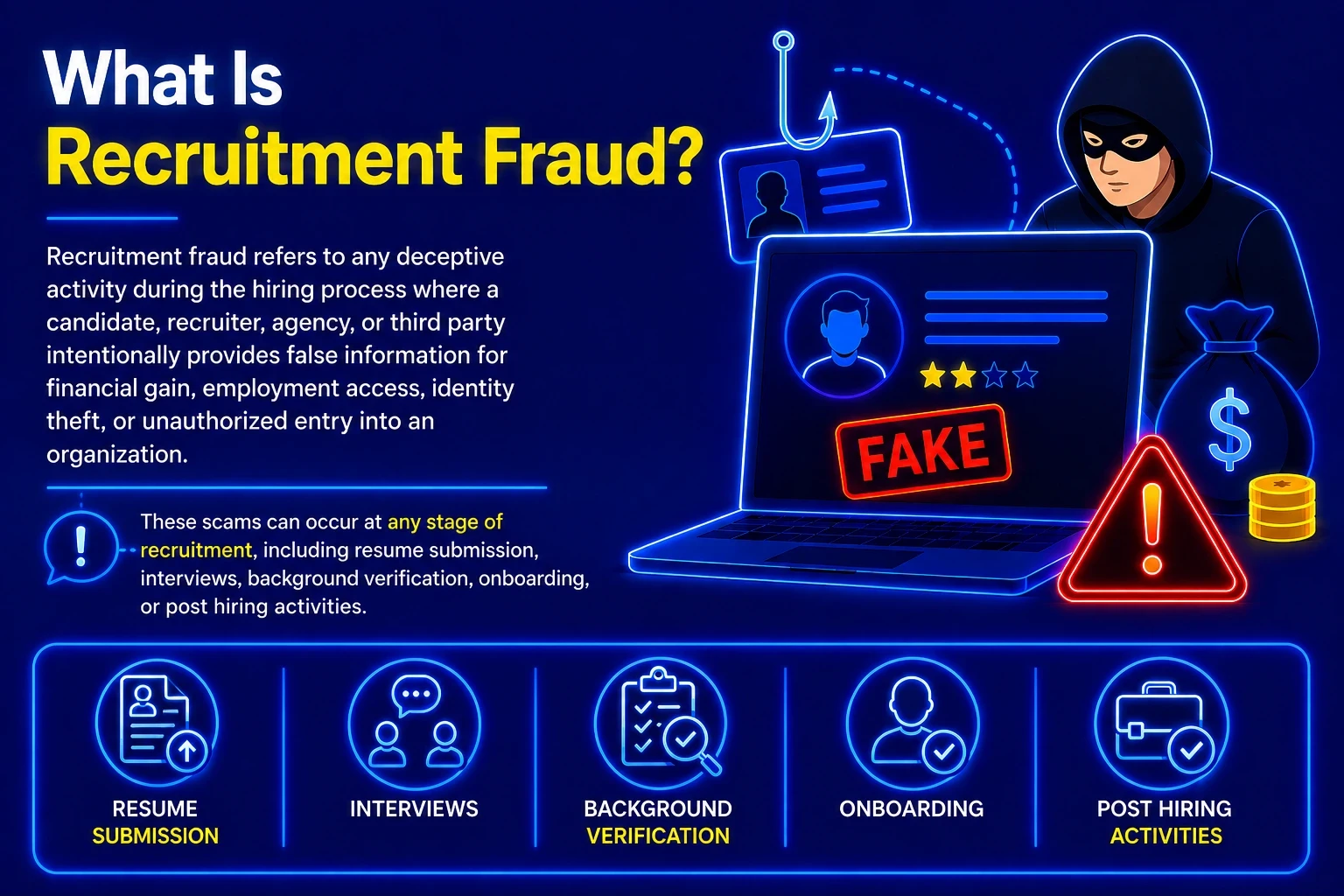
Recruitment fraud is no longer limited to fake resumes or exaggerated work experience. Today, organizations face sophisticated hiring scams involving deepfake interviews, forged identity documents, AI generated resumes, proxy interviews, fake references, and even cybercriminals impersonating legitimate job candidates. As remote and hybrid hiring continue to grow, recruitment fraud has become one of the biggest risks for HR teams, recruiters, and businesses worldwide.
The shift toward online recruitment has accelerated hiring efficiency, but it has also opened new opportunities for fraudsters. Candidates can now manipulate interviews using artificial intelligence, use real time assistance during assessments, or even outsource interviews to more qualified individuals. In some cases, organizations unknowingly hire fake employees who later gain access to sensitive company systems and confidential data. Today, recruitment fraud impacts more than just HR teams. Fraudulent hiring can lead to cybersecurity threats, insider attacks, compliance violations, operational disruption, and reputational damage. Organizations that rely only on traditional background checks may struggle to detect modern hiring scams powered by AI and digital manipulation.
Hiring teams are also struggling to detect these scams effectively. According to a report covered by TechRadar, only 19% of hiring managers felt confident in their ability to identify fraudulent applicants, despite the growing use of AI driven deception during recruitment.
In this article, we will break down the major types of recruitment fraud, explain how these scams work, identify the warning signs recruiters should never ignore, and explore how companies can strengthen hiring security using advanced fraud detection and identity verification solutions
Types Of Recruitment Fraud
Recruitment fraud can take many forms, ranging from simple resume manipulation to advanced AI powered identity scams. Understanding the different types of hiring fraud is essential for recruiters, HR leaders, and businesses looking to strengthen their hiring security.
Below are the most common types of recruitment fraud affecting organizations today.
Reference Fraud
Reference fraud occurs when candidates provide fake professional references to support false employment claims, exaggerated job responsibilities, or fabricated work experience. In many cases, candidates use friends, relatives, or third party reference agencies known as “reference houses” to impersonate former employers and provide misleading feedback to recruiters.
This type of recruitment fraud has become increasingly common in remote hiring because recruiters often rely on phone calls, emails, or digital communication to verify candidate backgrounds. Fraudulent references can help underqualified candidates secure roles they are not capable of performing, creating productivity, compliance, and security risks for organizations.
Some candidates also create fake companies, fake LinkedIn profiles, and temporary business websites to make fabricated work histories appear legitimate. When reference checks are rushed or poorly verified, these fraud attempts can easily bypass traditional recruitment processes.
What to Look For:
References using generic email domains instead of official company emails
Phone numbers that are always answered immediately or sound scripted
Inconsistent employment dates between resumes, LinkedIn profiles, and references
References unwilling to provide verifiable company details
Overly positive recommendations without specific examples
Suspiciously small or untraceable companies with limited online presence
Multiple candidates using the same reference contact information
How to Prevent It:
Verify references using official company contact details from trusted sources
Cross check employment history through LinkedIn and company databases
Request supporting documents such as offer letters or experience certificates
Conduct structured reference interviews with role specific questions
Use background verification services to validate employment claims
Implement AI powered identity and employment verification systems
Train recruiters to identify scripted or suspicious reference behavior
Qualification Fraud
Qualification fraud happens when candidates falsify academic degrees, certifications, licenses, or professional training credentials during the recruitment process. Candidates may edit certificates, purchase fake degrees online, exaggerate qualifications, or claim educational achievements they never completed. A survey reported by Prospects.ac.uk found that 45% of large companies discovered candidates providing false qualification information during the hiring process.
This type of fraud is particularly dangerous in industries such as healthcare, finance, cybersecurity, engineering, and education where specific certifications or academic qualifications are legally required. Hiring candidates with fake qualifications can expose companies to regulatory penalties, compliance violations, and operational failures.
The availability of sophisticated editing tools and fake certificate marketplaces has made qualification fraud easier than ever. Some fraudulent candidates even create fake university websites or use unofficial accreditation bodies to make fabricated credentials appear authentic.
What to Look For:
Certificates with formatting inconsistencies or spelling errors
Missing graduation dates or incomplete academic records
Universities or training institutions with limited online verification
Qualifications unrelated to the candidate’s career timeline
Candidates avoiding detailed discussions about coursework or projects
Suspiciously fast degree completion periods
Inconsistencies between resumes and LinkedIn education history
How to Prevent It:
Verify degrees directly with universities or authorized verification agencies
Use digital credential verification platforms
Conduct detailed interviews focused on practical knowledge and experience
Require official transcripts instead of scanned certificates alone
Cross check certification IDs with issuing organizations
Establish mandatory qualification verification for sensitive roles
Use recruitment fraud detection platforms to identify inconsistencies in candidate profiles
Fake Application Documents
Fake application document fraud involves candidates submitting forged or manipulated hiring documents to misrepresent their identity, work experience, salary history, or eligibility for employment. These documents can include fake resumes, altered salary slips, forged offer letters, manipulated bank statements, fake identity documents, and counterfeit employment certificates.
As remote hiring becomes more common, recruiters increasingly depend on digital document submissions instead of physical verification. This shift has created more opportunities for fraudsters to edit documents using advanced design software or AI powered editing tools. In many cases, fake documents are designed to bypass quick manual reviews and appear authentic at first glance.
Fraudulent application documents can result in companies hiring unqualified candidates, exposing confidential systems, or violating compliance regulations. In regulated industries, failing to verify hiring documentation properly can also create legal and financial liabilities.
What to Look For:
Mismatched fonts, logos, or formatting across submitted documents
Inconsistent employment dates between resumes and experience letters
Salary slips with calculation errors or missing tax information
Documents with low quality logos, blurry seals, or irregular signatures
Edited PDF metadata or suspicious file creation details
Identity documents with mismatched photos or altered text alignment
Multiple documents using identical templates from different employers
How to Prevent It:
Use document verification tools to detect edits and tampering
Validate employment documents directly with previous employers
Request digitally verifiable documents whenever possible
Cross check salary information with tax or payroll records where legally permitted
Implement identity verification during onboarding
Train HR teams to identify common signs of document manipulation
Use AI powered fraud detection systems to flag suspicious application patterns
CV-Based Fraud
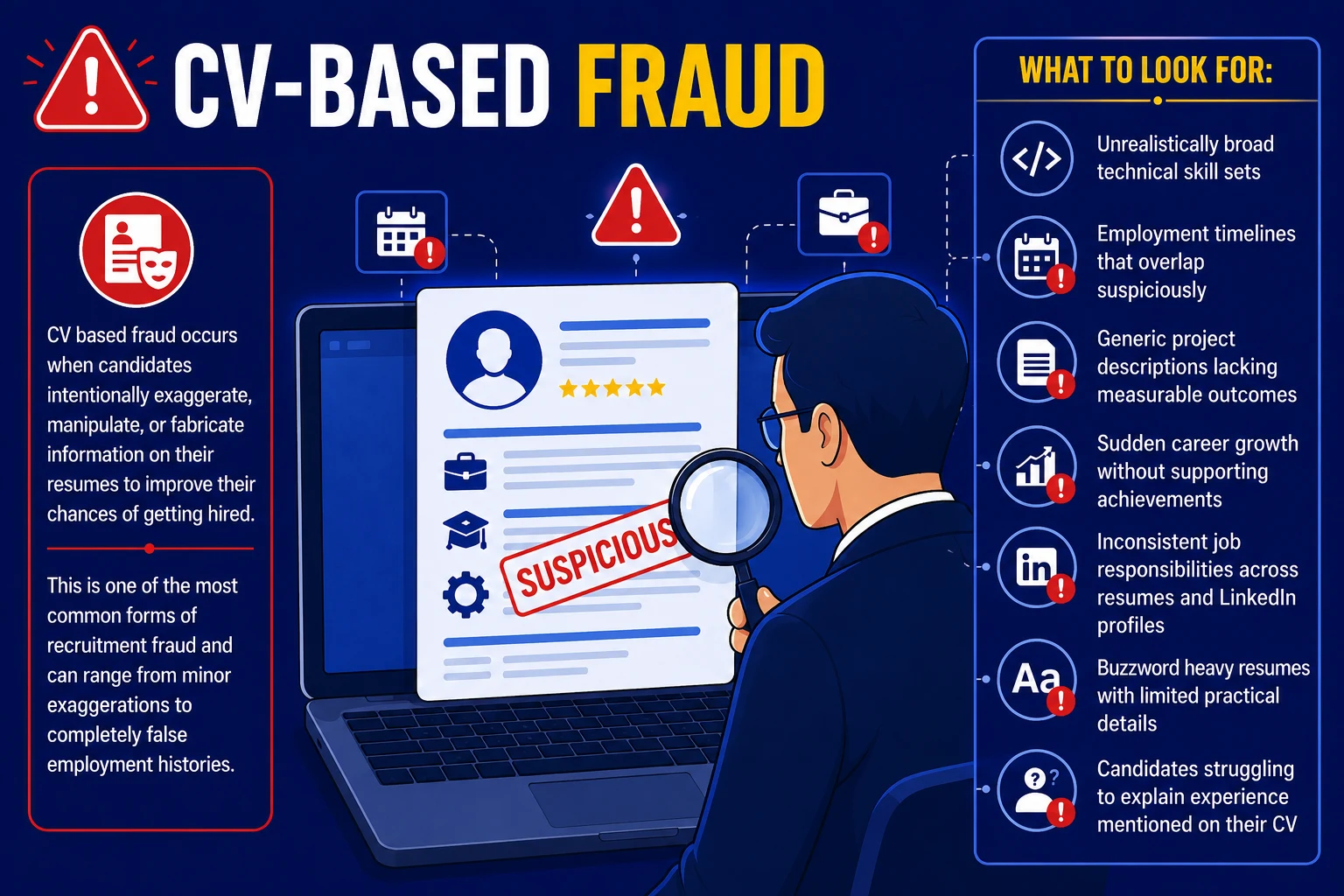
CV based fraud occurs when candidates intentionally exaggerate, manipulate, or fabricate information on their resumes to improve their chances of getting hired. This is one of the most common forms of recruitment fraud and can range from minor exaggerations to completely false employment histories.
Candidates may inflate job titles, extend employment dates to hide career gaps, falsely claim technical skills, exaggerate project contributions, or fabricate leadership experience. In competitive job markets, some candidates also copy resume content from online profiles or use AI tools to generate misleading experience descriptions tailored to job requirements.
Research highlighted by Cifas revealed that 18% of individuals admitted to lying on their CVs or job applications to secure employment opportunities.
While some forms of CV enhancement may seem harmless, hiring decisions based on inaccurate information can result in poor performance, operational risks, and costly turnover. For technical or leadership roles, CV fraud can have a major impact on productivity and team performance.
What to Look For:
Unrealistically broad technical skill sets
Employment timelines that overlap suspiciously
Generic project descriptions lacking measurable outcomes
Sudden career growth without supporting achievements
Inconsistent job responsibilities across resumes and LinkedIn profiles
Buzzword heavy resumes with limited practical details
Candidates struggling to explain experience mentioned on their CV
How to Prevent It:
Conduct structured interviews with role specific technical questions
Validate previous job responsibilities during reference checks
Use skill assessments and live problem solving interviews
Compare resumes with LinkedIn profiles and public portfolios
Verify employment dates through background screening
Use AI powered candidate analysis tools to detect inconsistencies
Ask detailed follow up questions about projects, tools, and contributions
Dual Employment Fraud
Dual employment fraud happens when an employee secretly works for multiple companies at the same time without disclosure or authorization. This issue has become more common with the rise of remote work, flexible schedules, and global hiring opportunities.
In some cases, candidates accept full time positions from multiple employers simultaneously while pretending to work exclusively for each organization. Fraudulent employees may outsource their tasks, avoid video meetings, or use overlapping work schedules to hide their dual employment activities. This can lead to productivity loss, confidentiality risks, intellectual property theft, and conflicts of interest.
Dual employment fraud is particularly risky in technology, finance, and consulting industries where employees often have access to sensitive systems, proprietary information, and customer data. Some organizations have also reported employees using AI tools or proxy workers to manage workloads across multiple jobs without detection.
What to Look For:
Frequent unavailability during working hours
Repeated excuses to avoid camera based meetings
Delayed responses and inconsistent productivity
Simultaneous LinkedIn activity with multiple employers
Declining performance despite strong interview performance
Suspicious VPN usage or login activity from multiple locations
Candidates unwilling to comply with employment exclusivity agreements
How to Prevent It:
Include clear dual employment policies in employment contracts
Conduct regular performance and engagement reviews
Monitor unusual access patterns and work activity
Require periodic identity verification for remote employees
Use secure device and access management systems
Encourage transparent communication around freelance or secondary work
Implement AI based workforce monitoring and fraud detection solutions
Immigration Fraud
Immigration fraud occurs when candidates provide false immigration information, forged visas, fake work permits, or fraudulent identity documents to gain employment illegally. This type of recruitment fraud can expose organizations to significant legal penalties, compliance violations, and reputational damage.
Fraudsters may use stolen identities, counterfeit residency documents, or falsified sponsorship information to bypass employment eligibility checks. In global hiring environments, companies that recruit across borders are especially vulnerable if verification processes are weak or inconsistent.
Immigration fraud can also involve fake sponsorship agencies or intermediaries that promise employment opportunities using fraudulent documentation. In heavily regulated industries, employing individuals without valid work authorization can lead to audits, fines, and restrictions on future hiring.
What to Look For:
Expired or inconsistent visa documentation
Identity documents with altered information or poor image quality
Mismatched names across employment and immigration records
Candidates avoiding questions about work authorization
Suspiciously urgent onboarding requests
Unverifiable immigration sponsorship details
Work permits that do not match the role or employment location
How to Prevent It:
Verify immigration documents through authorized government systems
Conduct identity verification before onboarding
Work with certified immigration and legal compliance partners
Maintain updated employment eligibility documentation
Train HR teams on immigration compliance requirements
Implement secure document verification technology
Use AI driven identity fraud detection tools to identify suspicious applications
Recruitment Agency-Based Fraud
Recruitment agency based fraud occurs when fake or unethical recruitment agencies manipulate hiring processes for financial gain or provide fraudulent candidates to employers. In some cases, agencies impersonate legitimate staffing firms, collect upfront payments from job seekers, or submit fake candidate profiles to companies.
Some fraudulent agencies create fabricated resumes, coach candidates to deceive recruiters, or intentionally hide important background information to secure placement commissions. Others may operate fake job portals that collect personal information, financial data, or application fees from unsuspecting candidates.
For employers, working with unverified recruitment agencies can lead to poor quality hires, compliance issues, financial losses, and reputational damage. Companies that rely heavily on third party staffing vendors are especially vulnerable if vendor verification processes are weak.
What to Look For:
Recruitment agencies requesting upfront fees from candidates
Agencies with limited online presence or unverifiable business information
Multiple candidates sharing identical resume formats or experience patterns
Agencies unwilling to provide detailed candidate verification records
Unusually fast candidate submissions for highly specialized roles
Suspicious communication domains that do not match company branding
Negative reviews or scam reports associated with the agency
How to Prevent It:
Partner only with verified and reputable recruitment agencies
Conduct vendor due diligence before signing recruitment agreements
Request background verification reports for submitted candidates
Audit agency hiring practices and compliance procedures regularly
Verify agency business registrations and physical office presence
Monitor candidate quality and hiring success metrics
Use AI powered recruitment verification tools to detect suspicious candidate patterns
Employment Scams
Employment scams target job seekers by impersonating legitimate employers, recruiters, or hiring platforms to steal money, personal information, or financial credentials. These scams have increased significantly with the growth of online job portals, remote hiring, and social media recruitment.
Fraudsters often post fake job advertisements offering attractive salaries, remote work opportunities, or guaranteed employment. Victims may be asked to pay for training, equipment, visa processing, or background checks before receiving a fake offer letter. In other cases, scammers use phishing techniques to collect sensitive information such as bank account details, identification documents, or login credentials. According to Fortune, reports of online job scams increased by 19% year over year, with job seekers losing nearly $300 million to employment scams.
Employment scams not only harm candidates financially but can also damage the reputation of legitimate companies whose names are misused in fake recruitment campaigns.
What to Look For:
Job offers requesting upfront payments or financial transfers
Recruiters using unofficial email addresses or messaging apps only
Unrealistically high salaries for entry level positions
Hiring processes completed without proper interviews
Urgent requests for personal or banking information
Fake websites closely imitating legitimate company pages
Poor grammar and inconsistent communication from recruiters
How to Prevent It:
Educate candidates about common recruitment scam tactics
Publish official hiring communication channels on company websites
Verify recruiter identities and email domains
Encourage candidates to report suspicious job offers
Monitor online platforms for fake job postings using your company name
Implement secure recruitment communication systems
Use identity verification and fraud monitoring tools to detect impersonation attempts
Proxy Interview Fraud
Proxy interview fraud occurs when someone other than the actual candidate attends or assists during the interview process. This type of recruitment fraud has increased rapidly with the growth of remote hiring and virtual interviews.
In some cases, a more experienced professional attends the interview pretending to be the candidate. In other situations, candidates receive real time assistance from hidden experts, AI tools, or external support during technical interviews and coding assessments. Fraudsters may also use lip sync software, voice changers, screen sharing tricks, or deepfake technology to manipulate virtual interviews.
Proxy interview fraud is especially common in technical hiring where candidates attempt to bypass skill evaluations to secure high paying roles. Organizations that fail to detect proxy interviews often end up hiring employees who cannot perform the actual job responsibilities.
What to Look For:
Delayed responses that suggest external assistance
Candidates repeatedly looking away from the screen
Lip movement and audio synchronization issues
Sudden changes in voice tone or communication style
Technical skills demonstrated during interviews not matching later performance
Frequent camera disruptions or excuses to disable video
Unusual typing patterns during coding assessments
How to Prevent It:
Conduct live video interviews with mandatory camera verification
Use AI powered interview proctoring tools
Include spontaneous follow up questions during technical interviews
Verify candidate identity before and during interviews
Record interviews for post interview review and analysis
Combine online assessments with live practical exercises
Use behavioral analytics to identify suspicious interview activity
Identity Fraud
Identity fraud happens when candidates use fake, stolen, or manipulated identities to secure employment opportunities. Fraudsters may use forged identity documents, stolen personal information, synthetic identities, or deepfake technology to impersonate someone else during the hiring process.
The rise of remote onboarding and digital recruitment has made identity fraud more difficult to detect through traditional verification methods. Some candidates use edited government IDs, manipulated selfies, or AI generated images to bypass identity verification systems.
Identity fraud can expose organizations to insider threats, financial fraud, cybersecurity incidents, and compliance violations. In sensitive industries, fraudulent identities may also create national security and regulatory risks.
What to Look For:
Identity documents with altered fonts or image inconsistencies
Candidate photos that do not match live interview appearances
Multiple applicants sharing similar personal information
Suspicious IP addresses or location mismatches
Deepfake indicators such as unnatural facial movement or lighting
Inconsistent signatures across submitted documents
Candidates resisting live identity verification procedures
How to Prevent It:
Implement biometric identity verification during hiring
Use AI powered deepfake and liveness detection systems
Conduct live identity checks before onboarding
Verify government issued documents through trusted systems
Monitor suspicious login behavior and device activity
Use secure digital onboarding platforms
Implement multi factor authentication for employee access systems
Proxy Interview Fraud
Proxy interview fraud occurs when someone other than the actual candidate attends or assists during the interview process. This type of recruitment fraud has increased rapidly with the growth of remote hiring and virtual interviews.
In some cases, a more experienced professional attends the interview pretending to be the candidate. In other situations, candidates receive real time assistance from hidden experts, AI tools, or external support during technical interviews and coding assessments. Fraudsters may also use lip sync software, voice changers, screen sharing tricks, or deepfake technology to manipulate virtual interviews. Research from Gartner predicted that by 2028, 1 in 4 job candidates globally could be fake or AI enhanced profiles, increasing the risk of proxy interviews and identity manipulation during virtual hiring.
Proxy interview fraud is especially common in technical hiring where candidates attempt to bypass skill evaluations to secure high paying roles. Organizations that fail to detect proxy interviews often end up hiring employees who cannot perform the actual job responsibilities.
What to Look For:
Delayed responses that suggest external assistance
Candidates repeatedly looking away from the screen
Lip movement and audio synchronization issues
Sudden changes in voice tone or communication style
Technical skills demonstrated during interviews not matching later performance
Frequent camera disruptions or excuses to disable video
Unusual typing patterns during coding assessments
How to Prevent It:
Conduct live video interviews with mandatory camera verification
Use AI powered interview proctoring tools
Include spontaneous follow up questions during technical interviews
Verify candidate identity before and during interviews
Record interviews for post interview review and analysis
Combine online assessments with live practical exercises
Use behavioral analytics to identify suspicious interview activity
How To Manage Recruitment Fraud Effectively
Managing recruitment fraud requires more than basic background verification. Modern fraud tactics involve AI generated resumes, proxy interviews, forged documents, deepfake identities, and coordinated scams that can bypass traditional hiring workflows. Organizations need a structured fraud management strategy that combines technology, policy enforcement, recruiter training, and continuous monitoring.
Below are the most effective ways businesses can manage recruitment fraud in modern hiring environments.
Build A Standardized Hiring Process
One of the biggest reasons recruitment fraud succeeds is inconsistent hiring practices. When recruiters follow different verification standards, fraudsters can exploit gaps in the process.
Organizations should create a standardized hiring workflow that includes:
Identity verification
Employment verification
Qualification checks
Structured interviews
Technical assessments
Reference validation
Document authentication
A consistent hiring framework reduces manual errors and makes suspicious activity easier to detect.
Use AI Powered Fraud Detection Tools Like Sherlock AI
Traditional recruitment methods struggle to identify modern hiring fraud. AI powered recruitment intelligence platforms like Sherlock AI help companies detect suspicious candidate behavior, interview manipulation, identity inconsistencies, and fraudulent application patterns in real time.
AI systems can analyze:
Behavioral inconsistencies
Interview activity patterns
Suspicious document signals
Identity verification mismatches
Proxy interview indicators
AI generated content risks
This allows recruiters to identify potential fraud before onboarding decisions are finalized.
Strengthen Identity Verification
Identity fraud is becoming increasingly sophisticated in remote hiring environments. Companies should implement multi layer identity verification during recruitment and onboarding.
Best practices include:
Government ID verification
Live selfie and liveness detection
Video based identity confirmation
Multi factor authentication
Secure onboarding workflows
Identity verification should happen at multiple hiring stages instead of only during onboarding.
Conduct Structured And Skill Based Interviews
Fraudulent candidates often rely on memorized answers, external assistance, or AI generated responses. Structured interviews with practical assessments help recruiters validate genuine expertise.
Effective interview management strategies include:
Live problem solving exercises
Role specific scenario questions
Unexpected follow up questions
Camera enabled video interviews
Real time technical demonstrations
Skill validation is especially important for remote technical hiring.
Verify Documents And Qualifications Carefully
Forged resumes, fake certificates, and manipulated employment records are common recruitment fraud tactics. Organizations should never rely only on submitted PDFs or scanned documents.
Instead, recruiters should:
Verify qualifications directly with institutions
Validate employment through official company channels
Use document authentication software
Review metadata for edited files
Cross check information across multiple sources
Automated verification systems can also help detect inconsistencies faster.
Work With Trusted Recruitment Partners
Third party staffing agencies and hiring vendors can introduce additional fraud risks if they do not follow proper verification standards.
Businesses should:
Vet recruitment agencies carefully
Request verification documentation
Review compliance procedures
Monitor candidate quality metrics
Establish contractual fraud prevention requirements
Trusted hiring partners reduce the likelihood of fraudulent candidate submissions.
How Sherlock AI Helps Prevent Recruitment Fraud
As recruitment fraud becomes more advanced, traditional verification methods are no longer enough to protect hiring teams from fake candidates, proxy interviews, forged documents, and AI assisted cheating. Modern organizations need intelligent hiring systems that can detect suspicious behavior before fraudulent candidates enter the workforce.
Sherlock AI helps companies strengthen recruitment security with AI powered fraud detection and candidate verification capabilities designed for modern hiring environments.
Sherlock AI helps businesses manage recruitment fraud by:
Detecting suspicious interview behavior during remote hiring
Identifying proxy interview attempts and external assistance
Analyzing candidate inconsistencies across resumes and applications
Supporting identity verification and fraud prevention workflows
Improving interview integrity during online assessments
Helping recruiters detect AI assisted cheating patterns
Reducing hiring risks through behavioral intelligence and monitoring
By combining AI powered hiring intelligence with secure recruitment workflows, Sherlock AI enables organizations to make faster, safer, and more confident hiring decisions.
Conclusion
Recruitment fraud has evolved into a major challenge for modern hiring teams, especially with the rise of remote work, AI generated applications, proxy interviews, and digital onboarding. From fake resumes and forged documents to identity manipulation and employment scams, fraudulent hiring activity can expose businesses to financial losses, security risks, compliance violations, and reputational damage.
Understanding the different types of recruitment fraud is essential for building a secure and trustworthy hiring process. Organizations that implement structured recruitment workflows, identity verification, document validation, interview monitoring, and AI powered fraud detection systems are better equipped to prevent fraudulent hires before they impact business operations.
As hiring fraud tactics continue to evolve, businesses must adopt smarter recruitment technologies and proactive fraud prevention strategies to stay protected. Platforms like Sherlock AI help organizations strengthen hiring integrity, detect suspicious candidate behavior, and build safer recruitment processes for the future.