
Back to all blogs
Discover what virtual hiring is, its types, pros and cons, best practices, and tips to improve virtual hiring processes.

Hiring has changed dramatically in recent years. Traditional face-to-face recruitment is no longer the only way companies evaluate talent. Today, organizations are increasingly turning to virtual hiring to recruit, assess, and onboard candidates remotely using digital tools, video interviews, AI screening, and online assessments.
From startups to enterprise businesses, virtual hiring has become an essential strategy for faster and smarter recruitment. Companies are no longer limited by location when searching for talent. Instead, recruiters can connect with qualified candidates across cities, states, and even countries without requiring in-person meetings.
The shift toward virtual hiring has been accelerated by remote work adoption and advancements in recruitment technology. The rise of remote work has also strengthened virtual recruitment trends. A 2025 remote work report found that more than 424,778 fully remote job postings were published in a single year, showing continued employer demand for location-independent talent and digital hiring solutions.
At the same time, artificial intelligence is reshaping recruitment. According to Foundit Insights, AI-driven hiring grew significantly in 2025, contributing to a 15% increase in overall recruitment activity, with organizations increasingly using automation for screening, scheduling, and candidate evaluation.
Virtual hiring is no longer just a temporary alternative to traditional recruitment. It has become a long-term hiring strategy that helps organizations reduce hiring time, improve candidate experience, widen talent pools, and streamline recruitment workflows.
What Is Virtual Hiring?
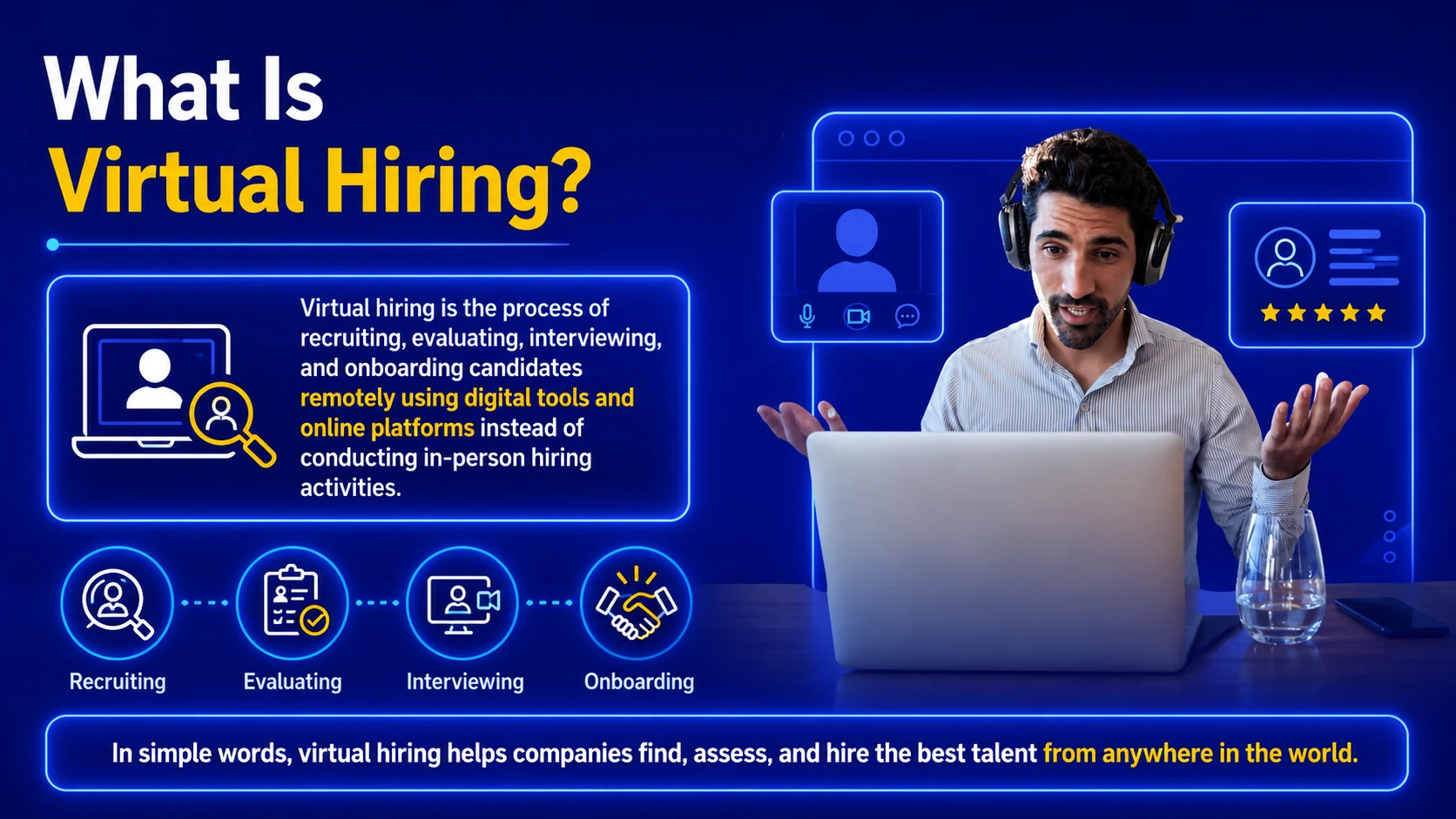
Virtual hiring is the process of recruiting, evaluating, interviewing, and onboarding candidates remotely using digital tools and online platforms instead of conducting in-person hiring activities.
In a virtual hiring process, recruiters and hiring managers use technologies such as video interviews, online assessments, applicant tracking systems (ATS), AI-powered screening tools, and automated scheduling platforms to identify and assess candidates from any location.
Unlike traditional recruitment, which requires face-to-face meetings and physical office visits, virtual hiring enables organizations to manage the entire recruitment cycle online. From posting job openings and screening resumes to conducting interviews and extending offers, every stage can happen digitally.
Virtual hiring became more popular as remote and hybrid work models increased. However, today it is no longer limited to remote-first companies. Businesses across industries now use virtual hiring to improve hiring speed, reduce operational costs, and access broader talent pools.
Types of Virtual Hiring
Virtual hiring is not a one-size-fits-all process. Organizations use different hiring methods depending on role requirements, hiring urgency, and candidate experience.
Here are the five most common types of virtual hiring used by modern organizations.
1. One-Way Video Interviews
A one-way video interview allows candidates to record answers to predefined interview questions without interacting with a recruiter in real time.
This type of virtual hiring is commonly used for:
High-volume hiring
Early-stage candidate screening
Entry-level recruitment
Campus hiring
Benefits of One-Way Video Interviews
Saves recruiter time
Allows flexible scheduling
Speeds up candidate shortlisting
Improves hiring efficiency
2. Two-Way Live Video Interviews
A two-way live video interview enables recruiters and candidates to interact in real time through video conferencing platforms.
This type of virtual hiring is commonly used for:
Mid-level hiring
Leadership recruitment
Technical interviews
Final interview rounds
Benefits of Two-Way Live Video Interviews
Enables real-time interaction
Improves candidate evaluation
Allows follow-up questions
Creates a better interview experience
3. AI-Powered Candidate Screening
AI-powered candidate screening helps recruiters automatically shortlist candidates based on skills, experience, and job relevance.
This type of virtual hiring is commonly used for:
High-volume recruitment
Faster candidate shortlisting
Skill-based hiring
Automated hiring workflows
Benefits of AI-Powered Candidate Screening
Reduces manual effort
Improves screening accuracy
Speeds up hiring decisions
Minimizes time-to-hire
4. Virtual Panel Interviews
A virtual panel interview involves multiple interviewers evaluating a candidate together during an online session.
This type of virtual hiring is commonly used for:
Senior-level recruitment
Leadership hiring
Specialized technical roles
Cross-functional evaluations
Benefits of Virtual Panel Interviews
Reduces interview delays
Improves decision-making
Enables collaborative feedback
Speeds up final selection
5. Online Skills Assessments
Online skills assessments help organizations evaluate practical job-related abilities through remote tests and assignments.
This type of virtual hiring is commonly used for:
Technical hiring
Communication roles
Writing assessments
Role-specific evaluations
Benefits of Online Skills Assessments
Measures real-world skills
Improves hiring accuracy
Reduces hiring bias
Supports better hiring decisions
Pros of Virtual Hiring
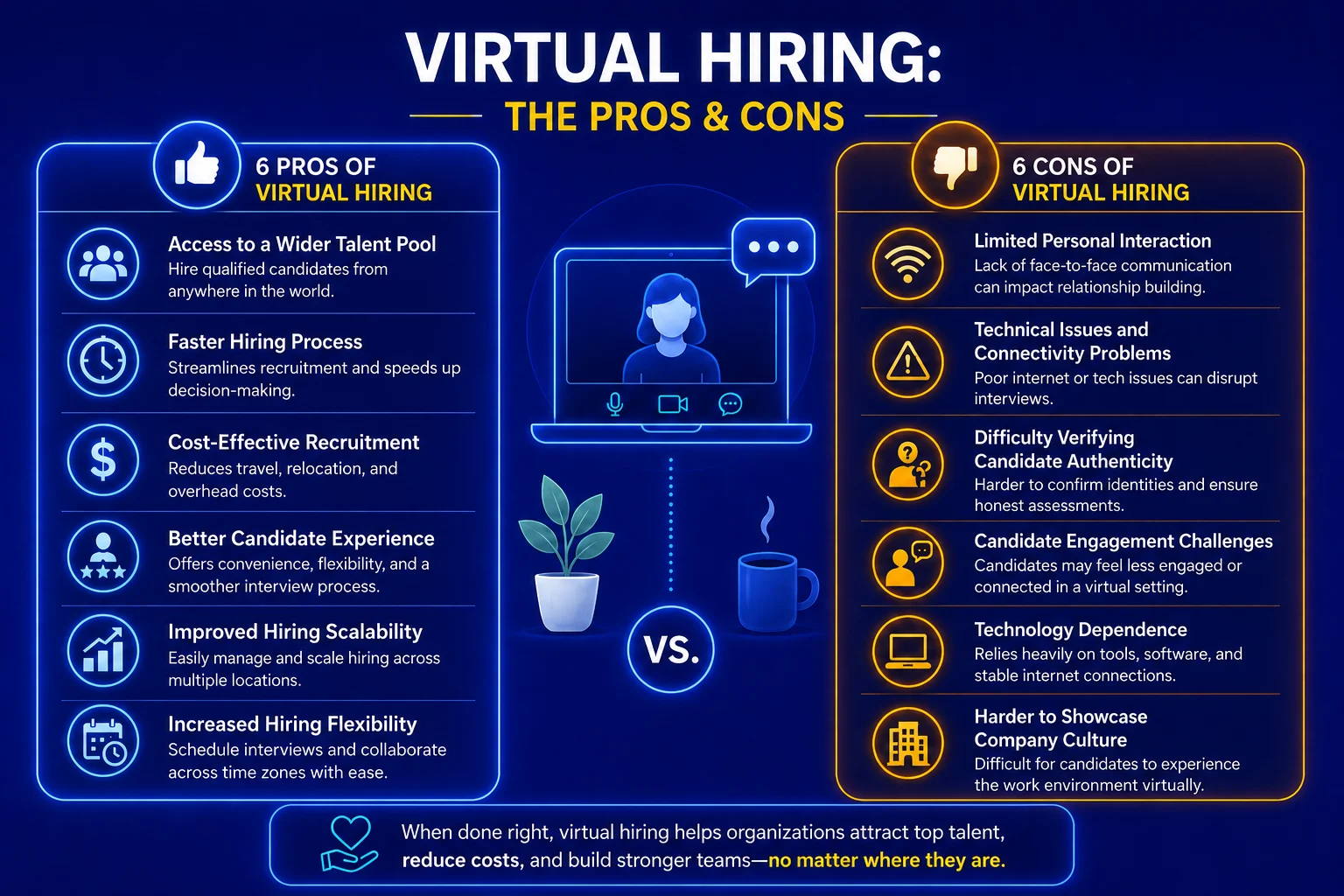
Virtual hiring has become a preferred recruitment strategy for organizations looking to hire talent faster, reduce operational costs, and improve hiring flexibility. By moving recruitment online, businesses can streamline hiring workflows while creating a smoother experience for candidates.
Here are the major pros of virtual hiring that make it a valuable recruitment approach for modern organizations.
1. Access to a Wider Talent Pool
One of the biggest pros of virtual hiring is the ability to recruit candidates from anywhere. Unlike traditional hiring, organizations are no longer restricted to a specific location when searching for qualified professionals. This allows businesses to connect with skilled candidates across different cities, states, and countries.
Expands access to qualified candidates
Helps fill specialized roles faster
Supports remote and global hiring
Reduces location-based hiring limitations
As a result, organizations gain access to a broader and more diverse talent pool, improving overall hiring quality.
2. Faster Hiring Process
Virtual hiring significantly speeds up recruitment by reducing delays caused by travel, scheduling conflicts, and in-person interviews. Recruiters can screen resumes, conduct interviews, and evaluate candidates online, helping organizations move candidates through the hiring process more efficiently.
Platforms like Sherlock AI further accelerate hiring by supporting interview integrity and reducing manual evaluation effort. Sherlock AI automatically joins interview meetings, provides real-time commentary during interviews, detects AI-assisted cheating and deepfake fraud, and generates interview notes and insights, helping recruiters focus on candidate quality instead of monitoring suspicious behavior
Reduces time-to-hire
Speeds up interview scheduling
Detects interview fraud in real time
Generates automated interview notes and insights
As a result, recruiters can make faster and more confident hiring decisions while maintaining interview quality and authenticity.
👉 Hire Smarter, Hire Faster With Sherlock AI |
|---|
3. Cost-Effective Recruitment
Another major advantage of virtual hiring is lower recruitment costs. Since interviews happen online, organizations can reduce expenses related to travel, venue arrangements, paperwork, and administrative tasks.
Lowers travel and logistics expenses
Reduces hiring overhead costs
Minimizes administrative work
Improves recruitment efficiency
This makes virtual hiring a more affordable solution for businesses of all sizes.
4. Better Candidate Experience
Virtual hiring provides candidates with greater flexibility and convenience throughout the recruitment process. Candidates can attend interviews from any location, avoiding travel stress and scheduling difficulties.
Offers flexible interview scheduling
Reduces travel-related stress
Improves accessibility for remote candidates
Creates a smoother hiring experience
A positive candidate experience can also improve employer branding and increase offer acceptance rates.
5. Improved Hiring Scalability
Virtual hiring allows organizations to manage large-scale recruitment more efficiently. Companies hiring for multiple roles can use digital tools and automation to streamline screening, interviewing, and candidate communication.
Supports high-volume hiring
Improves recruiter productivity
Simplifies recruitment workflows
Helps scale hiring operations faster
This is especially beneficial for fast-growing companies and enterprise-level recruitment.
6. Increased Hiring Flexibility
Virtual hiring gives both recruiters and candidates more flexibility during the hiring process. Recruiters can schedule interviews across time zones, while candidates can participate without disrupting their daily responsibilities.
Makes scheduling easier
Supports remote and hybrid hiring
Reduces time constraints
Increases interview accessibility
Greater flexibility helps organizations create a more efficient and candidate-friendly recruitment process.
Cons of Virtual Hiring
While virtual hiring offers flexibility and speed, it also comes with certain challenges. Organizations may face communication gaps, technical issues, and difficulties in evaluating candidates fully through digital interactions.
Here are some of the major cons of virtual hiring businesses should consider.
1. Limited Personal Interaction
One of the biggest drawbacks of virtual hiring is the lack of face-to-face communication. Recruiters may find it harder to assess body language, personality traits, and workplace behavior through virtual interactions alone.
Makes cultural fit assessment more difficult
Reduces personal connection with candidates
Limits non-verbal communication evaluation
Can feel less engaging than in-person interviews
As a result, organizations may need additional interview rounds to better evaluate candidate suitability.
2. Technical Issues and Connectivity Problems
Virtual hiring depends heavily on stable internet connections and digital platforms. Technical disruptions such as poor audio, video lag, or software issues can affect the interview experience.
Causes interview interruptions
Creates communication challenges
Delays interview schedules
Affects candidate performance
Reliable technology and backup plans are important to avoid disruptions during virtual interviews.
3. Difficulty Verifying Candidate Authenticity
In virtual hiring, recruiters may struggle to confirm whether candidates are completing assessments independently or using unauthorized support.
This challenge has grown with the rise of AI-generated responses, deepfake technology, and interview fraud.
Makes identity verification harder
Increases risk of AI-assisted cheating
Reduces confidence in candidate authenticity
Creates challenges in technical assessments
Platforms like Sherlock AI help address this issue by detecting AI-assisted cheating, deepfake fraud, and suspicious interview behavior in real time, helping recruiters make more reliable hiring decisions.
4. Candidate Engagement Challenges
Some candidates may find virtual interviews less personal or engaging compared to face-to-face interactions. Miscommunication or unclear expectations can also affect the candidate experience.
Reduces personal interaction
May lower candidate engagement
Creates communication misunderstandings
Can increase candidate drop-off rates
Clear communication and structured interview processes can help improve engagement during virtual hiring.
5. Technology Dependence
Virtual hiring requires organizations to rely on software tools, internet access, and digital hiring systems. Companies without the right infrastructure may face operational difficulties.
Requires reliable hiring platforms
Creates dependency on technology
May involve software learning curves
Can slow hiring during system issues
Organizations that invest in the right hiring tools often manage virtual recruitment more effectively.
6. Harder to Showcase Company Culture
In virtual hiring, candidates may have fewer opportunities to experience the workplace environment and team culture firsthand.
Without office visits or in-person interactions, organizations may need extra effort to communicate company values.
Limits workplace exposure for candidates
Makes team interactions less natural
Reduces cultural immersion
Can affect employer branding perception
Companies can overcome this challenge through virtual office tours, team introductions, and stronger communication during interviews.
Best Practices and Tips for Successful Virtual Hiring
Virtual hiring can help organizations recruit faster and access better talent, but success depends on having the right process in place. Without proper planning, companies may face communication gaps, poor candidate experiences, and inaccurate hiring decisions.
Following the right virtual hiring practices can improve recruitment efficiency while helping recruiters identify the best-fit candidates.
1. Create a Structured Hiring Process
A structured hiring process helps organizations maintain consistency across interviews and candidate evaluations. Recruiters should define clear hiring stages, interview criteria, and evaluation standards before starting recruitment.
Having a structured process helps reduce confusion and improves hiring quality.
Define interview stages in advance
Standardize candidate evaluation criteria
Use consistent interview questions
Set clear hiring timelines
A well-structured process helps recruiters make more confident and fair hiring decisions.
2. Use the Right Virtual Hiring Tools
Managing virtual recruitment manually can slow down hiring and create unnecessary inefficiencies. Organizations should use reliable virtual hiring tools to simplify scheduling, candidate communication, interview management, and evaluations.
The right hiring tools can help recruiters streamline the hiring process while improving collaboration and organization.
Improve interview management
Simplify candidate communication
Reduce manual administrative work
Support faster hiring decisions
Using reliable hiring technology can significantly improve recruitment speed and efficiency.
3. Prioritize Candidate Experience
A positive candidate experience plays an important role in successful virtual hiring. Candidates are more likely to complete the hiring process when communication is smooth and expectations are clear.
Organizations should ensure interviews are easy to access and professionally managed.
Send clear interview instructions
Share schedules in advance
Maintain transparent communication
Follow up after interviews
A better hiring experience can improve employer branding and candidate engagement.
4. Test Technology Before Interviews
Technical issues can negatively impact virtual interviews and create unnecessary delays. Recruiters should test software, internet connections, microphones, and video settings before interviews begin.
Preparing in advance helps create a smoother interview experience.
Test video conferencing platforms
Check audio and internet quality
Prepare backup communication methods
Avoid last-minute disruptions
Reliable technology improves professionalism and prevents interview interruptions.
5. Combine Interviews With Skills Assessments
Relying only on interviews may not provide a complete picture of candidate capabilities. Organizations should combine virtual interviews with practical assessments to evaluate real-world skills.
This helps recruiters make more accurate hiring decisions.
Use role-specific assessments
Evaluate practical skills
Test communication and problem-solving abilities
Reduce biased hiring decisions
Skills-based hiring often leads to stronger long-term hiring outcomes.
6. Maintain Human Connection During Hiring
Even in virtual environments, candidates still value personal interaction. Recruiters should focus on creating meaningful conversations and maintaining engagement throughout the hiring process.
Building strong communication can help candidates feel more connected to the organization.
Encourage open conversations
Introduce team members when possible
Share company culture and values
Provide timely feedback
A human-centered approach helps organizations create a more positive and memorable hiring experience.
Why Best Practices Matter in Virtual Hiring
Successful virtual hiring requires more than online interviews. Organizations need clear processes, reliable technology, structured evaluations, and strong candidate engagement to hire effectively.
By following these best practices, businesses can improve hiring efficiency, reduce recruitment challenges, and make smarter hiring decisions.
How Sherlock AI Improves Virtual Hiring
As virtual hiring continues to grow, recruiters face new challenges such as interview fraud, AI-assisted cheating, candidate authenticity concerns, and manual evaluation delays. Traditional virtual hiring methods may help organizations recruit remotely, but they often lack the tools needed to ensure interview integrity and efficient decision-making.
This is where Sherlock AI helps organizations make virtual hiring smarter, faster, and more reliable.
1. Detects AI-Assisted Cheating During Interviews
With the rise of AI-generated responses and hidden assistance tools, recruiters may struggle to determine whether candidates are answering independently.
Sherlock AI helps organizations maintain interview authenticity by detecting suspicious behavior and identifying potential AI-assisted cheating during interviews.
Detects AI-generated assistance
Helps maintain interview fairness
Improves hiring confidence
Supports authentic candidate evaluation
This helps recruiters make decisions based on genuine candidate performance.
2. Identifies Deepfake Fraud and Suspicious Activity
Candidate impersonation and deepfake technology have become growing concerns in virtual hiring.
Sherlock AI helps recruiters identify suspicious interview behavior and detect deepfake fraud signals, improving hiring reliability during remote interviews.
Helps prevent impersonation risks
Improves interview authenticity
Detects suspicious behavior patterns
Supports secure virtual hiring
Stronger fraud detection helps organizations reduce hiring risks.
3. Provides Real-Time Interview Commentary
Virtual interviews often require recruiters to multitask between evaluating responses and taking notes.
Sherlock AI automatically joins interviews and provides real-time commentary, helping recruiters stay focused on candidate interactions without missing important signals.
Supports better interview evaluation
Reduces recruiter workload
Improves focus during interviews
Helps capture important observations
Real-time insights help recruiters make faster and more informed decisions.
4. Generates Automated Interview Notes and Insights
Manual note-taking during interviews can be time-consuming and inconsistent.
Sherlock AI automatically generates interview notes and insights, helping recruiters review candidate performance more efficiently after interviews.
Saves recruiter time
Improves interview documentation
Simplifies candidate comparison
Supports better decision-making
Automated insights help hiring teams move candidates through the recruitment process faster.
5. Helps Recruiters Make Faster Hiring Decisions
Virtual hiring often involves multiple interview rounds and evaluations, which can slow recruitment.
By streamlining interview monitoring and reducing manual effort, Sherlock AI helps recruiters improve hiring efficiency and make decisions faster.
Reduces manual interview effort
Speeds up evaluation processes
Improves recruitment efficiency
Helps reduce time-to-hire
Faster decision-making helps organizations secure top talent before competitors.
Conclusion
Virtual hiring has transformed the way organizations recruit talent by making the hiring process faster, more flexible, and more efficient. From accessing a wider talent pool to reducing recruitment costs and improving candidate experience, virtual hiring offers several advantages that help businesses stay competitive in today’s evolving job market.
However, successful virtual hiring requires more than just conducting online interviews. Organizations must overcome challenges such as technical issues, candidate authenticity concerns, and communication gaps by following structured hiring practices and using the right recruitment strategies.
As remote and hybrid work continue to grow, virtual hiring is expected to become an essential part of modern recruitment. Businesses that adopt smarter hiring methods, prioritize candidate experience, and leverage technology effectively will be better positioned to attract and hire top talent in a competitive landscape.
👉 Try Sherlock AI & Make Virtual Hiring More Reliable |
|---|