

Back to all blogs
Discover the top 15 benefits of a virtual recruitment program, from reduced hiring costs and faster recruitment to improved candidate experience and interview integrity with Sherlock AI.

Virtual recruitment has evolved from a temporary hiring solution into a strategic advantage for organizations worldwide. As businesses compete for talent in an increasingly digital and global job market, virtual recruitment enables recruiters to source, assess, interview, and hire candidates more efficiently than traditional hiring methods.
The widespread adoption of virtual hiring is supported by compelling industry data. According to 4 Corner Resources 81% of recruiters now use video interviews as part of their hiring process. These numbers demonstrate that virtual recruitment is no longer a trend but a permanent component of modern talent acquisition strategies.
One of the biggest advantages of virtual recruitment is access to a broader talent pool. Organizations that embrace remote hiring can reach qualified candidates beyond their local markets, removing geographical barriers and expanding access to specialized skills. Some remote hiring studies report substantially larger candidate pools and faster hiring cycles compared to location-restricted recruitment models.
Candidate preferences are also shifting toward digital hiring experiences. Research shows that 50% of job seekers prefer video interviews over traditional face-to-face meetings, while candidate experience surveys report overwhelmingly positive feedback toward modern interview formats that offer greater flexibility and convenience.
As virtual recruitment becomes the standard, organizations must also address new challenges such as candidate verification, interview integrity, skills validation, and hiring accuracy.
Benefits of a Virtual Recruitment Program
In this guide, we explore the top benefits of a virtual recruitment program and how businesses can leverage modern recruitment technology to hire faster, smarter, and with greater confidence.
1. Lower Recruitment Costs
One of the biggest advantages of a virtual recruitment program is its ability to reduce overall hiring costs. Traditional recruitment often requires significant spending on travel, accommodation, venue arrangements, printed materials, and other logistical expenses associated with in-person interviews and hiring events. These costs can quickly add up, especially for organizations hiring across multiple locations.
Virtual recruitment eliminates many of these expenses by moving the hiring process online. Recruiters can conduct interviews, assessments, and candidate interactions through digital platforms, reducing the need for physical infrastructure and travel-related costs. As a result, businesses can allocate their recruitment budgets more effectively while maintaining a high-quality hiring process.
In addition to direct cost savings, virtual recruitment improves operational efficiency. Recruiters can schedule more interviews in less time, collaborate with hiring managers remotely, and manage larger candidate pipelines without increasing administrative overhead.
How Virtual Recruitment Reduces Hiring Costs
Eliminates candidate and recruiter travel expenses
Reduces costs associated with interview venues and office space
Minimizes spending on printed recruitment materials
Lowers administrative and coordination costs
Enables recruiters to manage more candidates with the same resources
Reduces dependency on location-based hiring events
Supports scalable hiring without significant budget increases
By reducing travel, logistical, and administrative expenses, virtual recruitment helps organizations build a more cost-effective hiring process without compromising the quality of candidate evaluation or hiring outcomes.
2. Strengthening Virtual Recruitment with Sherlock AI
As virtual recruitment becomes more common, organizations face new challenges that traditional hiring processes were not designed to address. Remote interviews can make it difficult to verify candidate authenticity, detect AI-assisted cheating, and ensure interview integrity throughout the hiring process.
Sherlock AI helps organizations address these challenges by acting as an AI-powered interview integrity platform. It works alongside interviewers during remote interviews, helping recruiters identify suspicious behaviors while allowing them to focus on evaluating candidate skills and qualifications.
By providing real-time insights and integrity monitoring, Sherlock AI helps organizations build greater confidence in their hiring decisions and maintain trust in virtual recruitment processes.
How Sherlock AI Supports Virtual Recruitment
Detects AI-assisted interview cheating in real time
Identifies interview fraud, impersonation, and proxy candidates
Monitors candidate behavior using multimodal AI analysis
Provides real-time interview integrity alerts
Evaluates AI fluency when organizations permit AI usage during interviews
Automatically generates interview notes and insights
Supports fair and trustworthy remote hiring processes
Integrates with existing virtual interview workflows
Helps recruiters focus on candidate evaluation rather than fraud detection
Sherlock AI strengthens virtual recruitment by helping organizations protect interview integrity, detect AI-assisted cheating, generate interview insights, and build greater confidence in remote hiring decisions.
3. Access to a Wider Talent Pool
One of the most valuable benefits of a virtual recruitment program is the ability to reach candidates beyond geographical boundaries. Traditional hiring often limits organizations to talent available within a specific city, region, or commuting distance. Virtual recruitment removes these restrictions, allowing businesses to connect with qualified professionals from different locations, states, and even countries.
As remote and hybrid work models continue to grow, candidates are increasingly seeking opportunities that offer flexibility and location independence. Virtual recruitment enables organizations to tap into this expanding workforce and attract talent that may have been inaccessible through conventional hiring methods.
A broader talent pool increases the likelihood of finding candidates with the right skills, experience, and cultural fit. Rather than competing for a limited number of local applicants, recruiters can evaluate a larger and more diverse group of professionals, improving overall hiring outcomes.
How Virtual Recruitment Expands Talent Reach
Removes geographical limitations from the hiring process
Enables access to national and global talent markets
Increases the number of qualified applicants for open positions
Helps organizations find specialized and hard-to-source skills
Supports remote and hybrid workforce strategies
Creates opportunities to build diverse and inclusive teams
Reduces dependency on local talent availability
Virtual recruitment allows organizations to access a wider and more diverse talent pool, helping them attract the best candidates regardless of location and make stronger hiring decisions.
4. Greater Scheduling Flexibility
Scheduling interviews can be one of the most time-consuming aspects of recruitment. Coordinating availability between recruiters, hiring managers, and candidates often causes delays that slow down the hiring process. Virtual recruitment simplifies scheduling by removing location-based constraints and allowing interviews to be conducted remotely.
This flexibility enables organizations to accommodate candidates across different time zones and work schedules. It also makes it easier to organize multiple interview rounds without the logistical challenges of arranging physical meetings.
How Virtual Recruitment Improves Scheduling
Eliminates the need for physical meeting locations
Supports remote interviews from any location
Accommodates candidates across different time zones
Reduces scheduling conflicts
Makes panel interviews easier to coordinate
Accelerates interview timelines
Improves overall recruitment efficiency
Virtual recruitment offers greater scheduling flexibility, helping organizations move candidates through the hiring process more quickly while reducing delays and administrative challenges.
5. Better Hiring Efficiency
As organizations receive larger volumes of applications, recruiters need efficient processes to manage candidate evaluations and hiring decisions. Virtual recruitment streamlines many aspects of the recruitment lifecycle, making it easier to handle multiple roles and candidates simultaneously.
Digital hiring workflows reduce manual effort, improve organization, and help recruitment teams focus on evaluating talent rather than managing administrative tasks. This increased efficiency enables businesses to scale their hiring efforts without sacrificing quality.
How Virtual Recruitment Increases Efficiency
Streamlines candidate screening and evaluation
Simplifies interview coordination
Reduces administrative workload
Improves communication among hiring stakeholders
Supports high-volume recruitment
Accelerates decision-making
Creates a more organized hiring process
Virtual recruitment improves hiring efficiency by simplifying recruitment workflows, reducing manual tasks, and helping organizations manage talent acquisition more effectively.
6. Enhanced Collaboration Among Hiring Teams
Successful recruitment often requires input from multiple stakeholders, including recruiters, hiring managers, department heads, and leadership teams. Virtual recruitment makes collaboration easier by enabling stakeholders to participate in the hiring process regardless of their physical location.
Digital hiring platforms allow interviewers to share feedback, review candidate information, and discuss hiring decisions in a centralized environment. This helps teams stay aligned and make informed decisions more quickly.
How Virtual Recruitment Supports Team Collaboration
Enables stakeholders to participate remotely
Simplifies candidate feedback sharing
Supports collaborative hiring decisions
Improves communication across hiring teams
Reduces delays caused by scheduling challenges
Encourages greater hiring consistency
Increases transparency throughout the recruitment process
Virtual recruitment strengthens collaboration by enabling hiring teams to communicate more effectively, share insights efficiently, and make faster hiring decisions.
7. Reduced Time-to-Hire
Speed is a critical factor in successful recruitment. Top candidates are often available for only a short period before accepting other job offers. A virtual recruitment program helps organizations accelerate the hiring process by eliminating many of the delays associated with traditional recruitment.
In a conventional hiring process, scheduling interviews, coordinating travel, reserving meeting rooms, and managing multiple stakeholders can significantly extend recruitment timelines. Virtual recruitment streamlines these activities by enabling recruiters, hiring managers, and candidates to connect from anywhere, making scheduling faster and more flexible.
Digital hiring tools also simplify candidate screening, assessments, interview coordination, and communication. This allows recruitment teams to move qualified candidates through the hiring funnel more efficiently and make faster hiring decisions.
How Virtual Recruitment Speeds Up Hiring
Enables faster interview scheduling and coordination
Eliminates travel-related delays for candidates and recruiters
Accelerates candidate screening and shortlisting
Supports quicker communication between hiring teams
Allows multiple interview rounds to be completed remotely
Reduces administrative bottlenecks in the hiring process
Helps organizations fill critical positions faster
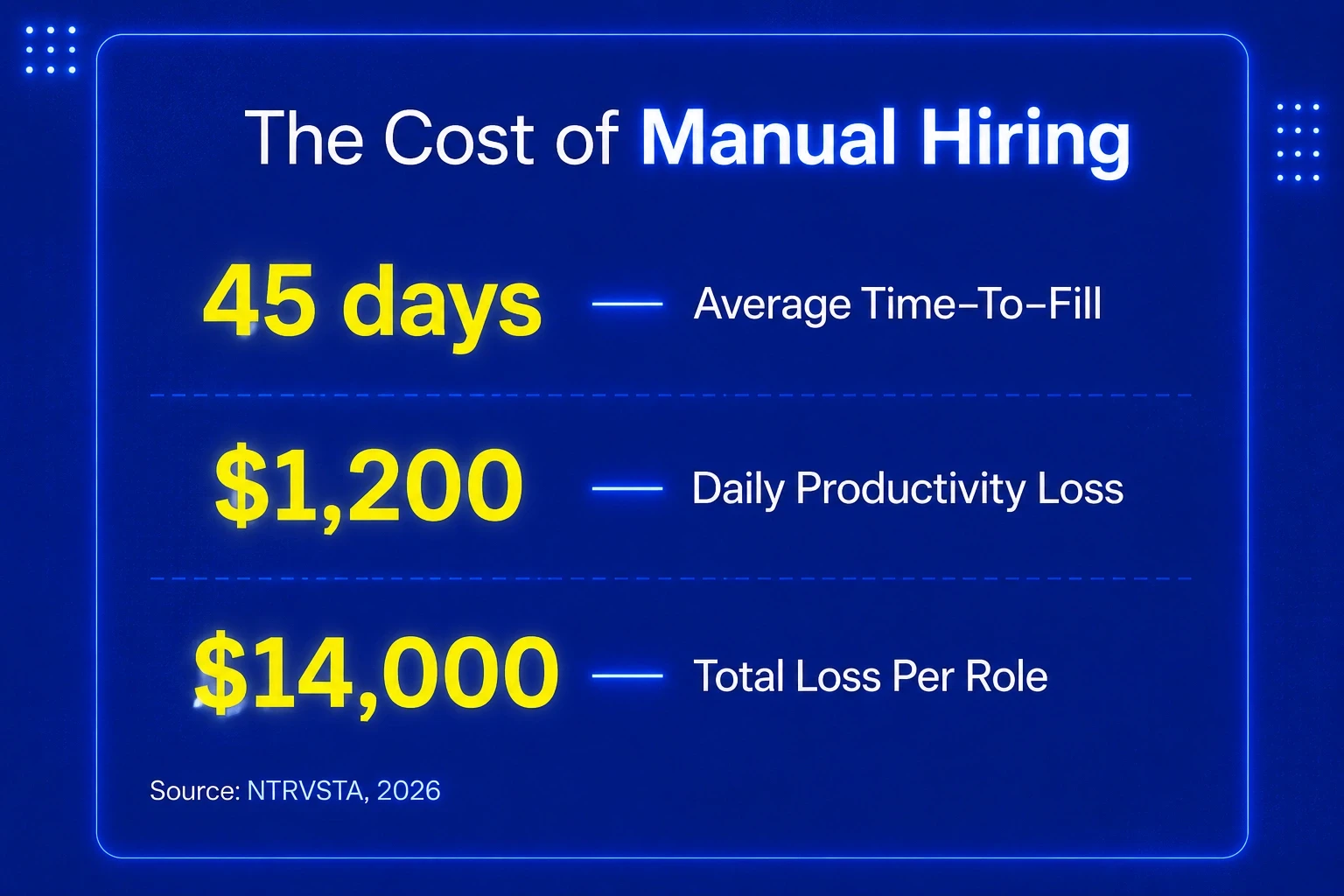
Virtual recruitment reduces time-to-hire by streamlining scheduling, communication, and candidate evaluation, enabling organizations to fill open positions faster and stay competitive in the talent market.
8. Increased Diversity and Inclusion Opportunities
Building diverse and inclusive teams is a priority for many organizations. Virtual recruitment supports these efforts by expanding access to talent beyond traditional geographic boundaries. Instead of relying solely on local candidates, employers can engage professionals from different regions, backgrounds, and experiences.
By reducing location-based barriers, virtual recruitment creates more opportunities for underrepresented talent and helps organizations develop a broader and more inclusive hiring strategy. This expanded reach can lead to stronger teams and a more diverse workforce.
How Virtual Recruitment Supports Diversity and Inclusion
Expands access to candidates from different regions
Increases opportunities for underrepresented talent
Reduces geographical barriers to employment
Creates a more accessible hiring process
Encourages broader candidate participation
Supports inclusive hiring initiatives
Helps build diverse teams
Virtual recruitment helps organizations attract talent from a wider range of backgrounds and locations, supporting diversity, inclusion, and stronger workforce development.
9. Improved Candidate Evaluation
Evaluating candidates accurately is one of the most important aspects of recruitment. Virtual recruitment provides access to digital tools that help recruiters assess candidates more effectively through structured interviews, skills assessments, and standardized evaluation processes.
By creating a consistent hiring framework, organizations can compare candidates fairly and make decisions based on relevant qualifications, competencies, and job-related performance indicators.
How Virtual Recruitment Improves Candidate Evaluation
Supports structured interview processes
Enables standardized candidate assessments
Improves consistency in hiring decisions
Allows easier comparison of candidates
Reduces reliance on subjective evaluations
Provides better documentation of candidate performance
Helps identify the most qualified applicants
Virtual recruitment enables more consistent and objective candidate evaluations, helping organizations make informed hiring decisions.
10. Stronger Employer Branding
The recruitment process often serves as a candidate’s first interaction with an organization. A modern and efficient virtual recruitment experience can leave a positive impression and strengthen an employer’s brand.
Organizations that embrace digital hiring demonstrate innovation, flexibility, and adaptability, qualities that many candidates value when evaluating potential employers.
How Virtual Recruitment Enhances Employer Branding
Creates a modern hiring experience
Demonstrates commitment to innovation
Improves candidate perceptions of the organization
Increases employer visibility across broader markets
Supports a positive candidate experience
Encourages candidate referrals and recommendations
Strengthens talent attraction efforts
Virtual recruitment helps organizations build a stronger employer brand by delivering a professional, efficient, and candidate-focused hiring experience.
11. Improved Candidate Experience
A positive candidate experience can significantly influence whether top talent accepts a job offer. Virtual recruitment makes the hiring process more convenient, accessible, and flexible by allowing candidates to participate from any location. Instead of traveling to interviews or taking extended time away from work, candidates can engage with employers through a streamlined digital process.
Virtual hiring also reduces many of the common frustrations associated with traditional recruitment, such as lengthy scheduling delays, travel costs, and time-consuming interview logistics. As a result, candidates often feel more comfortable and engaged throughout the hiring journey.
How Virtual Recruitment Improves Candidate Experience
Eliminates travel expenses and commuting time
Provides greater flexibility in scheduling interviews
Creates a more convenient hiring process
Reduces interview-related stress
Supports faster communication and feedback
Makes opportunities accessible to candidates from different locations
Improves the overall hiring experience
In a survey, 66% of candidates said that a positive candidate experience influenced their decision to accept a job offer.
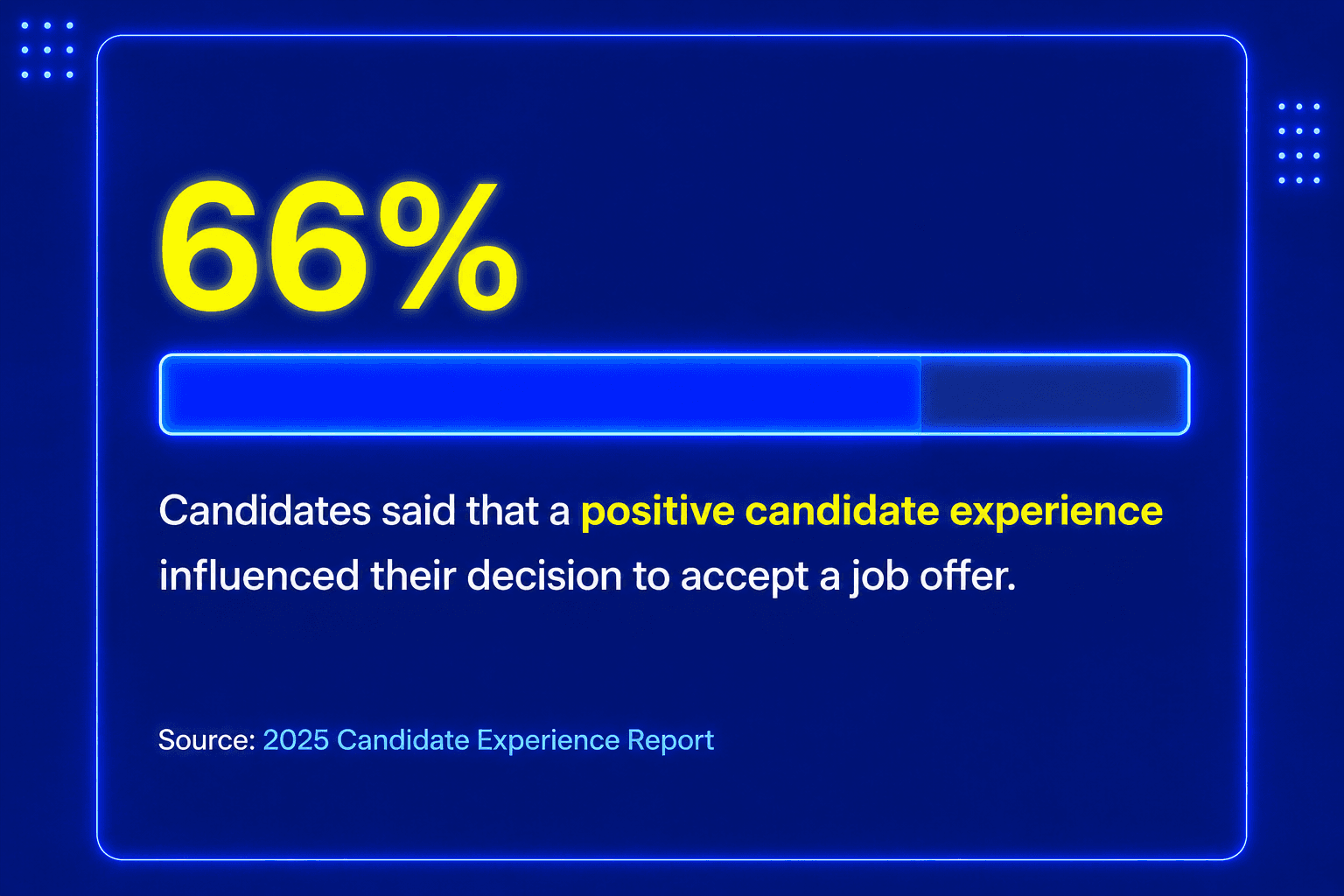
Virtual recruitment helps organizations create a more positive and efficient candidate experience, which can improve engagement, strengthen employer branding, and increase offer acceptance rates.
12. Better Recruitment Analytics and Insights
Data-driven hiring is becoming increasingly important as organizations seek to improve recruitment outcomes. Virtual recruitment generates valuable data throughout the hiring process, allowing recruiters to track performance and identify areas for improvement.
Recruitment analytics can provide insights into sourcing effectiveness, candidate engagement, interview performance, and hiring timelines.
How Virtual Recruitment Supports Better Analytics
Tracks hiring process performance
Measures recruitment efficiency
Identifies sourcing channel effectiveness
Provides visibility into hiring bottlenecks
Supports data-driven decision-making
Helps improve future hiring strategies
Enables continuous recruitment optimization
Virtual recruitment provides access to valuable hiring data that helps organizations improve recruitment performance and make smarter hiring decisions.
13. Enhanced Hiring Security and Candidate Verification
As virtual hiring grows, ensuring candidate authenticity has become increasingly important. Organizations need reliable ways to verify identities, validate credentials, and maintain hiring integrity throughout the recruitment process.
Modern virtual recruitment programs can incorporate identity verification, assessment monitoring, and interview integrity measures that help employers build trust in hiring outcomes.
How Virtual Recruitment Strengthens Hiring Security
Supports candidate identity verification
Helps validate candidate credentials
Reduces the risk of hiring fraud
Improves trust in assessment results
Enhances interview integrity
Supports secure digital hiring workflows
Strengthens compliance and documentation
Virtual recruitment can improve hiring security by helping organizations verify candidate authenticity and maintain confidence in recruitment outcomes.
14. Scalable Recruitment for Growing Organizations
As businesses grow, recruitment demands often increase rapidly. Virtual recruitment provides the flexibility and scalability needed to support hiring across multiple departments, locations, and hiring campaigns.
Unlike traditional recruitment processes that may require additional physical resources, virtual hiring can scale efficiently to accommodate changing workforce needs.
How Virtual Recruitment Supports Scalability
Enables hiring across multiple locations
Supports high-volume recruitment campaigns
Reduces operational limitations
Improves hiring consistency at scale
Accommodates rapid business growth
Simplifies recruitment management
Increases overall hiring capacity
Virtual recruitment helps organizations scale hiring efforts efficiently while maintaining consistency and quality throughout the recruitment process.
15. Better Support for Remote and Hybrid Hiring
As remote and hybrid work models become more common, organizations need recruitment processes that align with these workplace structures. Virtual recruitment naturally complements remote hiring by enabling candidates and recruiters to engage entirely online.
This approach allows organizations to evaluate talent based on skills and qualifications rather than proximity to a physical office.
How Virtual Recruitment Supports Remote Hiring
Aligns with remote and hybrid workforce strategies
Simplifies hiring across multiple locations
Expands access to qualified candidates
Supports distributed teams
Creates a seamless digital hiring experience
Reduces location-based hiring limitations
Helps organizations adapt to modern work environments
Virtual recruitment provides the flexibility needed to support remote and hybrid workforce models while expanding access to top talent.
Conclusion
Virtual recruitment has transformed the way organizations attract, evaluate, and hire talent. From reducing recruitment costs and shortening time-to-hire to expanding access to global talent and improving candidate experiences, a virtual recruitment program offers numerous advantages for modern hiring teams.
As the workforce becomes increasingly distributed and digital-first, organizations need recruitment strategies that are flexible, scalable, and efficient. Virtual recruitment not only helps businesses meet these evolving demands but also enables them to make more informed hiring decisions through streamlined processes and advanced hiring technologies.
To maximize the benefits of virtual recruitment, organizations must also prioritize interview integrity, candidate authenticity, and fair evaluation practices. By combining effective virtual hiring strategies with the right tools, businesses can create a recruitment process that is both efficient and trustworthy.
Ultimately, a well-executed virtual recruitment program helps organizations hire faster, reach better talent, improve hiring outcomes, and build a workforce prepared for the future of work.
Book a demo today to see how Sherlock AI can help you create a more secure, reliable, and effective virtual recruitment process. |
|---|